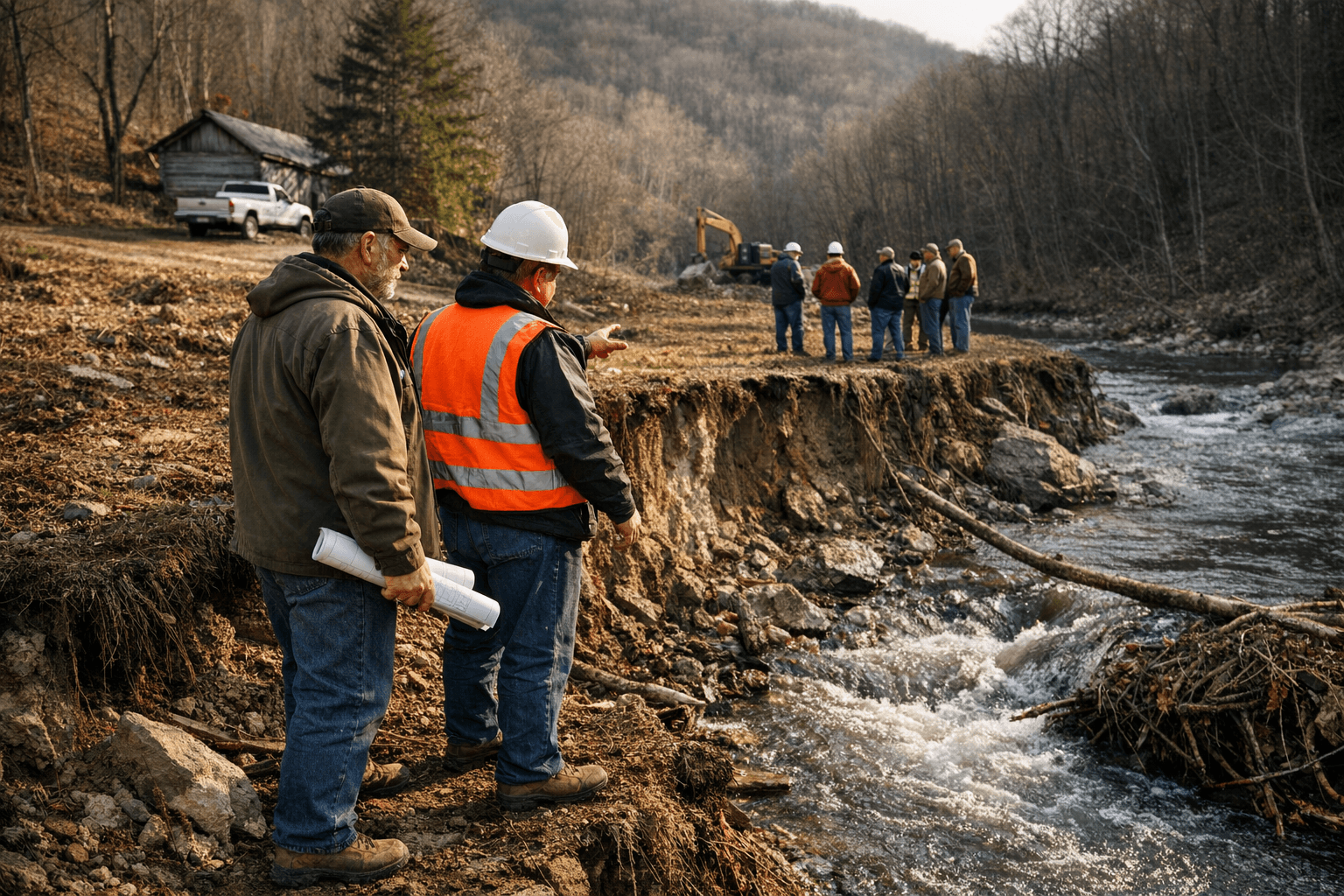
Continuously Updated Guide Helps Perry County Residents Access Flood Recovery Services
Perry County Emergency is listed in a continuously updated guide collecting local resources to help residents navigate flood recovery, shelters, health services and FEMA aid.
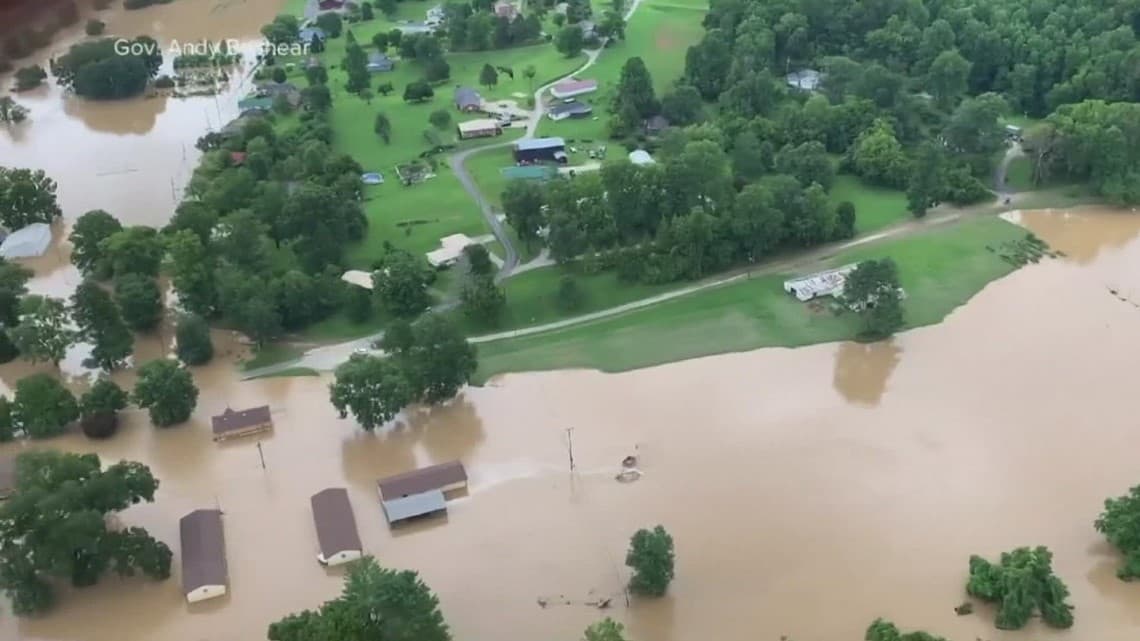
Perry County Emergency appears as the first named entry in a continuously updated guide intended to centralize local flood recovery information, helping residents find shelters, immediate health services and where to apply for federal aid. “Many residents of Perry County continue to need clear, actionable information about local flood recovery, immediate health services, shelters, and where to apply for federal aid.” That sentence frames the guide’s purpose and the shortfall it seeks to fill.
What the guide promises and what is confirmed The guide is described as “continuously updated” and aims to collect the principal local public resources residents should use right now: “Perry County Emergency” is listed explicitly in the original material, though the entry is cut off and requires verification. The stated focus areas are clear: flood recovery, immediate health services, shelters, and federal-aid application assistance. Those are the services residents most frequently need after the widespread flooding that affected eastern Kentucky in 2021 and 2022.
Why this matters in Perry County Appalachia’s larger context helps explain the urgency. “Appalachia is home to a vibrant culture, a fierce sense of pride and a strong sense of love. But it is also marked by the omnipresent backdrop of a declining coal industry.” County-level data cited in the reporting makes the local stakes concrete: “In Perry County, Kentucky, where one of eastern Kentucky’s larger cities, Hazard, is located, nearly 30% of the population lives under the federal poverty line.” That poverty rate, combined with extreme income inequality — “the average income of the top 1% of workers in Perry County is nearly US$470,000 – 17 times more than the average income of the remaining 99%” — constrains households’ ability to recover after disaster.
What residents face on housing and land The housing market and land availability are structural obstacles to recovery. The reporting notes that desirable land is scarce and prices have spiked, which “makes it increasingly difficult for both individuals and housing developers to purchase land and build.” A local anecdote captures the scale of change in rural land prices: “If you paid $5,000 for 30 acres 40 years ago, why won’t you sell that for $100,000? Nope, [they want] $1 million.” After two major flood years, the outcome was severe: “Eastern Kentucky’s 2021 and 2022 floods turned this into a full-blown housing crisis, with 9,000 homes damaged or destroyed in the 2022 flood alone.”
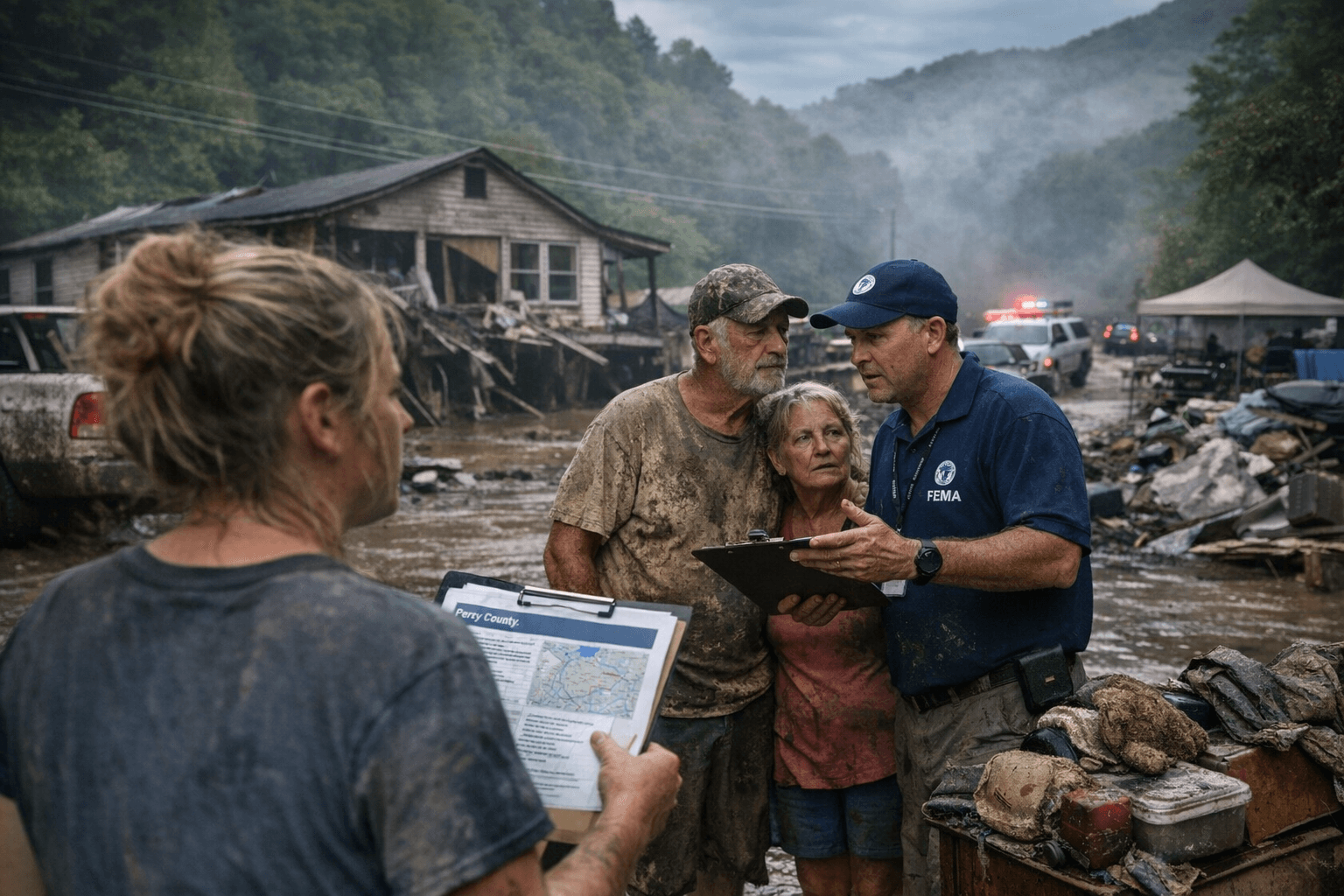
Insurance and federal aid realities The financial safety net many residents expected was thin. “Most homeowners did not have flood insurance to assist with rebuilding costs.” That lack of private coverage raised reliance on federal assistance, but that aid often fell short. “While many applied to the Federal Emergency Management Agency for assistance, the amounts they received often did not go far.” The reporting includes FEMA program caps as reported: “The maximum aid for temporary housing assistance and repairs is $42,500, plus up to an additional $42,500 for other needs related to the disaster.” Those caps set a ceiling but, as noted, individual awards frequently fail to cover full rebuilding costs.
How to use the continuously updated guide, step by step Because the guide’s stated role is to centralize resources, use it as a first stop to identify which local offices and shelters are active and where to begin federal registration. Key steps to follow, in sequence: 1) Locate the current guide entry for local resources, beginning with the Perry County entity listed as “Perry County Emergency,” and confirm the guide’s latest update. 2) Document damage to properties thoroughly, with photos and notes on dates and losses, to support FEMA and other applications. 3) Register with FEMA and other disaster programs as applicable, and compile receipts and contractor estimates for repairs to support claims. 4) Seek immediate health services and shelter options listed in the guide rather than waiting, especially if you or household members need medical attention or safe lodging.
- Keep hard and digital copies of damage photos, receipts and correspondence related to the flood and relief applications.
- Ask every agency you contact for a written or emailed confirmation of your application or appointment.
- Prioritize medical needs: the guide’s stated focus on “immediate health services” means clinics and emergency medical providers should be a near-term stop for injuries, chronic condition management and communicable disease prevention after flooding.
- If FEMA assistance is awarded, compare the amount to contractor estimates and consult local nonprofits for gap funding because “the amounts they received often did not go far.”
Practical tips highlighted in the guide
Shelters, health services and local support: what the guide should list The continuously updated guide is intended to point users to local shelters and immediate health services. The original material confirms those are included as focus areas but does not enumerate specific shelters, clinics or organizations. Given the housing crisis described — “There was no empty housing or empty places for housing,” one resident involved in local flood recovery efforts told me. “It just was complete disaster because people just didn’t have a place to go.” — a central, current list of shelter locations, health clinics in Hazard and surrounding communities, and faith-based or nonprofit staging areas would be essential.
- The exact entity referenced by the truncated entry “Perry County Emergency” and its current contact information.
- Where the guide is hosted, who maintains it, and how frequently it is updated.
- County-level damage figures for Perry County specifically, to contextualize the regional 9,000-home figure cited for the 2022 floods.
- Current FEMA program rules and whether the reported maximums remain $42,500 for temporary housing and repairs plus up to $42,500 for other needs.
Known gaps, verification needed and follow-up steps
The guide as supplied in the material contains important content but also several critical gaps that must be verified before relying on it as a complete roadmap. The original listing of “Perry County Emergency” is truncated and may not reflect the full agency name, contact information or the correct office to reach. No URL, phone number, publisher or last-updated timestamp for the continuously updated guide is provided. Journalists and local leaders should confirm:
How local institutions can help bridge gaps County officials in Perry County, the city government of Hazard, state emergency management and local nonprofit coalitions should make the guide fully actionable by publishing named points of contact, a timestamped update log, shelter addresses, medical clinic hours and FEMA registration assistance locations. The guide’s stated mission, summarized in the original material, is to assemble exactly those items: “This guide collects the principal local public resources residents should use right now: Perry County Emergency” is the opening of that list; completing it with verified contacts will turn a statement of intent into an operational tool.
A final, practical note for recovery planning The combination of nearly 30% poverty in Perry County, severe inequality and a housing market constrained by scarce land has amplified the post-flood recovery gap. FEMA ceiling amounts provide some relief, but as reported, “the amounts they received often did not go far.” Use the continuously updated guide to find immediate shelter and health services, document damage comprehensively, and coordinate with county officials and local nonprofit groups for supplementary help. The guide’s value will depend on completing the missing contact and hosting details and keeping the list current as recovery work continues.
Sources:
Know something we missed? Have a correction or additional information?
Submit a Tip