Could stellarators unlock fusion energy, inside the world’s largest test machine
The world’s biggest stellarator is testing a harder path to fusion, one that may be more stable than flashier designs but still sits far from the power grid.
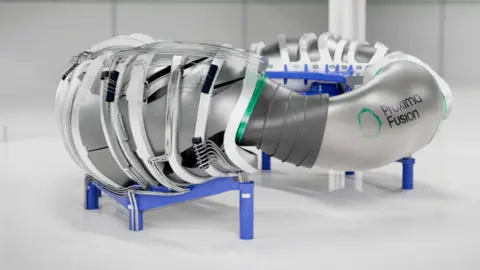
The appeal of a stellarator is simple: if complexity buys stability, it could make fusion easier to run for long stretches than the more familiar tokamak. That is the hope driving renewed attention to the world’s largest stellarator, Wendelstein 7-X, a machine built to prove that a notoriously difficult design might still be the better route to steady clean power.
Why stellarators matter
The stellarator idea goes back to 1951, when Lyman Spitzer at Princeton University proposed a magnetic confinement device for fusion as part of Project Matterhorn, Princeton’s controlled thermonuclear research program. The concept was bold from the start: instead of relying on a simpler loop of magnets, a stellarator uses coils twisted into intricate shapes to hold a superhot plasma in place. That extra geometric complexity is the whole bet, because it can help the plasma stay confined without the same level of pulsing and instability that has challenged other approaches.
That promise comes with a cost. Stellarators are hard to design, hard to build, and hard to model, because every coil must be shaped with extreme precision. The reward, if the physics continues to hold up, is a machine that may be better suited to continuous operation. In a field where reliability matters as much as raw performance, that distinction is crucial. A fusion system that can run steadily, rather than in bursts, is more relevant to real-world electricity than a laboratory device that only shines briefly.
Inside Wendelstein 7-X
The best-known modern stellarator is Wendelstein 7-X, in Greifswald, Germany. It began operation in December 2015, produced its first plasma on December 10, 2015, and its first hydrogen plasma on February 3, 2016. The machine is the world’s largest stellarator, with a diameter of around 16 meters, and it was assembled as an engineering and modeling feat as much as a physics experiment.
Its design target is daunting: confine plasma at roughly 100 million degrees Celsius. At that temperature, ordinary materials would fail immediately, so the machine depends on magnetic fields sculpted by precision-built coils. The main assembly concluded in 2014, and the project’s investment costs from 1995 through its final configuration in December 2021 totaled 460 million euros. When site, personnel, material, and operating costs are included, the total for that period reached 1.44 billion euros.
Those numbers matter because they show what stellarator development really demands. This is not a low-cost shortcut to fusion. It is a long-term commitment to a design philosophy that sacrifices simplicity in the hope of gaining better plasma control. In practical terms, the machine is asking whether elaborate engineering can do what more streamlined concepts have not yet done well enough: keep fusion conditions stable long enough to matter.
Why the records matter
Wendelstein 7-X is not just a showcase machine. In May 2025, it achieved a world record for triple product in long plasma discharges, and in 2025 the Princeton Plasma Physics Laboratory reported that the machine had set new performance records in fusion research. Triple product is one of the most important measures in the field because it tracks how close a fusion device is to net energy gain. When the triple product rises, the field gets closer to the threshold where fusion becomes energetically meaningful rather than merely scientifically impressive.
The machine’s progress is not being explained by luck alone. A 2021 Nature study reported evidence that W7-X’s optimized magnetic design reduced neoclassical energy transport, which helps explain why the device has achieved better confinement. In plain terms, the magnetic geometry appears to be doing real work, limiting the ways energy leaks out of the plasma. That is the central argument for stellarators: if the design can better control loss channels, it may eventually compensate for the difficulty of building it.
The result is a more serious debate than stellarators have often received. For years, they were seen as a technically fascinating but unwieldy branch of fusion research. W7-X has changed that perception by showing that the hard path can produce measurable gains, even if the machine is still experimental.
Where fusion stands now
The renewed attention to stellarators sits inside a broader surge in fusion optimism. In December 2022, the National Ignition Facility at Lawrence Livermore National Laboratory announced fusion ignition, meaning it produced more energy from the fusion reaction than the laser energy delivered to the target. That was an important scientific milestone, and it helped pull fusion back into the center of public debate.
But ignition in a laboratory is not the same thing as a power plant on the grid. The leap from a single high-profile experiment to a system that can supply reliable electricity involves efficiency, durability, maintenance, fuel handling, and cost. A 2026 Nature Energy analysis argued that reductions in the cost of fusion power may be overly optimistic, a warning that cuts through the excitement. Even if the physics improves, the economics may remain punishingly hard.
That is where stellarators’ trade-off becomes most interesting. Tokamaks have long dominated fusion discussions because they have been more familiar and, in many cases, easier to pursue. Stellarators, by contrast, ask for harder engineering up front in exchange for the possibility of steadier operation later. If that trade proves right, it could matter not just for scientific prestige but for the everyday reality of electricity systems that need dependable, scalable, low-carbon power.
For now, Wendelstein 7-X stands as the most convincing argument that the less glamorous route may still be the more practical one. It has already shown that precision magnetic design can improve confinement and drive performance records. What it has not yet shown is the one result that ultimately counts for households, utilities, and grids: a fusion plant that can reliably turn all that technical promise into affordable electricity.
This article was produced by Prism’s automated news system from verified source data, official records, and press releases, then run through automated quality and moderation checks before publishing. The system is built and supervised by the people who set the standards it runs under. Read our full AI policy.
Did this article answer your question?


