Council Tax Bills in England Set to Rise by Up to 4.99% in April
Average council tax bills in England hit £2,392 in April, a 4.9% rise, with seven councils cleared to charge up to 9% amid financial crisis.
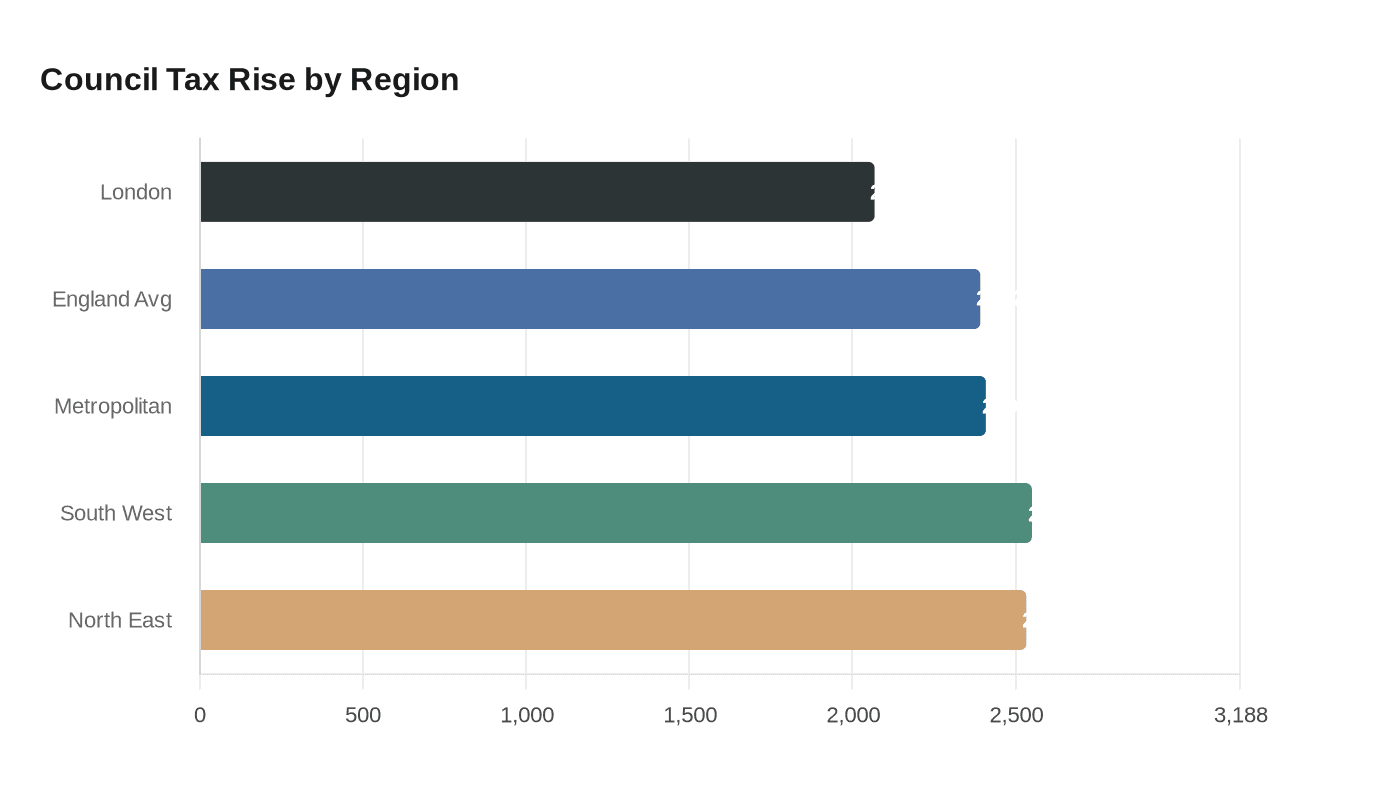
The average Band D council tax bill in England will reach £2,392 from April, an increase of £111, or 4.9%, on last year's figure, according to official statistics published today by the Ministry of Housing, Communities and Local Government. The 4.9% average rise is the lowest in three years; the increase was 5.0% last year and 5.1% the year before.
Of the 384 authorities subject to referendum principles, 274 used the maximum flexibility available to them, with a further 50 close to the maximum, while 21 authorities either made no change or decreased their Band D council tax. The 4.99% ceiling, which comprises a 2.99% core increase plus a 2% adult social care precept, has been the legal maximum permitted in England since April 2023, up from a previous cap of 2.99%. Councils have pushed to the limit largely to protect social care and children's services, both of which face soaring demand.
Seven local authorities secured government permission to go further still. North Somerset Council, Shropshire Council, and Worcestershire County Council were granted a maximum of 9%, comprising 2% on adult social care and 7% on other expenditure. Rises of 7.5% have also been permitted in Trafford, Warrington and Windsor & Maidenhead, while Bournemouth, Christchurch and Poole is expected to implement a 6.75% increase. The government maintains that even at these elevated rates, bills in those areas remain below the national average.
Shropshire's case illustrates how acute the underlying pressure has become. Following years of real-term reductions in funding from central government, Shropshire Council approved an 8.99% council tax rise at a full council meeting on 26 February 2026, with the increase taking effect from 1 April. The rise will bring in around an additional £8.8 million, reducing the amount the council needs to borrow; without it, the council said its financial situation would become increasingly precarious and it risked being unable to approve a legal balanced budget, which would force a Section 114 declaration. North Somerset Council Leader Cllr Mike Bell was equally blunt: "The Government's £6m cut to our grant is almost pound for pound the £5.9m we must raise through this exceptional council tax increase, this is a decision made in Westminster and Whitehall, and paid for by local residents."
Regional variation is significant: the average Band D figure will be £2,068 across London, a rise of £87 or 4.4%, and £2,409 in metropolitan areas, up £120 or 5.2%. Band D bills are expected to average £2,550 in the South West and £2,533 in the North East. The Times noted that for the first time every region across England and Wales will see standard Band D properties exceed £2,000 from 1 April.
The April council tax rise does not arrive in isolation. The government published the council tax levels set by local authorities in England for 2026-27 today, the same month that Ofgem's energy price cap rises by £111, taking the average annual energy bill to £1,849 for a typical household. Mobile phone, broadband and water bills are also rising simultaneously.
Some households may be paying more than they need to. Qualifying households can apply for discounts of between 25% and 100% off their bill, and those already on reduced rates should contact their council to confirm eligibility. Consumer expert Martyn James, quoted by the Guardian, offered one immediate practical step for those under pressure: "If money is tight, why not ask the council to spread the money over 12 months instead?" Council tax is normally billed over ten months, and many councils will agree to the longer schedule on request.
An MHCLG spokesperson said councils "are responsible for their own council tax levels" and the government is "clear they should keep taxes on working people as low as possible," adding that £78 billion has been made available for local finances next year, with the majority of money unringfenced so local leaders can decide how best to spend it. The seven councils granted above-cap increases received less than they originally requested, and the government claims that even with these hikes, bills in those areas will remain below the national average.
This article was produced by Prism’s automated news system from verified source data, official records, and press releases, then run through automated quality and moderation checks before publishing. The system is built and supervised by the people who set the standards it runs under. Read our full AI policy.
Did this article answer your question?

