Country Joe McDonald, Whose Fixin’-to-Die Rag Became an Anthem, Dies
Country Joe McDonald, frontman of Country Joe & the Fish, died at 84; his Fixin’-to-Die Rag and infamous Woodstock sing-along shaped Vietnam-era memory.
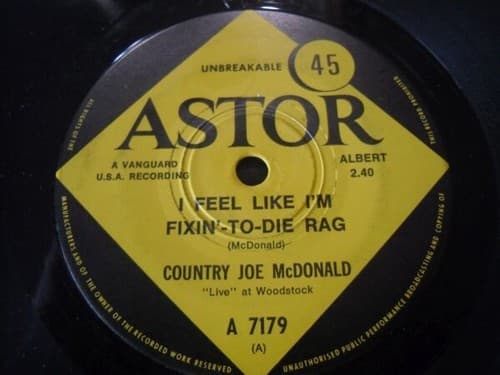
Country Joe McDonald, the singer-songwriter who led Country Joe & the Fish and turned a rowdy sing-along into one of the Vietnam era’s most enduring protest moments, died at 84 on March 8, 2026. His death has revived attention to the cultural and civic aftershocks of the antiwar movement and to how the nation has recognized veterans across generations.
McDonald rose from the Bay Area’s psychedelic rock scene and helped crystallize opposition to the Vietnam War with the song variously titled “Feel-Like-I’m-Fixin’-to-Die Rag” or “I-Feel-Like-I’m-Fixin’-to-Die Rag.” The tune was first released in 1967; label executives worried its antiestablishment verses would preclude radio play, so it became the title track of the band’s second album, I-Feel-Like-I’m-Fixin’-to-Die. During the recording session McDonald improvised what became the “F-I-S-H cheer,” an opening rah-rah that would come to define the band’s public persona and, briefly, attract police scrutiny at shows.
At Woodstock in 1969, McDonald walked back on stage alone and, decked out in what a retrospective account described as a regulation army jacket with long hair, a hoop earring, a paisley headband and a handlebar mustache, launched the crowd into the infamous chant. He called out, “Give me an F!” and audiences, variously estimated at 300,000 to half a million strong, joined in a sing-along preserved in Michael Wadleigh’s Oscar-winning 1970 documentary, Woodstock. The three-minute acoustic segment became inseparable from the festival’s image and from the era’s protest soundtrack; McDonald later quipped, “That Woodstock generation takes care of its own.”
McDonald’s relationship with military service was complicated and reflected broader tensions in how America treated its veterans. He enlisted in the U.S. Navy at 17, served as an air traffic controller at the Atsugi, Japan, facility and received an honorable discharge in 1962. He never served in Vietnam but referred to himself as a “Vietnam era veteran.” Decades after Woodstock he reframed his best-known song and other material for audiences reckoning with the war’s human cost: in 1986 he issued the album Vietnam Experience, reusing the title track and including songs such as “Agent Orange Song,” “Vietnam Never Again” and “Welcome Home,” the latter conceived as a musical nod to those who wore tropical fatigues.

McDonald also participated in public events tied to veteran recognition. One Los Angeles celebration billed as “the official welcome home celebration for our Vietnam veterans” planned a Forum-stage finale featuring a song McDonald wrote for the occasion and promises of red, white and blue balloons and confetti “as if it were a ticker-tape parade that the Vietnam veterans never had,” according to organizer Joie Talley. That dual life as provocateur and participant in veteran ritual underscored a larger civic dynamic: protest can both criticize the state and later serve as a mechanism for public healing and acknowledgment.
His work underscores how cultural expression intersects with public health and social equity. Songs that mobilized public sentiment helped push issues such as veteran recognition into view, shaping policy debates about care, benefits and the long-term health burdens of war. As institutions continue to address mental health, exposure to toxins and disparities in veteran services, McDonald’s career remains a reminder of how art, civic action and health policy can converge.
No further details, including a cause of death or arrangements, have been disclosed. His performances and recordings remain widely available on film and record, and the Woodstock segment endures as a touchstone of protest-era memory.
This article was produced by Prism’s automated news system from verified source data, official records, and press releases, then run through automated quality and moderation checks before publishing. The system is built and supervised by the people who set the standards it runs under. Read our full AI policy.
Did this article answer your question?

