Court pauses immediate refunds for IEEPA tariffs as CBP seeks 45 days to build system
The U.S. Court of International Trade suspended a March 5 order requiring immediate tariff refunds, giving Customs and Border Protection time to set up a refund process that could take weeks.
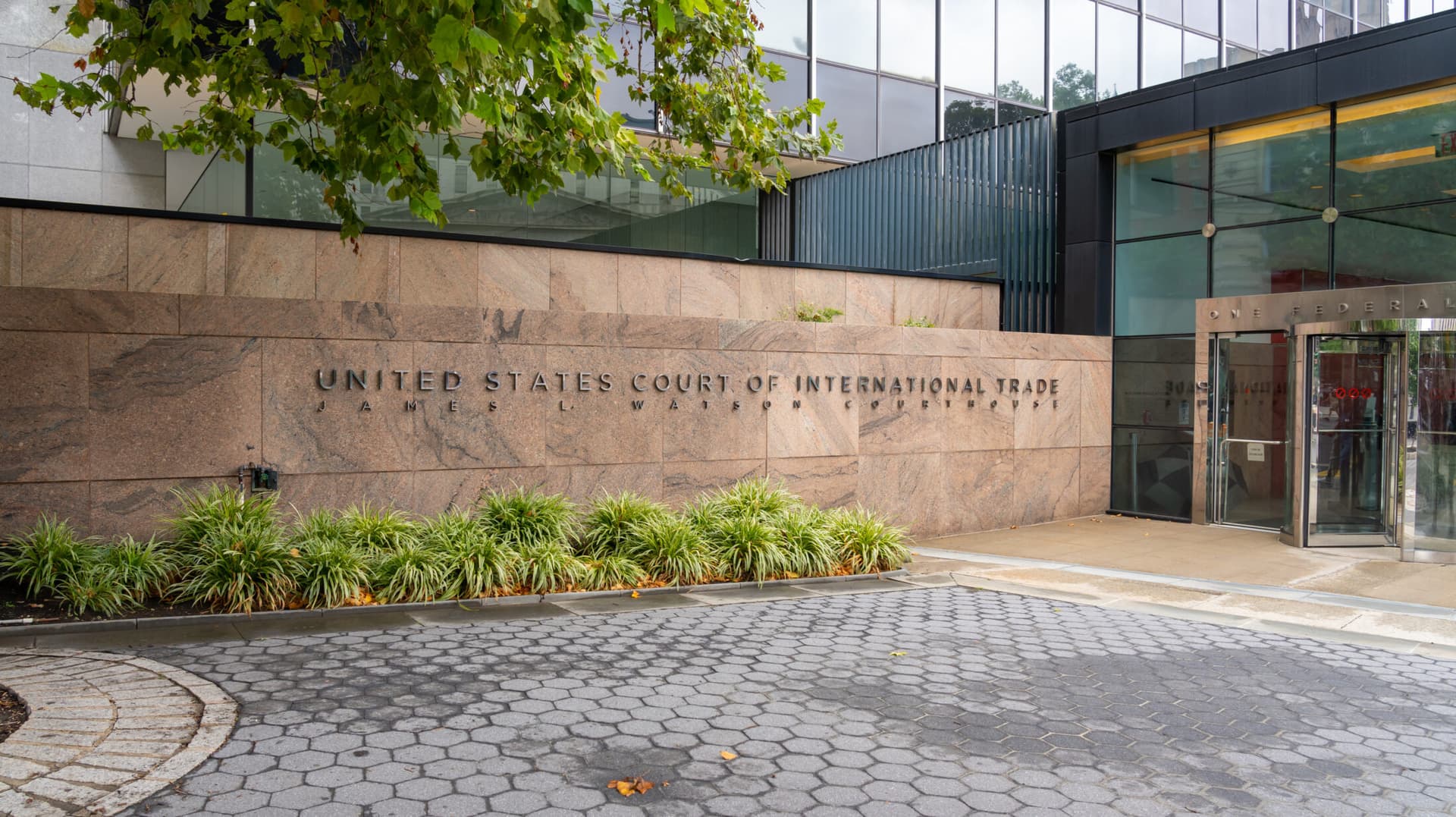
The U.S. Court of International Trade on March 6 suspended its March 5 amended order to the extent it "requires immediate compliance," halting a directive that had told U.S. Customs and Border Protection to begin issuing refunds of tariffs imposed under the International Emergency Economic Powers Act. The action follows a closed conference in Atmus Filtration, Inc. v. United States and a CBP filing saying the agency cannot immediately implement the court's mandate.
CBP, in a brief to the court signed by Brandon Lord, Trade Policy Program Executive Director, told Judge Richard Eaton the agency would need roughly 45 days to establish an automated system to accept and validate refund declarations. The court said the suspension "gives the government time to address the operational issues described by CBP while preparations for refund processing continue," while reiterating that the suspension does not alter its legal finding that IEEPA tariffs were invalid.
The background is stark: the U.S. Supreme Court on February 20 found that IEEPA did not lawfully authorize the tariffs, and the CIT had concluded that "[a]ll importers of record whose entries were subject to IEEPA duties are entitled to the benefit" of that decision. The March 5 order moved to translate that legal remedy into payments to importers, but CBP warned the agency lacks the ready infrastructure to process what the court described as "potentially millions of entries."
Customs court filings set out the planned operational workflow in detail. "Importers would submit a declaration through ACE listing entries on which IEEPA duties were paid. The system would then validate those entries, recalculate duties without the IEEPA tariffs, compute applicable interest, and aggregate refunds by importer before transmitting the certified refund amounts to the U.S. Department of the Treasury for electronic payment." The court noted CBP "expressed confidence that the system can be developed," but also acknowledged "operational, legal, and technical considerations remain" and that reviewing declarations and issuing payments could take significant time.

Practical implications for importers are immediate. CBP's 45-day timeline is the agency's own estimate for a functioning intake and validation system; Politico additionally reported that the administrative process known as "liquidation" gives importers 314 days before a tariff payment is finalized, a timing constraint that may shape who can seek reliquidation and when. Treasury will only receive certified refund amounts after CBP completes validation and certification, adding another handoff in the payment pipeline.
The legal fight is not over. The court warned that "the Government is expected to appeal the decision to the United States Court of Appeals for the Federal Circuit and seek a stay of the ruling while the appeal is pending." "If the appellate court grants a stay, implementation of the United States Court of International Trade’s order—including the liquidation or reliquidation of entries without the IEEPA duties and the issuance of refunds—would be paused until the appeal is resolved."
For importers and trade finance providers the ruling remains a legal victory with practical delays: the Supreme Court stripped the authority to collect the tariff, but the cash relief will depend on CBP building and operating a complex ACE-based system, and on whether the government secures an appellate stay. Until those steps are resolved, the court’s underlying legal conclusion stands while the financial remedy is deferred.
This article was produced by Prism’s automated news system from verified source data, official records, and press releases, then run through automated quality and moderation checks before publishing. The system is built and supervised by the people who set the standards it runs under. Read our full AI policy.
Did this article answer your question?