Court to Issue Order Seeking Golfer's Medications, Dosage and Driving Warnings
Martin County prosecutors will subpoena Tiger Woods' full pharmacy records on April 22, seeking pill bottle warnings about driving while taking his hydrocodone prescription.
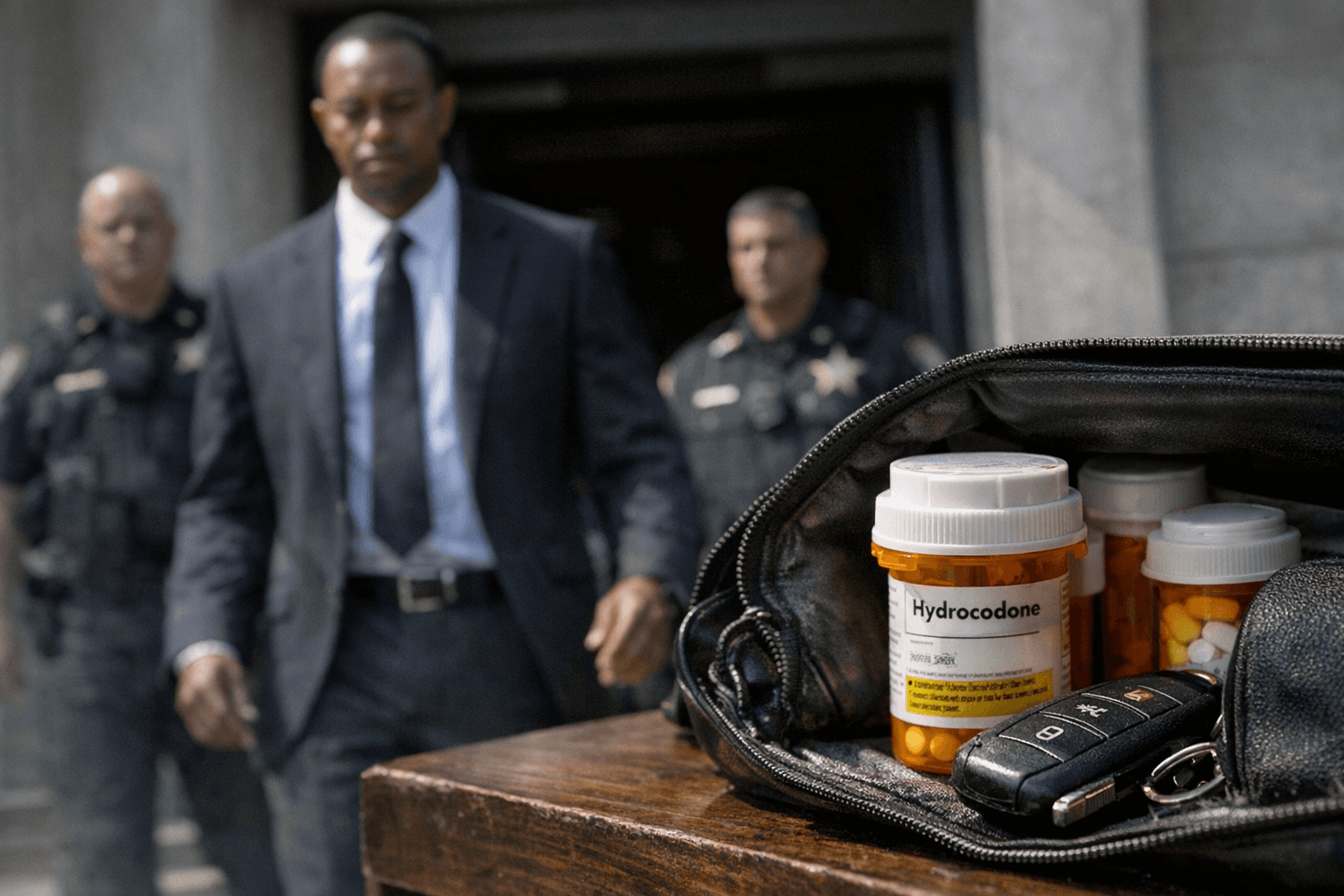
Martin County prosecutors filed court documents Tuesday announcing they will subpoena Tiger Woods' complete prescription drug records from Lewis Pharmacy in Palm Beach, with the order set to be issued April 22. The move, coming roughly 12 days after Woods' March 27 rollover crash near Jupiter Island, Florida, signals how central his medication history has become to the state's case against the 15-time major champion.
The court filing states Florida will seek "copies of any and all prescription medication on file" to include the date and time each prescription was filled, the type of prescription, the number of pills, the dosage amount, all special instructions, the date of next refill, and "all warnings including but not limited to operating a motor vehicle while taking the prescription" from January 1, 2026 through March 27, 2026.
The scope of that request reveals the prosecutorial strategy. In prescription-drug DUI cases, Florida must prove that a driver's normal faculties were impaired. Unlike alcohol DUI prosecutions, there is no per se legal limit for opioids in the blood, which puts a premium on circumstantial evidence. A warning label explicitly telling a patient not to operate a motor vehicle while taking a medication can help establish that the defendant knew, or should have known, the drug would affect his ability to drive safely.
At the scene of the March 27 crash, a Martin County deputy told Woods, "At this time, I do believe your normal faculties are impaired, OK? And you're under an unknown substance, OK, so at this time you are under arrest for DUI." Woods told deputies he had not consumed any alcohol but had taken "a few" prescription medications earlier that day. Two white pills in his pocket were identified as hydrocodone, the affidavit said, a prescription opioid used to treat severe, chronic pain that can cause slowed breathing. A breath test taken at the Martin County Jail registered 0.000 on both samples, indicating no alcohol was detected.
The crash unfolded on a residential street when Woods' Land Rover crossed double solid lines while attempting to pass a slowing truck with a trailer, entering oncoming traffic. The deputy concluded that Woods' normal faculties were impaired, making him unable to operate a vehicle safely. Woods was formally arrested just after 3 p.m.
Woods was charged with two misdemeanors: driving under the influence and refusal to submit to a lawful test. He pleaded not guilty to both charges. His refusal to submit to chemical testing carries its own legal consequences under Florida's Trenton's Law, a statute created after a fatal DUI crash in which a driver's refusal made it difficult for prosecutors to prove impairment.
Any objections to the subpoena must be filed with the State Attorney's Office within 10 days. Neither Lewis Pharmacy nor Woods' attorney, Doug Duncan, immediately responded to emails seeking comment. That 10-day window represents the procedural safeguard that allows the defense to challenge the breadth of the pharmacy records demand before any records are turned over.
The subpoena's three-month scope, spanning the full year up to the date of arrest, is itself legally significant. A single pill count on the day of the crash tells prosecutors little about patterns of use; the refill dates and dosage history can reveal whether Woods was taking more than prescribed or obtaining overlapping prescriptions.
This was Woods' second DUI arrest. He was previously arrested for DUI in 2017 after being found asleep in his car with the engine running in a lane of traffic. He pleaded guilty to reckless driving, which led to a year of probation, 50 hours of community service, a $250 fine, and an agreement to undergo regular drug testing. Duncan also represented Woods in that 2017 case, in which prescription drugs including hydrocodone were found in his system.
A judge granted Woods permission to travel out of the country for "comprehensive in patient treatment," with the motion filed in Martin County court arguing the 82-time PGA Tour winner cannot effectively get the treatment he needs in the United States due to "public exposure." Woods' next court hearing is May 5.
This article was produced by Prism’s automated news system from verified source data, official records, and press releases, then run through automated quality and moderation checks before publishing. The system is built and supervised by the people who set the standards it runs under. Read our full AI policy.
Did this article answer your question?
.jpg&w=1920&q=75)