Courts question Trump tariffs, Iran crisis deepens pressure on White House
A trade court weighed Trump’s 10% global tariff as judges signaled doubt, while an Iran ceasefire and weak polls added pressure on the White House.
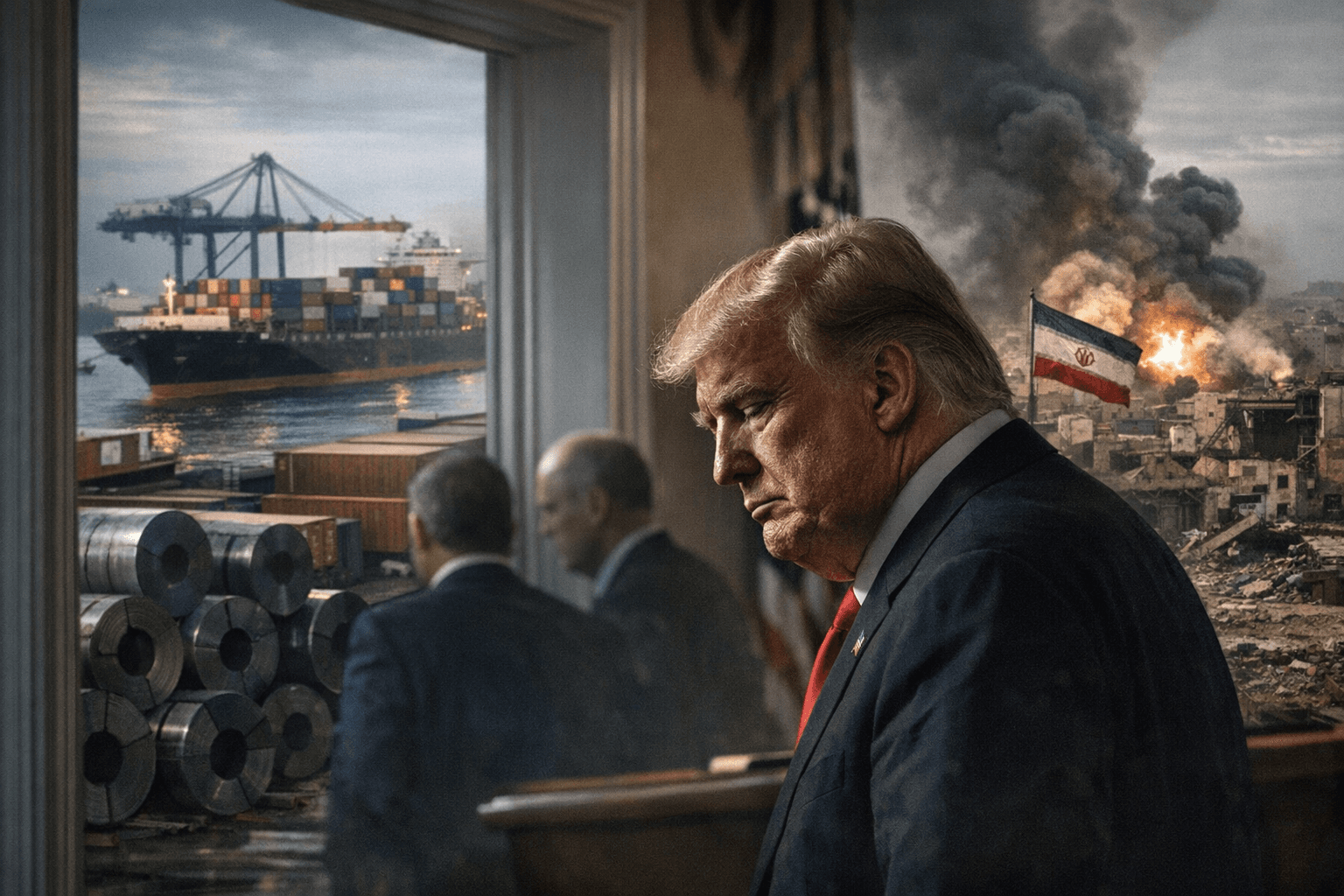
A federal trade court’s scrutiny of Donald Trump’s 10% global import tax put the legal reach of presidential power back in the spotlight, with judges weighing whether a 1974 trade law can justify sweeping tariffs tied to a trade deficit. The challenge, brought by 24 mostly Democratic-led states and two small businesses, threatens to upend the tariff that went into effect on February 24 and could ripple through importers, consumers and the White House’s wider trade agenda.
The hearing came after the Supreme Court’s February 20 ruling in Learning Resources, Inc. v. Trump, which held that the International Emergency Economic Powers Act does not authorize the president to impose tariffs. That decision forced the administration onto a new legal theory, and the questioning at the U.S. Court of International Trade suggested skepticism that Trump can use a different statute to reach the same broad result. The outcome could shape not only the tariff itself but also how far future presidents can push executive authority over trade.
The stakes go beyond customs duties. Businesses that rely on overseas goods are left facing uncertainty over pricing, supply contracts and inventory plans while the case moves forward. For the administration, a ruling against the tariff would be another sharp limit on a trade policy that Trump has presented as central to his economic pitch, even as the courts have blocked the president in a number of other cases.
The tariff fight landed as Trump faced fresh pressure on foreign policy after he announced a U.S.-Iran ceasefire on April 7. Reports of U.S. aircraft losses in Iran intensified scrutiny of the conflict, and Senate Democratic Leader Chuck Schumer said on April 8 that lawmakers would try again to force a vote requiring congressional approval for further attacks. The episode added to a growing sense that Trump’s second-term agenda is meeting resistance not just in the courts, but also on Capitol Hill.
Public opinion has not offered much cushion. AP-NORC polling on March 19 showed Trump with 38% approval and 60% disapproval overall. On foreign policy, he stood at 34% approval and 64% disapproval. On trade negotiations, the numbers were 38% approval and 61% disapproval. Those ratings frame the 2026 midterm year, when all 435 House seats and 35 Senate seats will be on the ballot. With 58 House members already announcing they will not seek reelection as of March 27, the fight over tariffs and war powers is unfolding against a Congress headed for unusual turnover and a White House under mounting pressure.
This article was produced by Prism’s automated news system from verified source data, official records, and press releases, then run through automated quality and moderation checks before publishing. The system is built and supervised by the people who set the standards it runs under. Read our full AI policy.
Did this article answer your question?

