Crimea bans children's holiday travel as war strains daily life
Occupied Crimea has barred organized children's holiday travel until Sept. 1, as fuel cutoffs, outages and drone strikes turn summer life into a wartime calculation.
Russian-appointed authorities in occupied Crimea have barred organized children’s holiday travel to the Black Sea peninsula until September 1, a move that shows how deeply the war has entered ordinary civilian life. Sergey Aksyonov said the restrictions were needed for public safety, underscoring that even summer camps are now being treated as a security risk.
The ban reaches beyond family travel. It covers organized children’s summer camps and tourist activities, a sharp sign that Moscow-backed officials no longer believe they can guarantee the kind of routine holiday environment Crimea spent years marketing to visitors. Russia annexed the peninsula in 2014 and has since treated it both as a strategic rear area and as a domestic tourist destination, but the war has steadily narrowed that room for normal life.

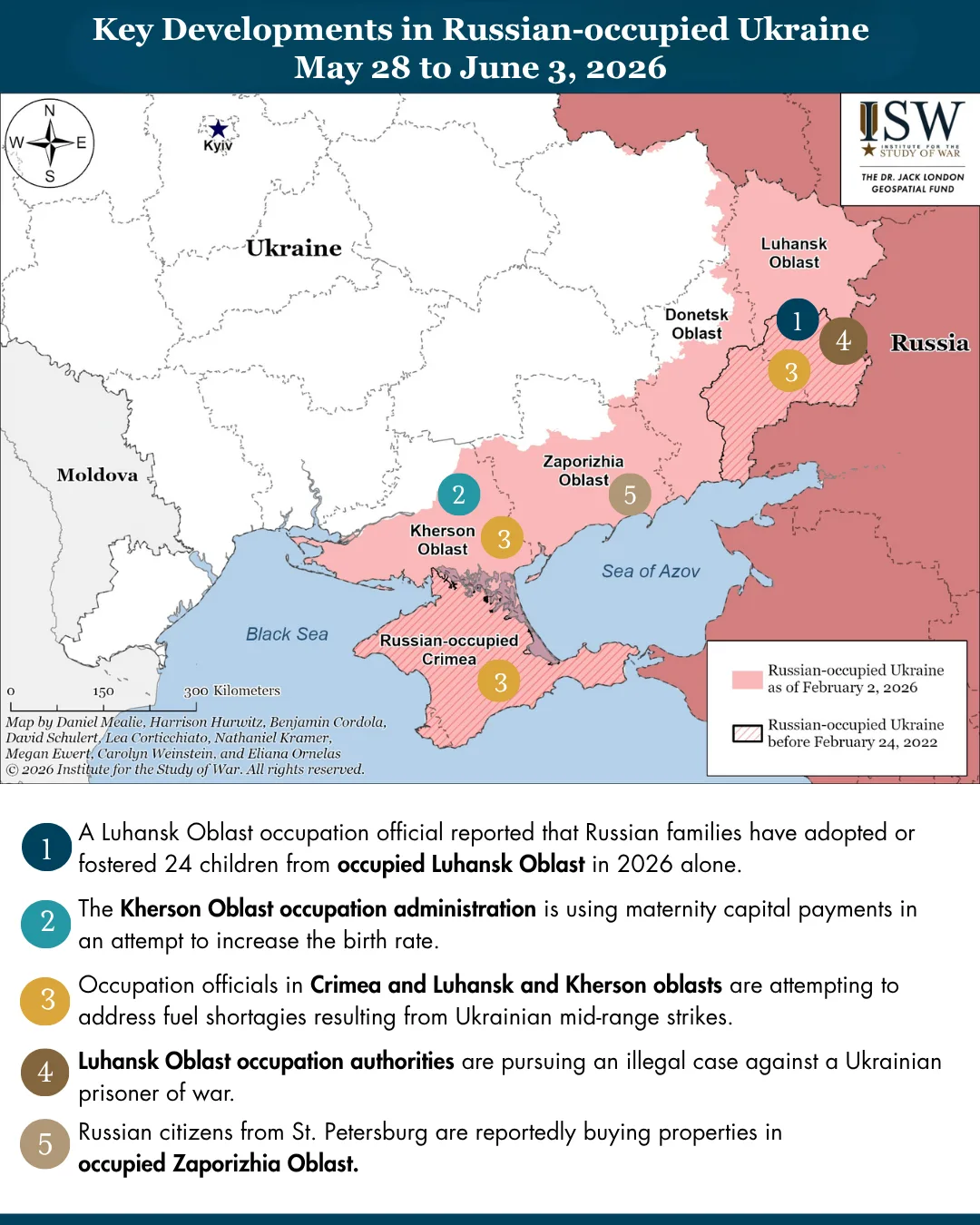
The pressure is visible most clearly in fuel. Fuel stations in Crimea halted all sales to individuals and businesses from Sunday, June 21, after earlier limits of 20 liters per person in Sevastopol and QR codes tied to number plates. A Ukrainian drone attack in Crimea killed five people and wounded 28 the day before the travel ban, adding to the sense of a worsening threat environment. Residents have been left adjusting in practical ways, with one Sevastopol resident saying he would simply drive less and rely more on public transport, walking or biking.
Transport and power have also come under strain. Authorities have reduced the number of night trains, while Krimenergo has announced electricity outage schedules that could affect water supplies, showing how infrastructure disruptions now reach far beyond the military sphere. The peninsula is facing what analysts describe as its worst fuel crisis since 2014, just as the summer vacation season begins and tourism-dependent businesses are most exposed.
Kyiv has long targeted Crimea’s supply lines, including the land corridor from Russia and the Kerch Strait crossings, as part of a broader effort to isolate the peninsula and make the occupation more costly. The holiday ban, the fuel halt and the blackout warnings point to the same conclusion: Crimea is still officially open for business, but the war is making it behave less like a resort and more like a frontline territory.
This article was produced by Prism’s automated news system from verified source data, official records, and press releases, then run through automated quality and moderation checks before publishing. The system is built and supervised by the people who set the standards it runs under. Read our full AI policy.
Did this article answer your question?


