Criminal gangs exploit UK shopfronts to hide illegal drug supply
Mini-marts, barbershops and car washes are giving criminal networks a low-profile front for drugs, while police and regulators struggle to spot what is happening behind the tills.
Criminal gangs are using ordinary shopfronts across the UK to mask illegal drug supply, turning mini-marts and other high-street premises into quiet distribution points that are harder for police and regulators to detect than a house used as a grow site or a van making suspicious drops.
That model is attractive because it blends into everyday commerce. A corner shop, a barbershop or a car wash can move cash, bring in foot traffic and create a normal-looking presence on a busy street, even when the business is part of a wider organised-crime network. In November 2025, an investigation linked a Kurdish crime network to more than 100 mini-marts, barbershops and car washes from Dundee to south Devon, and the Home Office said it would investigate the findings. The same high-street cover can also conceal illicit cigarettes, vapes and illegal working, making the storefront a gateway for multiple offences at once.
The drug trade has been using hidden premises for years. A 2007 investigation found that hundreds if not thousands of cannabis farms had been set up in upmarket houses in the UK, with police raiding a cannabis farm somewhere in Britain every weekday morning. Other reporting has documented a haul of about 168kg of cocaine found in Aylesbury, Bucks, showing how the market reaches far beyond street-corner dealing. County lines gangs have also pushed Class A drugs into towns and villages, spreading the trade into places that once seemed insulated from it.
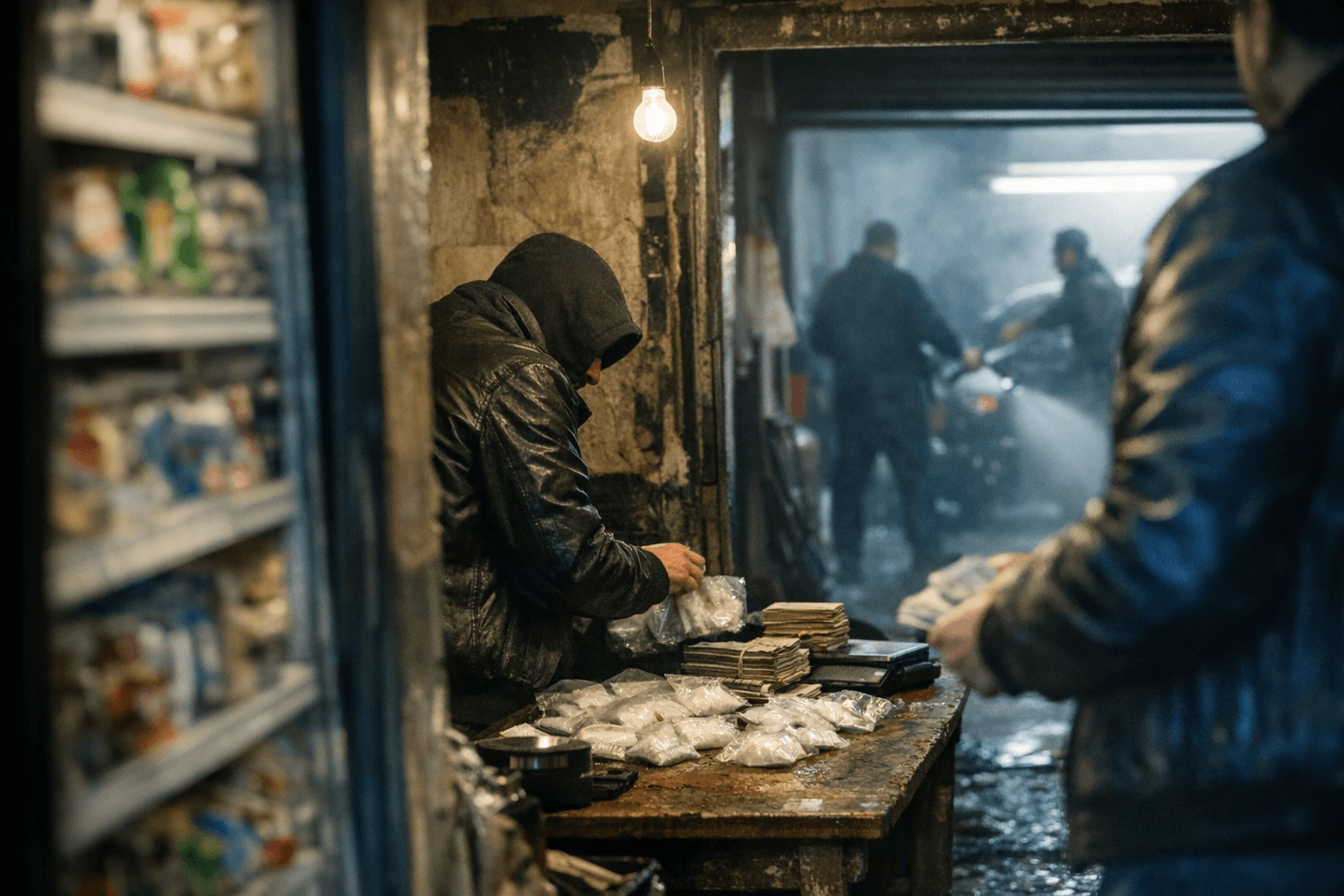
The pattern matters because it exploits enforcement blind spots. Traditional drug policing is often built around suspicious homes, known dealers or vehicles, but retail premises bring a different challenge. Licensing checks may focus on paperwork rather than ownership chains. Inspections can miss what happens after hours. Landlords may collect rent without seeing who truly controls a business, and neighbourhood complaints may not register when a shop appears busy and legitimate. That gives criminal groups room to move drugs, launder proceeds and swap premises faster than authorities can build a case.
The market has repeatedly adapted to regulation shifts. In 2010, a BBC Wales investigation found that so-called legal highs were still being sold over the counter in some High Street stores even after the December 2009 ban. Earlier reporting in 2008 said crack cocaine use was spreading across the UK and had reached record levels, underlining how quickly supply lines and retail tactics can change when one route is blocked. The lesson is stark: when criminal networks can hide behind a cash register, the front door becomes part of the crime.
This article was produced by Prism’s automated news system from verified source data, official records, and press releases, then run through automated quality and moderation checks before publishing. The system is built and supervised by the people who set the standards it runs under. Read our full AI policy.
Did this article answer your question?