CRS warns Nippon Steel purchase of U.S. Steel could reshape supply chains
Congressional Research Service analysis flags risks to U.S. industry, workers, competition and national security-sensitive supply chains from Nippon Steel’s acquisition of U.S. Steel.
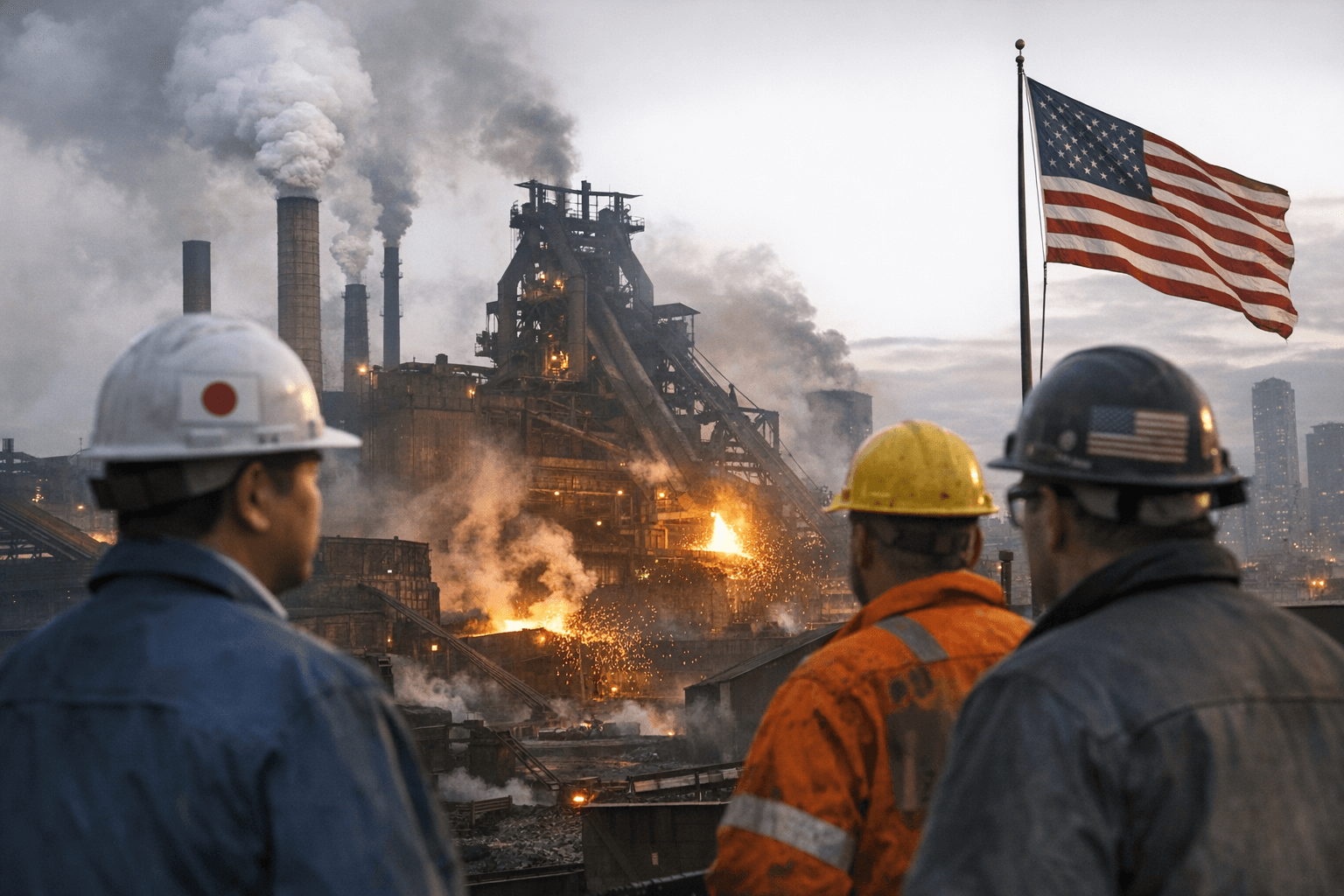
The Congressional Research Service released a detailed analysis on March 4, 2026, assessing Nippon Steel Corporation’s acquisition of U.S. Steel and highlighting “potential implications for the U.S. steel industry, workers, competition and national security‑sensitive supply chains.” The report frames the deal not only as an industrial transaction but as a matter likely to attract congressional and agency scrutiny because of its possible effects on critical manufacturing networks and employment.
The CRS summary, issued to inform lawmakers, pointedly lists industry, labor, competition and national security elements as its scope. It does not, in the public excerpt, provide transaction value, regulatory decisions or a timeline for closing. It also does not specify which product lines or raw-material routes the report judged “national security‑sensitive,” leaving those details to the full text or follow-up briefings that congressional offices typically request.
Outside analysts flagged broader geopolitical and policy implications that could influence Washington’s posture toward the deal. A Nationalaglawcenter excerpt tied concerns about a large Japanese buyer to risks of “losing Japan as a global partner in promoting nuclear safety and nonproliferation measures and in reducing greenhouse gas emissions.” That background is drawn from prior congressional briefings and scholarship on Japan-U.S. strategic cooperation, and it signals that some policymakers will evaluate the transaction through a foreign-policy as well as an industrial lens.
The CRS files further cite long-standing debates inside Japan over energy and national identity that could shape Tokyo’s corporate and diplomatic behavior. As one CRS passage notes, “Japan is undergoing a national debate on the future of nuclear power, with major implications for businesses operating in Japan, U.S.-Japan nuclear energy cooperation, and nuclear safety and nonproliferation measures worldwide.” The report also points to a concrete statistic: “Prior to 2011, nuclear power was providing roughly 30% of Japan’s power generation capacity,” invoked to explain how energy politics and industrial strategy are intertwined.
CRS excerpts referenced contentious episodes around the 2011 reactor meltdowns, reporting that uncertainty after the disasters, rising public alarm about radiation in air, tap water and produce, and perceptions of regulatory dependence on Tokyo Electric Power Company amplified skepticism toward government and industry. The file also reproduces material describing nationalist currents in Japan, citing groups such as Nippon Kaigi Kyokai and noting historical revisionist positions singled out in prior CRS work.
For Congress, regulators and unions, the immediate calculation is practical: how will ownership change affect domestic production, facility-level employment and access to inputs deemed sensitive by defense and industrial planners? The public-facing CRS summary invited those questions by listing workers, competition and national-security supply chains among its core concerns, even as it declined to enumerate remedies or mitigation measures in the excerpt.
The next steps for policymakers will include obtaining the full CRS report, seeking clarifying briefings from the agency, and soliciting responses from Nippon Steel, U.S. Steel and labor representatives. Lawmakers focused on industrial policy and national security are likely to press federal agencies to clarify whether the acquisition warrants formal review and, if so, what structural or operational safeguards might be required to protect U.S. production capacity and strategic supply chains.
This article was produced by Prism’s automated news system from verified source data, official records, and press releases, then run through automated quality and moderation checks before publishing. The system is built and supervised by the people who set the standards it runs under. Read our full AI policy.
Did this article answer your question?

