Cryptographer Adam Back Denies New York Times Report Naming Him as Satoshi Nakamoto
Adam Back shared 67 of Satoshi Nakamoto's rare hyphenation patterns, nearly double the next suspect. He denied being Bitcoin's creator more than 6 times in a two-hour interview.
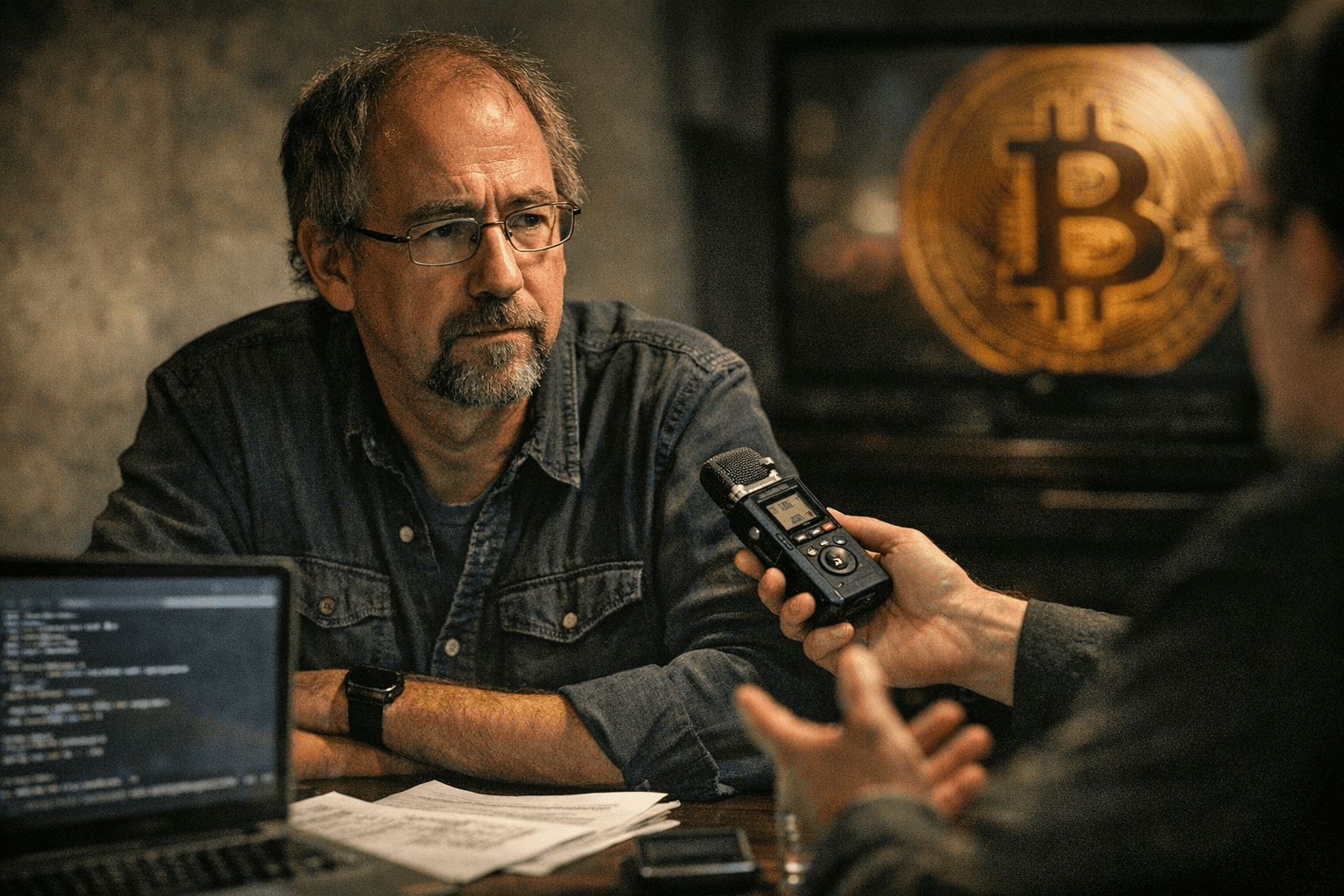
Adam Back, the British cryptographer who invented the proof-of-work system at the heart of Bitcoin's mining process, has flatly rejected claims naming him as Satoshi Nakamoto, the pseudonymous creator of Bitcoin, dismissing the linguistic evidence as attributable to his long and publicly documented career rather than to any hidden identity.
The claims emerged from an investigation by New York Times reporters John Carreyrou and Dylan Freedman, published April 8 after more than a year of research, which named the 55-year-old Blockstream CEO as "the strongest candidate yet" for Satoshi's true identity. Carreyrou is best known for his reporting that exposed the Theranos fraud. The investigation's central argument rested on three independent writing-style analyses drawn from a database of 134,308 posts across the Cypherpunks, Cryptography, and Hashcash mailing lists, each identifying Back as the closest stylistic match to Nakamoto.
One analysis catalogued 325 distinct hyphenation errors in Satoshi's writings and found that Back shared 67 of those patterns, nearly double the count of the next closest suspect. Among all participants analyzed, Back was the only person who both hyphenated the term "proof-of-work" and referenced WebMoney, an obscure Russian digital currency that appears in Satoshi's texts. He was also the only participant to use the phrase "burning the money" in the context of digital coins, and one of just two to use the phrase "partial pre-image," mirroring Satoshi's usage. The investigation drew additional weight from the 2024 COPA v. Craig Wright court case in the United Kingdom, in which emails emerged showing Satoshi had shared an early draft of the Bitcoin white paper directly with Back before its publication.
Back denied being Satoshi more than six times during a two-hour interview in El Salvador, and posted on X that the stylistic similarities are "a combination of coincidence and similar phrases from people with similar experience and interests." His explanation: having written publicly on electronic cash and cryptographic privacy on the Cypherpunks mailing list since approximately 1992, his body of work is simply larger and more susceptible to pattern-matching than that of contributors who posted far less. He added that he does not know Satoshi's true identity and considers the anonymity beneficial for Bitcoin.
The standard of proof that could settle the question is not stylistic but cryptographic: whoever holds Satoshi's original private keys could sign a message in a way no impersonator could replicate. No such signing has occurred. The wallets attributed to Nakamoto hold an estimated one million Bitcoin, untouched since approximately 2011. Any confirmed identification would carry immediate consequences for Bitcoin's markets, for network governance debates, and for who wields credibility in the expanding domain of cryptocurrency policy.
The hunt has accumulated a record of false positives. Newsweek identified California-based scientist Dorian Nakamoto as Bitcoin's creator in 2014; he denied it. Craig Wright spent years claiming the identity with mounting aggression, until Back testified against that claim in the COPA v. Wright trial in February 2024, and a UK High Court judge ruled definitively in March 2024 that Wright had not authored the Bitcoin white paper.
Back is the only person cited by name in that document, published October 31, 2008, for a technical contribution: his Hashcash proof-of-work system. Satoshi Nakamoto vanished from public view around 2011. Seventeen years on, the bar for resolving the question, cryptographic verification rather than linguistic proximity, remains uncleared.
This article was produced by Prism’s automated news system from verified source data, official records, and press releases, then run through automated quality and moderation checks before publishing. The system is built and supervised by the people who set the standards it runs under. Read our full AI policy.
Did this article answer your question?