Cuba defends military conglomerate GAESA amid new U.S. sanctions pressure
Cuba rejected U.S. claims that GAESA is a kleptocratic cash vault, even as a June 5 sanctions deadline threatened hotels, remittances and trade.
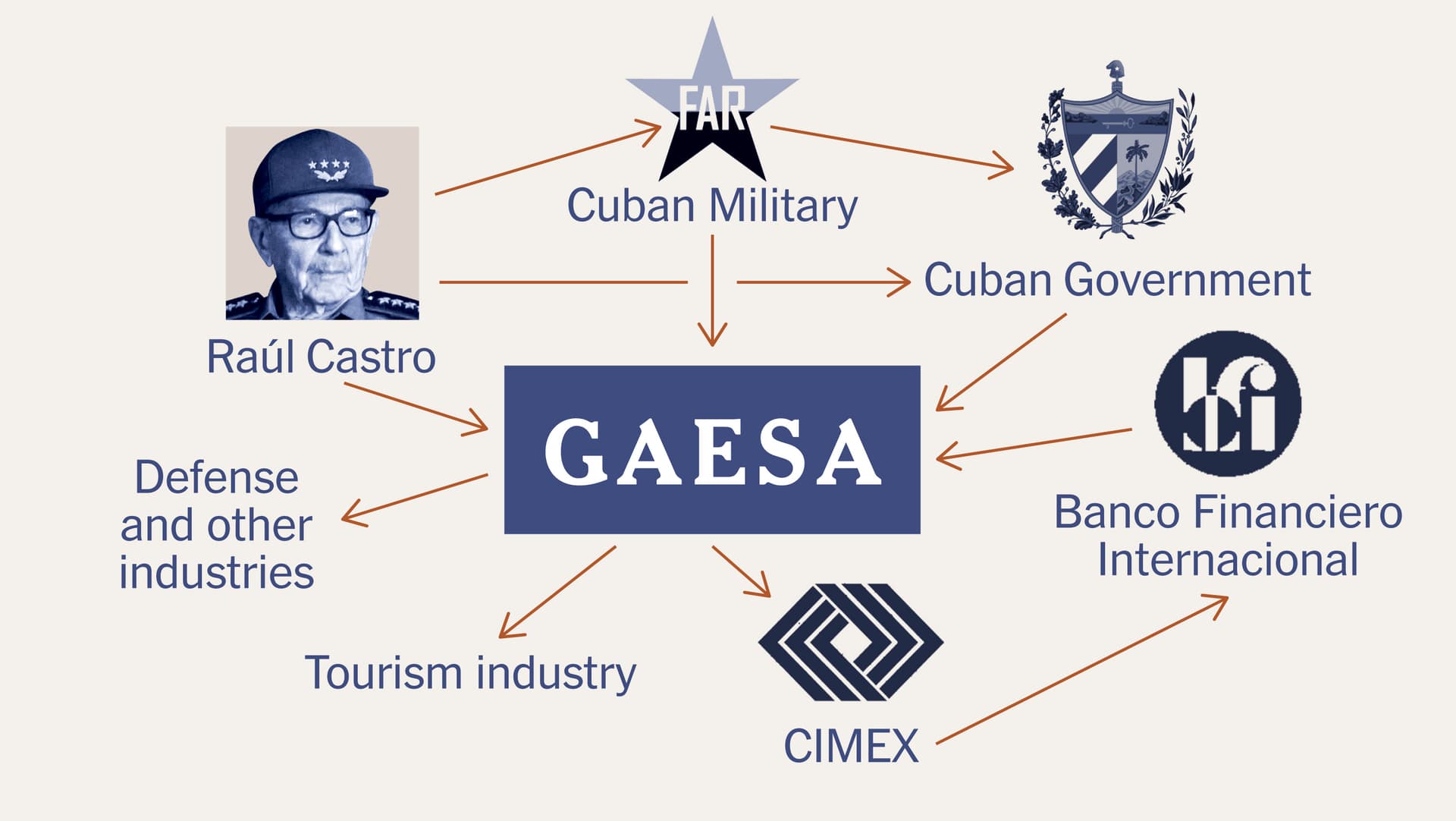
Cuba defended GAESA on Tuesday after Washington sharpened sanctions pressure on the military-run conglomerate, insisting the company had helped, not harmed, the country’s economic and social development. The response came as the Trump administration moved to tighten the screws on a business empire that sits at the center of Cuba’s hard-currency economy and touches tourism, retail, banking, shipping, ports, construction and remittances.
The U.S. State Department designated GAESA on May 7 under Executive Order 14404 and warned foreign companies and financial institutions that dealing with the conglomerate could trigger sanctions risk. Officials set a June 5 deadline for foreign firms to wind down operations with GAESA, a timeline that has already pushed some international operators to cut ties or scale back exposure. Washington says GAESA, a military-controlled umbrella enterprise, controls an estimated 40 percent or more of Cuba’s economy.

Cuba answered through the official press and Granma with a statement titled Cuba, GAESA, and the United States: Anatomy of a State Calumny. The government rejected corruption allegations and argued that the United States was using economic tools to destabilize the island rather than promote accountability. That argument landed three days before the wind-down deadline, underscoring how quickly the pressure campaign could affect contracts, financing and imports tied to the conglomerate.

The stakes are high because GAESA is not a narrow holding company. Created in the 1990s under Raúl Castro, it grew into Cuba’s dominant military-linked business network, with particular power over the tourism arm Gaviota. Recent reporting said Spanish hotel chains run 62 hotels in Cuba, more than half of Gaviota’s portfolio, with Meliá the largest Spanish operator and Iberostar next. Other reports said tourism in Cuba has sunk to historic lows, with hotel occupancy around 30 percent to 35.5 percent in 2024-era figures, and that Meliá has left half its hotels closed because demand is so weak.
The broader economy is already straining under that collapse. Cuban government figures cited in recent reporting showed nearly 40 percent of the 2024 investment budget, about $1.5 billion, went to tourism and hospitality even as returns stayed thin. That helps explain why sanctions on GAESA matter so much: they strike at the sector that generates scarce foreign currency, funds imports and supports thousands of jobs in hotels, transport and supply chains.
The White House and senior U.S. officials have cast the campaign as pressure on Cuba’s repressive system, while Cuban economists say GAESA’s opaque control of foreign exchange has long distorted the economy. For ordinary Cubans, the immediate risk is not only diplomatic escalation but a deeper squeeze on travel, goods, wages and the already fragile flow of hard currency that keeps daily life moving.
This article was produced by Prism’s automated news system from verified source data, official records, and press releases, then run through automated quality and moderation checks before publishing. The system is built and supervised by the people who set the standards it runs under. Read our full AI policy.
Did this article answer your question?


