Cuba Launches Official eVisa Portal evisacuba.cu Live in English and Spanish
Cuba’s official e-visa portal went live in early March 2026 in English and Spanish, replacing the paper tourist card system that retired June 30, 2025.
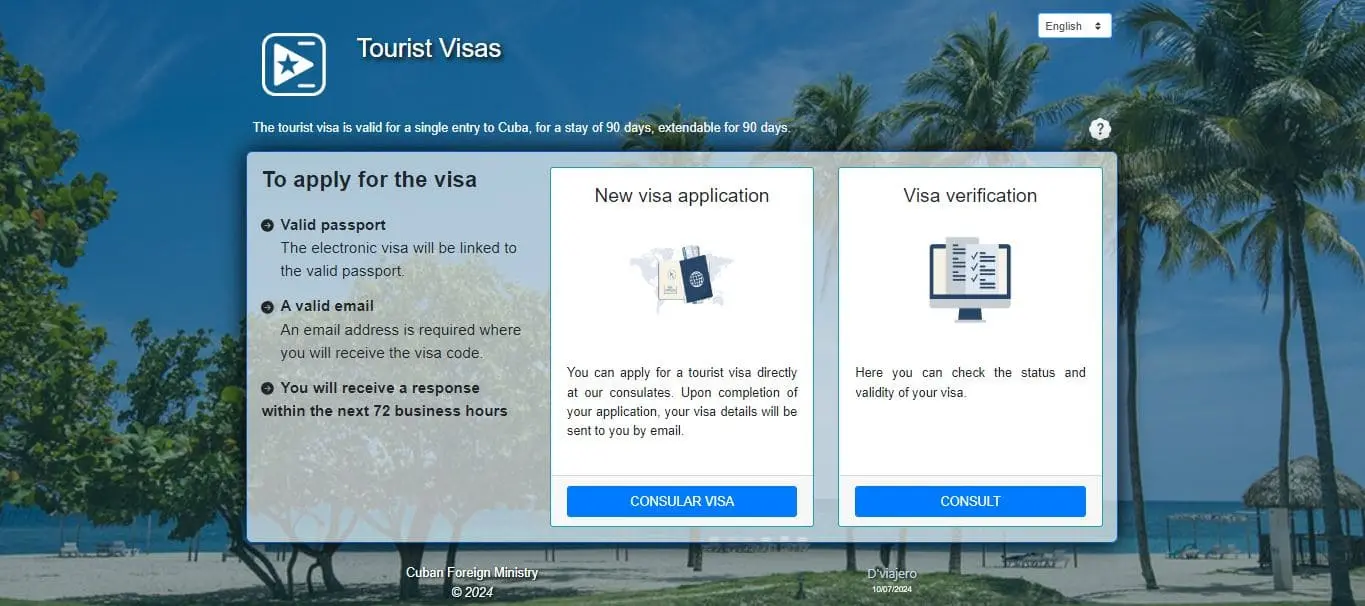
Cuba’s government opened its official e-visa portal in early March 2026, and the site is live in English and Spanish, giving travelers a single online route to apply, upload documents, and track status. The portal launch follows the policy change that made electronic visas mandatory for most visitors from July 1, 2025, after the island retired the paper Tarjeta del Turista on June 30, 2025. For years, Cuba’s iconic “tourist card” (Tarjeta del Turista) was your golden ticket; the new platform aims to replace that process.
The Cuban Ministry of Tourism (MINTUR) is rolling out the eVisaCuba portal as a digital platform designed to centralize and simplify the visa process. The goal? To streamline entry, boost security, and cut down on paperwork-making travel more efficient for everyone involved. Under current rules, the e-Visa is typically valid for up to 90 days and can be extended once locally for another 90 days; Discover reports the document is “valid for a single entry,” while other practical guidance confirms the 90-day limit and one extension.
Applicants must present a valid passport, a recent photo, and a payment method when they apply online; Marysol Travel noted an approximate government fee of US $40–$60 and warned of additional service charges if using a third-party facilitator. Marysol’s August 13, 2025 post also says that once approved, travelers “receive your e‑Visa confirmation via email along with instructions to complete the D’Viajeros form,” which remains mandatory for all arrivals.
D’Viajeros must be completed shortly before travel. Sources agree it should be done within seven days prior to arrival, and Marysol recommends completing it three to five days before your flight. The D’Viajeros workflow asks applicants to visit the official D’Viajeros site, select language, click “Form Request,” then fill personal details (name, passport number, email), add travel details (arrival airport, airline, flight number, e‑Visa number, reason for travel), provide accommodation address, complete customs and health declarations, and submit to download a QR code — which travelers should save digitally and print for check-in and arrival.
Operational wrinkles remain. Discover says “the e‑Visa is typically processed within 72 business hours,” while Marysol reports “Processing typically takes 2–5 business days, but it’s best to apply early.” That inconsistency — and the lack of a published, nationality-specific fee schedule in public reports — means travelers should confirm exact processing times, fees, accepted payment methods, and single-entry rules with the official government portal and MINTUR before booking.
Nationality exceptions matter in practice: Discover notes “almost everyone. From July 1, 2025, all travelers—except most Canadians—must secure a Cuba e-Visa before arriving in Cuba,” adding that Canadians flying direct from Canada often have the e-Visa bundled into the airline ticket while Canadians with stopovers must apply themselves. Marysol also stresses that “Cuban-born travelers must enter with a Cuban passport and cannot use the e‑Visa.” The portal’s launch in early March 2026 centralizes these changes, but travelers should verify the live portal text and airline procedures to avoid surprises.
Know something we missed? Have a correction or additional information?
Submit a Tip