Cuba's power grid fails, plunging eastern provinces into blackout
Power vanished across eastern Cuba as hospitals, food storage and daily routines buckled under a grid collapse with no restoration estimate.

Cuba’s electric system failed across the island’s east, cutting power from Guantánamo to Ciego de Ávila and deepening a crisis that had already left Havana under rolling blackouts and families bracing for spoiled food, interrupted work and strained hospital care. The state-run Electric Union said crews were working to restore service but gave no estimate for how long the outage would last.
The collapse came after President Miguel Díaz-Canel described the energy situation as “tense” the day before, as Cuba ran through oil supplies delivered by a Russian vessel in late March. Cuba produces barely 40% of the fuel it needs to power its economy, leaving the grid exposed after years of wear and chronic shortages. In Havana, outages stretched to 24 consecutive hours on Thursday, underscoring how much of daily life on the island now depends on whether the lights stay on.
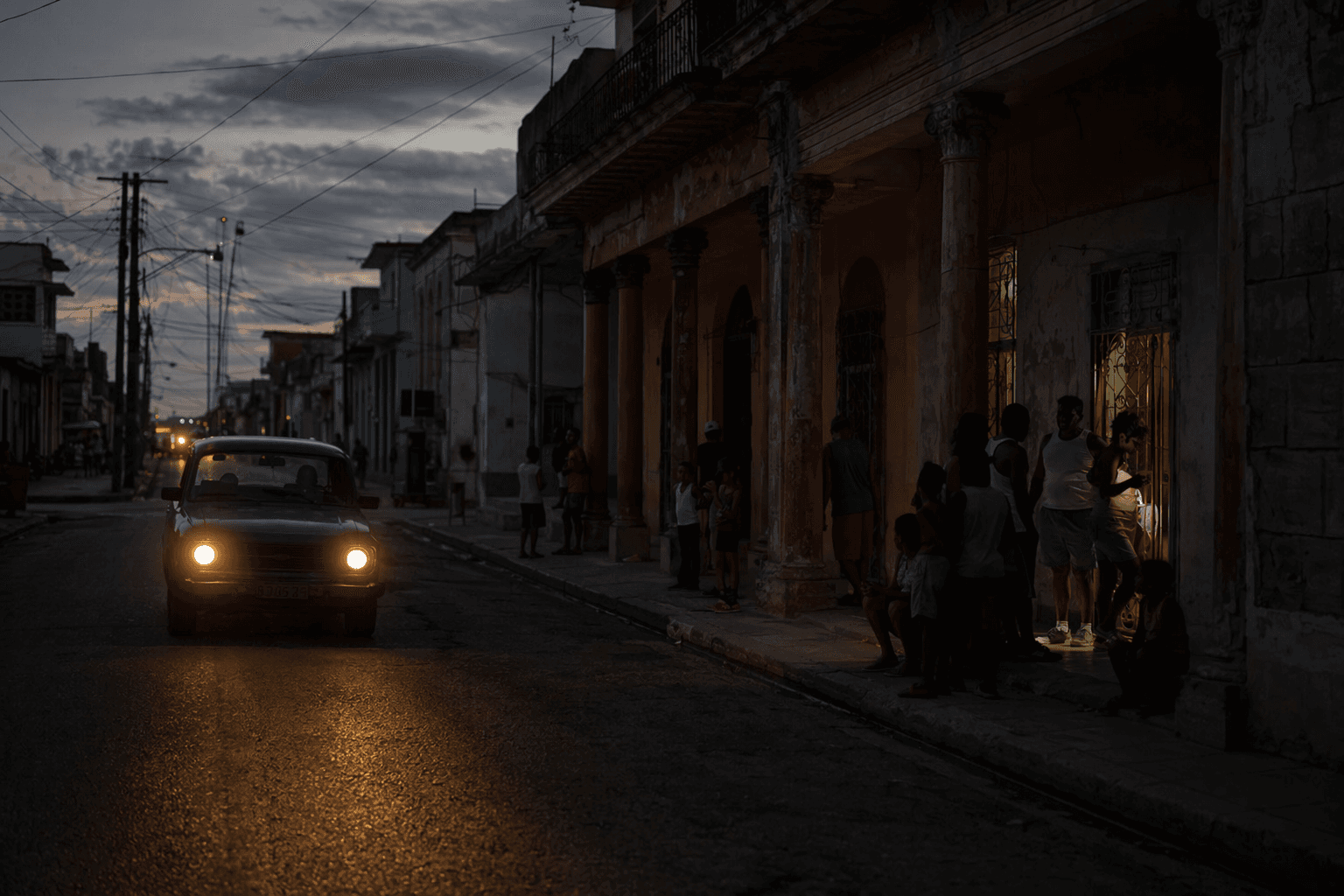
The blackout also turned into a street-level protest. On Wednesday evening, Associated Press reporters saw residents in several neighborhoods banging pots and pans and setting fire to trash cans in anger over the outages. Hours later, Energy and Mines Minister Vicente de la O Levy appeared on Cuban television and called the situation “critical.” The breakdown has reduced work hours, spoiled food in refrigerators and, in some cases, forced hospitals to cancel surgeries.
The humanitarian strain is colliding with a diplomatic test for Washington and Havana. A U.S. delegation visited Cuba on Thursday and met with government officials, the first U.S. diplomatic flight to the island since 2016. Cuban officials said the exchange was conducted “respectfully and professionally,” while also making clear that ending the energy embargo remained a top priority for Havana. The timing sharpened the contrast between political hostility and the urgent needs created by infrastructure failure.
The back-and-forth over aid added another layer of uncertainty. The United States has made a formal $100 million humanitarian aid offer for Cuba, but Foreign Minister Bruno Rodríguez Parrilla said on May 12, 2026, that his government had not received it. The United Nations said Cuba’s humanitarian crisis had worsened after Washington moved at the end of January to block oil supplies, and said the country had suffered three national electrical-system disconnections in March. The UN also said more than 96,000 surgeries were pending, including 11,000 for children, and about one million people depended on water trucking. Reuters reported that the United States has still allowed limited fuel shipments to Cuba’s private sector, about 30,000 barrels this year to date, even as it restricts government-linked flows.
This article was produced by Prism’s automated news system from verified source data, official records, and press releases, then run through automated quality and moderation checks before publishing. The system is built and supervised by the people who set the standards it runs under. Read our full AI policy.
Did this article answer your question?