Russia unleashes largest aerial assault on Ukraine since war began
Russia fired more than 1,560 drones in two days, hitting Kyiv and other cities in the biggest aerial assault since the war began.

Russia unleashed its largest aerial assault on Ukraine since the full-scale war began, firing more than 1,560 drones since the start of Wednesday and pounding Kyiv and other cities over a two-day stretch. Ukrainian President Volodymyr Zelenskyy said the barrage marked a new scale of pressure from Moscow, one that put the capital under sustained attack and tested Ukraine’s air defenses across a third straight day of major strikes.
In Kyiv, at least four people were injured and damage was reported in six city districts, according to local authorities. Rescue crews worked through affected areas as apartment blocks, infrastructure and other targets were hit across the capital. The strikes were not confined to Kyiv. The broader wave also reached other cities across Ukraine, underscoring how Russia widened its aerial campaign well beyond a single target area.
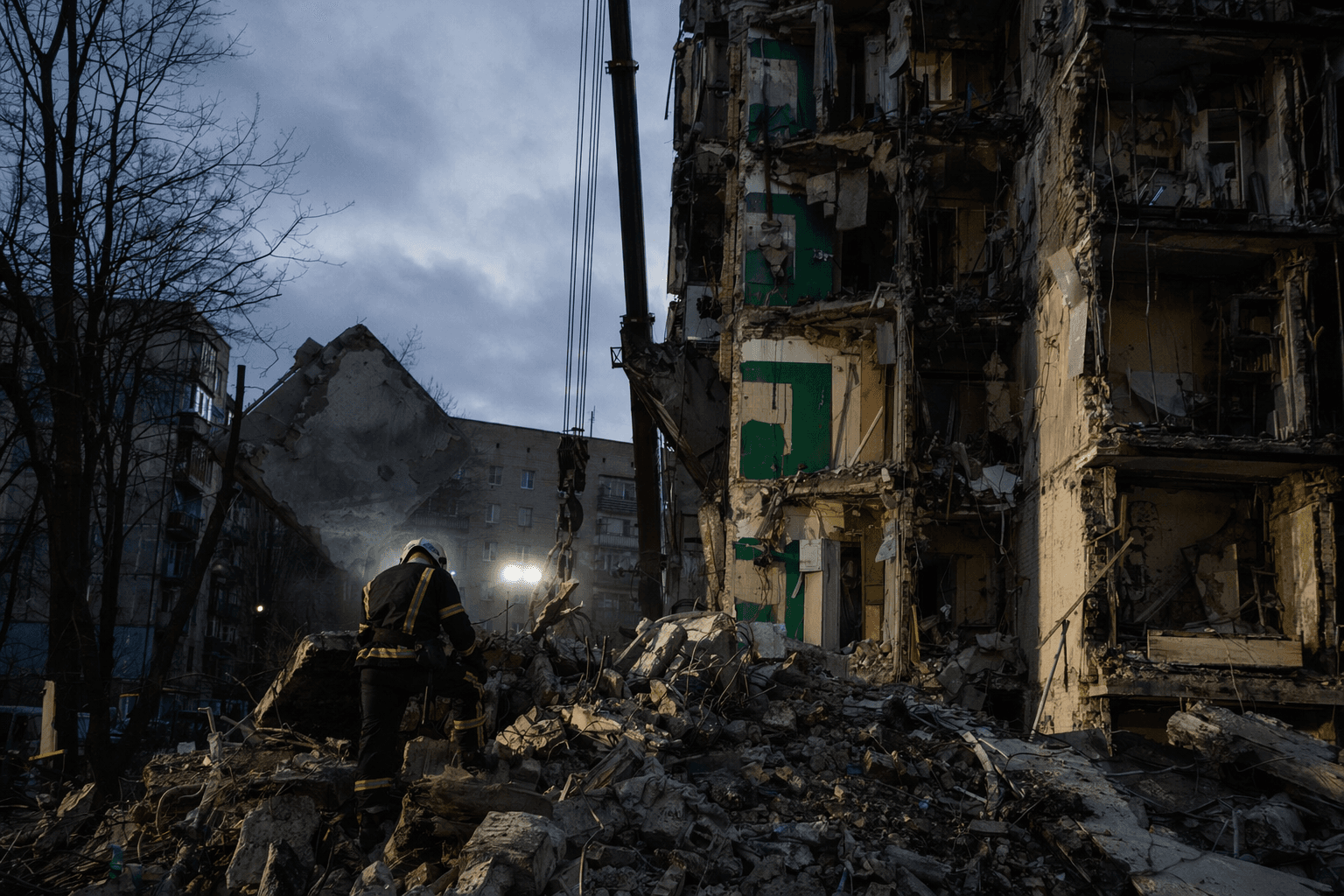
The scale mattered as much as the damage. Launching more than 1,560 drones in such a short period suggested an effort to overload air defenses, keep civilian areas under pressure and force Ukraine to spread its resources more thinly. With attacks arriving on three consecutive days, the barrage pointed to a sustained campaign rather than a one-off show of force, one meant to wear down both military readiness and public resilience.
The human cost was made clearer by later reporting that a Russian drone struck an apartment building in Kyiv, killing seven people and leaving at least 20 missing. That attack crystallized the danger facing Ukrainian cities as the war moved toward its fourth year, with Russian forces intensifying pressure even as talk of possible diplomatic movement continued elsewhere. For Kyiv, the message of the assault was unmistakable: Moscow is not easing the aerial war, but expanding it.
This article was produced by Prism’s automated news system from verified source data, official records, and press releases, then run through automated quality and moderation checks before publishing. The system is built and supervised by the people who set the standards it runs under. Read our full AI policy.
Did this article answer your question?


