Cuba's revolutionary veteran Ramiro Valdes dies at 94
Ramiro Valdes, Fidel Castro's early comrade and Cuba's security chief, died at 94, leaving fewer living links to the 1959 revolution. His death narrows the last bridge between the Castro era and today's state.

Ramiro Valdes, one of Fidel Castro’s earliest collaborators and one of the most enduring faces of Cuba’s revolutionary state, died at 94. President Miguel Diaz-Canel confirmed the death and said it hurt “like that of a father,” a measure of the symbolic weight Valdes carried inside the ruling system. No cause of death was given.
Valdes belonged to the generation that turned rebellion into government. Born in 1932, he was a Moncada attacker in 1953, then joined the Granma expedition from Mexico and survived the disastrous landing that left only a small group of the original fighters alive. He went on to fight in the Sierra Maestra, serving as deputy commander to Ernesto “Che” Guevara, and took part in the Battle of Santa Clara before Fulgencio Batista fled on Jan. 1, 1959.
After the revolution, Valdes helped build the institutions that outlived the guerrilla war and became the backbone of the Cuban state. Official biographies describe him as a founder of the Ministry of the Interior and the state security apparatus, a role that tied his name to the country’s intelligence and internal-control system for decades. He served as interior minister twice, from 1961 to 1968 and again from 1979 to 1985, later became minister of informatics and communications from 2005 to 2010, and remained vice prime minister from 2019 until his death. He stayed in the Communist Party Political Bureau until 2019.
His career reflected the durability of the old guard inside Cuba’s power structure. Cuban official accounts also describe him as a founding member of the Communist Party’s Central Committee and Political Bureau, while state biographies list him as a rebel army combatant and a vice president of the Council of State and Council of Ministers. In a system where legitimacy long rested on the memory of the armed struggle and Fidel Castro’s rule from 1959 to 2008, Valdes stood as a living institutional bridge to that era.
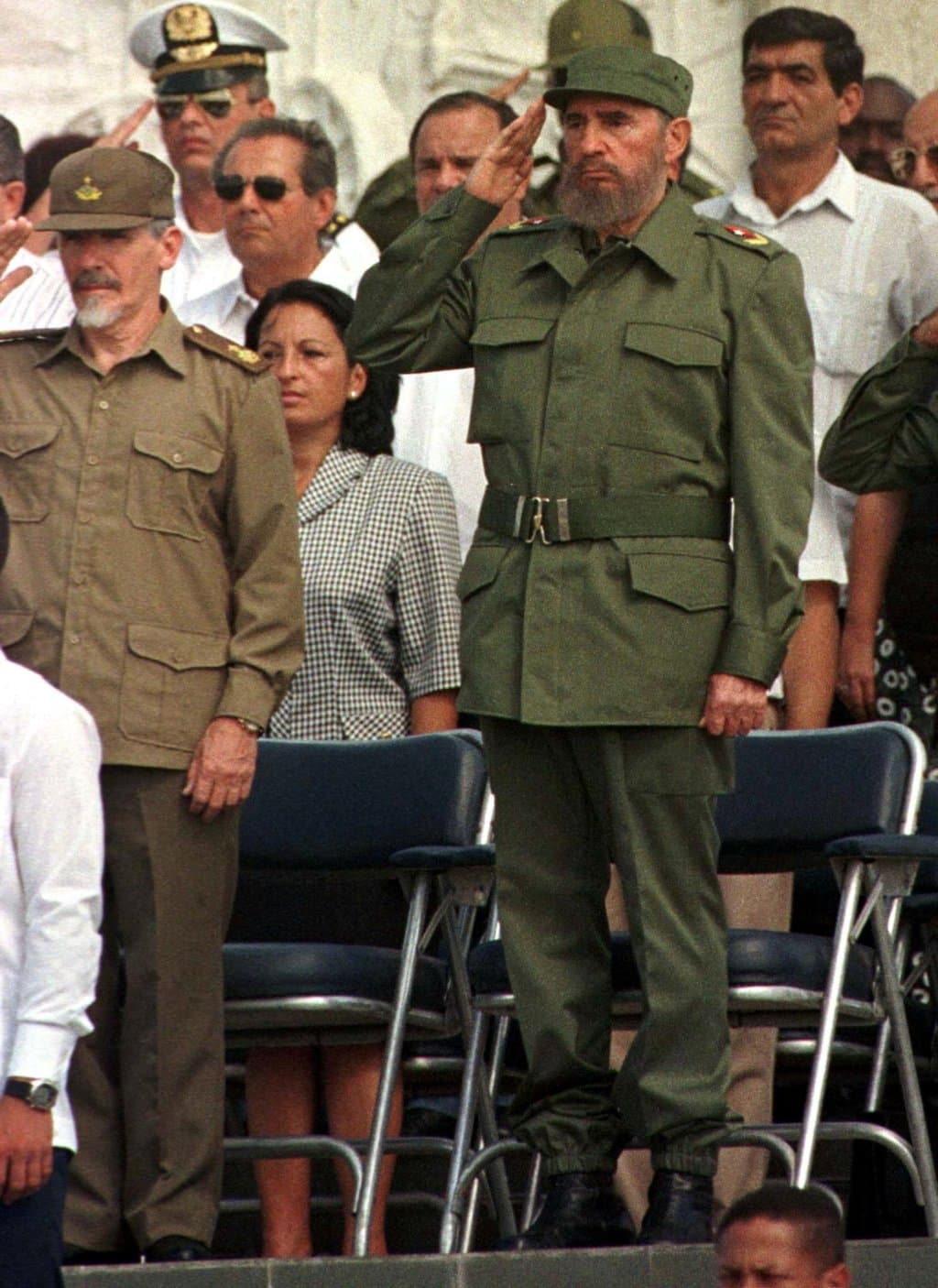
His death also exposes how much of that generation has already vanished from active politics. What remains in Cuba’s state and security apparatus is increasingly a structure built by men like Valdes, but no longer animated by them. That shift leaves the revolutionary myth more dependent on memory, and more vulnerable to the competing image of Valdes as either a loyal builder of the republic or a chief architect of its repressive machinery.
This article was produced by Prism’s automated news system from verified source data, official records, and press releases, then run through automated quality and moderation checks before publishing. The system is built and supervised by the people who set the standards it runs under. Read our full AI policy.
Did this article answer your question?


