D-Day anniversary marked in Normandy as 98 names added to memorial
Six Normandy veterans were due to attend as 98 more names were added to the memorial, underscoring how D-Day remembrance is shifting from memory to record repair.
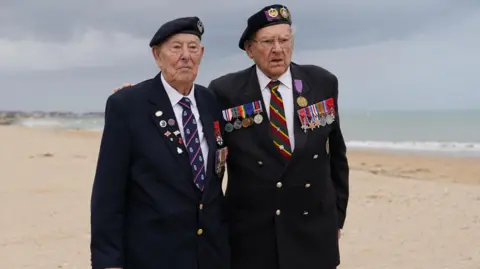
The 82nd anniversary of D-Day was marked in Normandy with a stark measure of how much of the war has moved out of living memory: only six confirmed Normandy veterans were due at this year’s ceremony, the smallest number since the British Normandy Memorial opened in 2021, even as 98 more names were added to its roll of honour.
At the Service of Remembrance at Ver-sur-Mer, overlooking Gold Beach, the memorial’s newest inscriptions reflected years of research into wartime records that were incomplete or inaccurate. Some of the men added had been killed in Normandy but never carved into the stone. Others were mortally wounded there, then died later in British hospitals, and were left off the original lists. The memorial now records 22,540 servicemen and women under British command who died on D-Day and during the Battle of Normandy, including people from more than 30 countries.

The site itself, on a hillside above the Normandy coast, has become one of the clearest places where commemoration and correction meet. It was officially opened on 6 June 2021 by His Majesty The King, then Prince of Wales, and now stands alongside a French Memorial dedicated to French civilians who died during the same period. The annual ceremony drew Normandy veterans, invited guests and members of the public, while other commemorations took place at Bayeux War Cemetery, Bayeux Cathedral, Bény-sur-Mer Canadian War Cemetery and Langrune-sur-Mer.

The narrowing circle of survivors was felt in the words of 100-year-old Kenneth Hay, one of the last surviving UK veterans travelling to France for the ceremonies. “To most people coming here they’re just a series of names,” he said. “To people like myself, they’re people, I can see their faces.” For families, the new inscriptions carried a different kind of finality. John Green said he was “really pleased” after seeing his father Cecil Green added to the memorial, describing it as “a strange mixture of being glad and happy and sad at the same time.”

General the Lord Dannatt, the memorial’s chairman, said the newly added names now take their rightful place alongside their comrades, and warned of the need to ensure the United Kingdom is adequately defended. The Rev Simon d’Albertanson, who led a memorial service in Ver-sur-Mer in 2025, called D-Day a “seminal moment in history” and said its legacy matters in “troubled times.” That argument carried added weight as French schoolchildren walked across Juno Beach to mark H-Hour, while the full scale of the battle was recalled: nearly 160,000 Allied troops landed on 6 June 1944, 4,414 were killed that day, and the Battle of Normandy cost 73,000 Allied lives and left 153,000 men wounded.
This article was produced by Prism’s automated news system from verified source data, official records, and press releases, then run through automated quality and moderation checks before publishing. The system is built and supervised by the people who set the standards it runs under. Read our full AI policy.
Did this article answer your question?


