Danish Archaeologists Uncover Lost Flagship From 1801 Battle of Copenhagen
Archaeologists found the Dannebroge, a flagship that exploded during the 1801 Battle of Copenhagen, buried 15 meters deep with human remains of the crew still aboard.
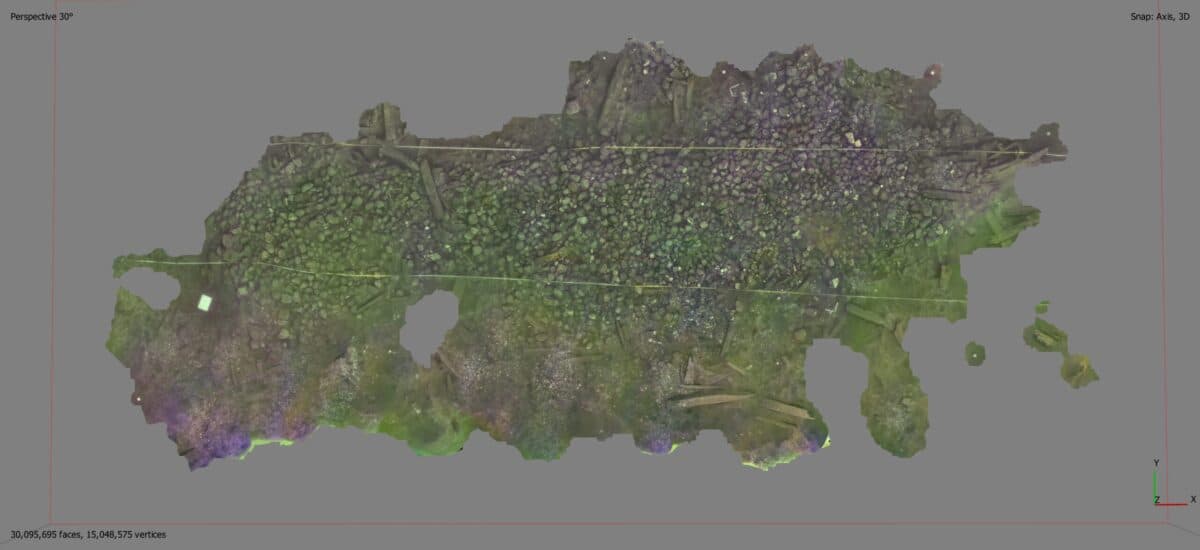
Maritime archaeologists from Denmark's Viking Ship Museum pulled the first timbers and personal artifacts from the wreck of the Dannebroge this week, recovering what remained of a Danish-Norwegian flagship that caught fire and exploded during the Battle of Copenhagen 225 years ago. Human remains were found within the wreck, which lies more than 15 meters below the surface of Copenhagen harbor, encased in heavy silt with near-zero visibility.
The excavation took place at Lynetteholm, a planned artificial-island development on the harbor's edge where construction surveys first revealed the wreck's location. The Viking Ship Museum, which holds national responsibility for seabed archaeology in eastern Denmark, announced the find between April 2 and 4, timing the disclosure to coincide with the 225th anniversary of the battle.
Lead maritime archaeologist Otto Uldum said the team had "found Dannebroge and the remains of those who never made it ashore after the battle," describing the site as a rare archaeological window into one of the most consequential days in Danish naval history.
The Dannebroge served as a command vessel on April 2, 1801, when a British fleet under Admiral Sir Horatio Nelson engaged the Danish-Norwegian forces in the battle that became a cornerstone of Danish national memory. Heavily involved in the fighting, the ship caught fire and exploded hours after the engagement began. No prior archaeological excavation had ever reached the wreck; until now, historians relied entirely on documentary accounts.
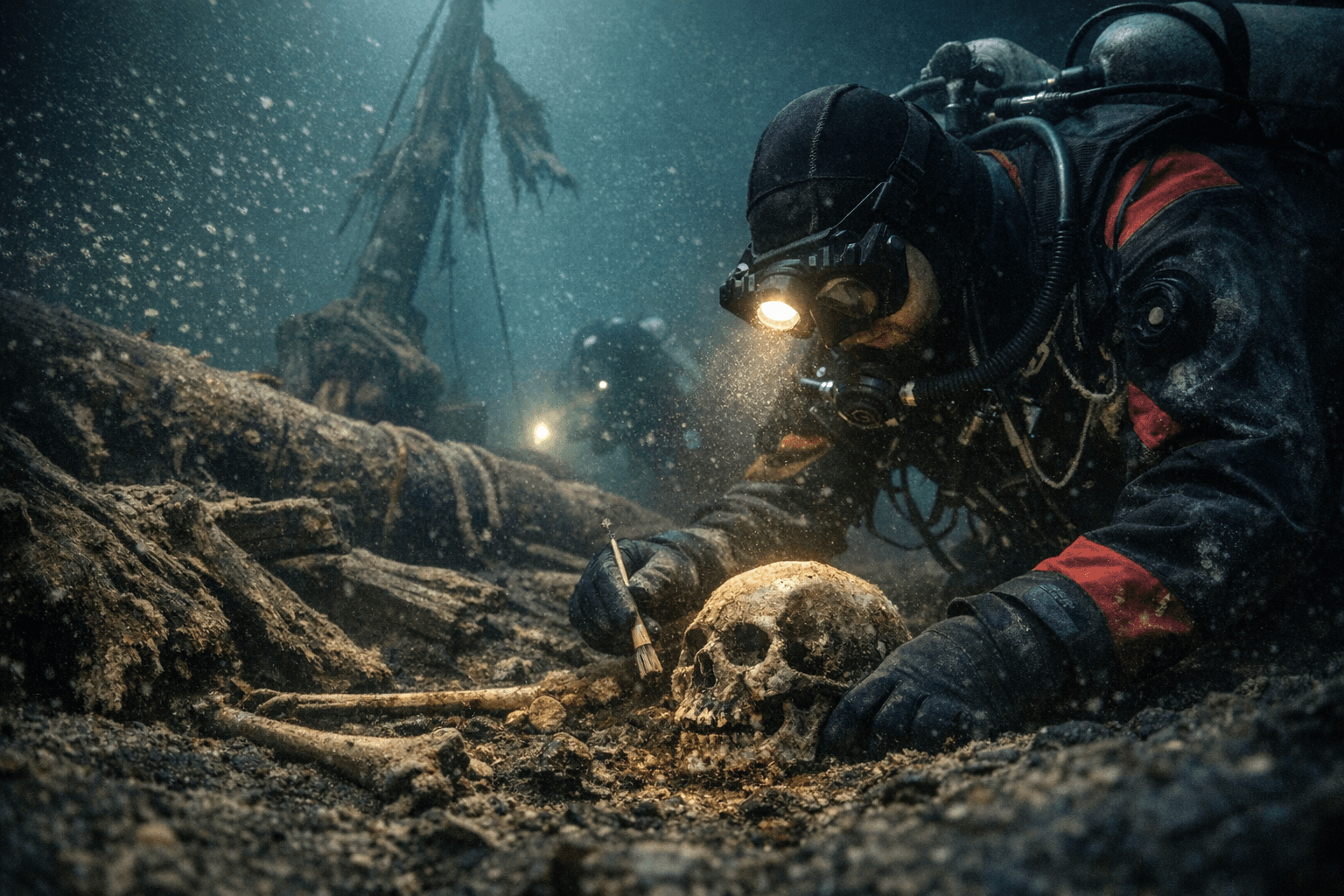
Structural timbers, ballast and personal artifacts have already been recovered alongside osteological remains, which will be treated with forensic and ethical care. Each category of find carries the potential to answer questions that written records never resolved: how the ship was constructed, what conditions were like during the battle, how many people died aboard, and what daily material life looked like for sailors at the turn of the 19th century.
The excavation carries a hard deadline. Lynetteholm's planned construction will eventually cover the site, making the work both urgent and politically sensitive. The wreck sits at the intersection of two competing priorities: a major urban infrastructure project and what many in Denmark regard as a piece of national heritage of the highest order. The Viking Ship Museum described the operation as time-sensitive but careful, emphasizing that recovery and documentation must proceed together rather than sacrifice one for the other.
As the first archaeological work directly tied to the Battle of Copenhagen, the Dannebroge excavation is expected to drive new museum exhibits and reopen a broader conversation in Denmark about how the country retrieves and protects the physical record of its past before it is built over.
This article was produced by Prism’s automated news system from verified source data, official records, and press releases, then run through automated quality and moderation checks before publishing. The system is built and supervised by the people who set the standards it runs under. Read our full AI policy.
Did this article answer your question?