David Hockney dies at 88, painter of California light and pools
David Hockney, who turned California pools into pop icons and kept reinventing himself across six decades, died in London at 88.

David Hockney, the Bradford-born painter who made California light, swimming pools and hard-edged modern life into enduring images, died June 11 in London at 88. Across more than six decades, Hockney treated reinvention as a working method, moving from painting to photography, printmaking, stage design and digital experiments without allowing any single medium or period to define him.
Hockney was born July 9, 1937, in Bradford, Yorkshire, England, and first came to public attention in 1961 while still a student at the Royal College of Art. His first trip to California in 1964 changed the direction of his work. Tate has said the visit led directly to the first swimming pool paintings, the images that would make him internationally famous and tie his name to Los Angeles as firmly as any artist of his generation.
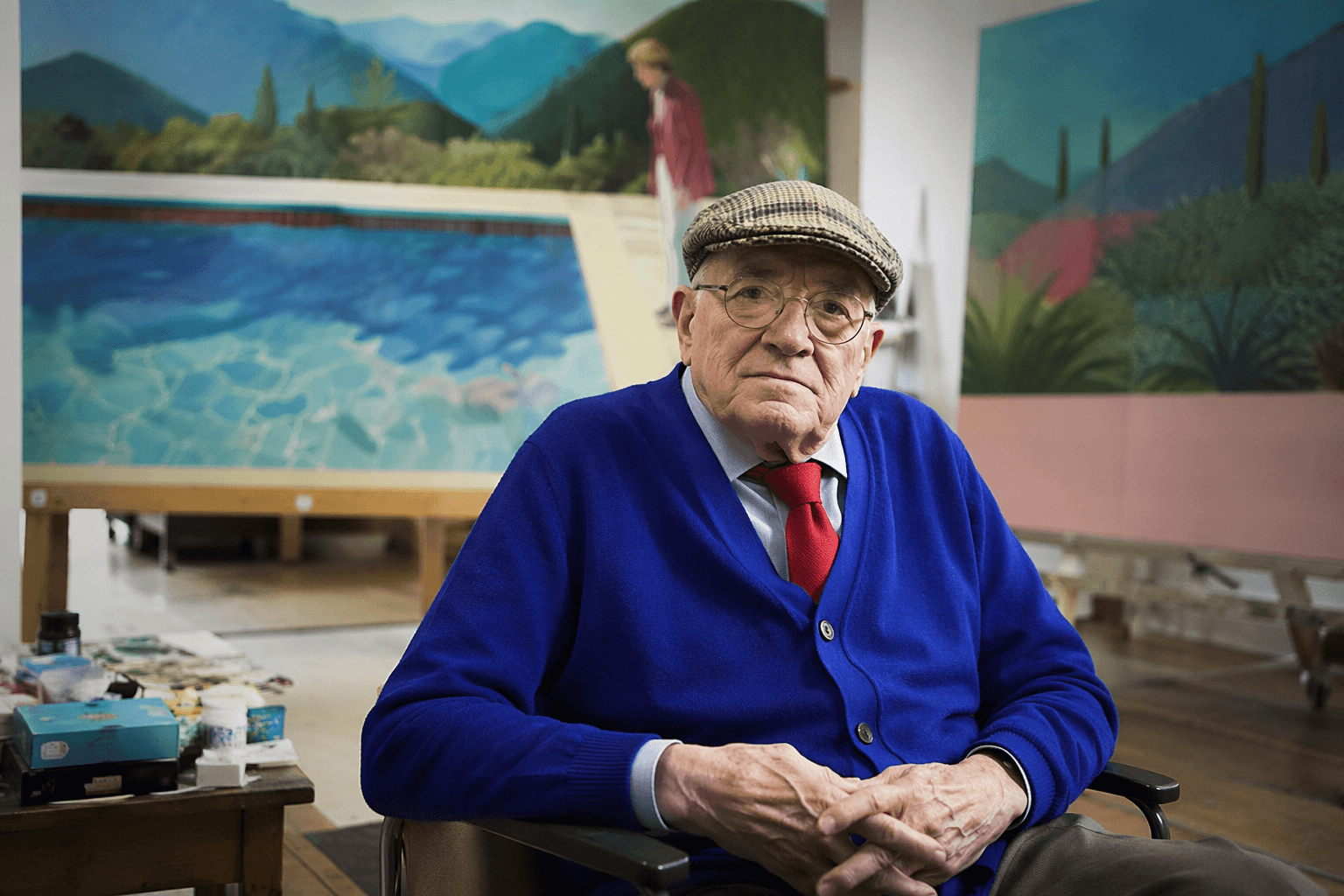
That body of work produced some of the most recognizable pictures of the postwar era. A Bigger Splash, painted in 1967, crystallized the stylized surfaces and bright light that defined the California years. Portrait of an Artist (Pool with Two Figures), painted in 1972, later sold for about $90 million in 2018, setting the record at the time for a living artist. As important as the boys and the pools and the light, a memoirist wrote, the most important thing was becoming the driving, a line that captures Hockney’s fixation on motion and on pushing his attention forward.
Even late in life, museums kept treating Hockney as a living force rather than a fixed name from art history. The Metropolitan Museum of Art mounted a major retrospective in 2017 for his 80th birthday. Fondation Louis Vuitton followed with a large exhibition running from April 9 to August 31 and spanning more than 400 works from 1955 to 2025, underlining just how long Hockney remained visible across changing artistic eras.
Tate said it was “greatly saddened” by his death and called him an “endlessly inventive artist,” noting that his work first entered the museum’s collection in 1963. That long institutional relationship reflected a career built not on repeating a signature image, but on constant testing of light, movement, space and time. Hockney’s legacy now sits at the center of a larger argument about ageing artists and cultural relevance: the ones who endure are often those who refuse to stand still.
This article was produced by Prism’s automated news system from verified source data, official records, and press releases, then run through automated quality and moderation checks before publishing. The system is built and supervised by the people who set the standards it runs under. Read our full AI policy.
Did this article answer your question?