D.C. Jewelers Share Engagement Ring Trends, Options and Buying Tips
D.C. jewelers report chunkier bands, elongated stones and warmer K–M diamonds—get a certificate, try wedding bands on with your engagement ring, and ask where the stone actually came from.
D.C.’s independent jewelers say the post‑Valentine’s market is arriving with clear preferences: rings with real weight, alternative orientations, and an appetite for antique color and elongated silhouettes. Below I break down the trends, the design and setting options you’ll encounter, and the practical buying steps you should take—grounded in what local jewelers told the Washingtonian and in industry guidance from retailer sources.
1. Local market overview and headline trends
Local Washington, D.C. jewelers report a wide set of trends that coexist rather than replace one another. The Washingtonian summary observed that “buyers continue to favor personalized and vintage‑inspired details (antique cuts, engraved galleries, mixed met” — a fragment that points to personalization and historic detail even as some shoppers prefer modern lines. Expect to see both antique influence and contemporary restraint on showroom floors across the city.
2. Warmer, antique‑colored diamonds (K–M)
Colin Shah of Shah & Shah Distinctive Jewelers reports a clear uptick in warmer stones: he “has been seeing a rise in warmer, more antique‑colored diamonds—specifically diamonds within the K‑M color range, with a faint yellow tint to them.” K–M colored diamonds sit below the near‑colorless grades in the standard scale; they wear as distinctly warmer and often carry different price points and appeal. If you prefer a honeyed, vintage look, ask for the color grade and view stones in daylight to confirm the tint.
3. Elongated cuts and celebrity influence
Two D.C. jewelers—Matthew Rosenheim of Tiny Jewel Box and Erik Boone of Boone & Sons—report elongated shapes as a running trend. Rosenheim characterizes broader style movement as “less decorative, more streamlined, clean, and contemporary,” which aligns with elongated cushions, ovals, and emerald cuts that stretch the finger visually. The Washingtonian text links this to celebrity conversation—“another trend that harkens to Swift’s ring, which experts have suggested may be an elongated cushion or ‘old mine’ cut”—but treat celebrity identifications as contextual, not provenance.
4. Thicker bands and the “cigar” silhouette
Several local voices are steering away from wafer‑thin rings. Shelter founder Mallory Sweetbaum says customers are choosing thicker rings “with ‘heft’ to them—turning away from the super delicate rings we’ve seen in the past.” Hitched’s Kiersten Weed cites the “current popularity of thick ‘cigar’ bands,” a bold, rounded band profile that reads modern and masculine-forward. If you like a ring that feels present on the hand, look for bands with wider shanks or custom‑forged heft.
5. East‑west settings and orientation experiments
Demand for non‑traditional orientations is rising: Kiersten Weed notes a “growing demand for east‑west settings, in which the stone is set horizontally along the band, perpendicular to the length of the finger.” East‑west settings change how a stone reads on the hand and can be especially striking with elongated marquise, oval, or baguette cuts—Zendaya’s engagement ring was flagged in the Washingtonian as a pop example of this look. Ask to try east‑west prototypes to verify how the profile sits with your lifestyle.
6. Settings that protect: the bezel option
Retailer Lewis Jewelers highlights bezel mounts as both a design statement and a functional choice: “Bezel‑Set Beauty — Minimalist. Modern. Made to last. The bezel setting is gaining attention for its clean lines and secure design. With the diamond fully encased in metal, it’s a chic choice that blends form and function, especially for those with hands‑on lifestyles.” If you use your hands a lot—cooking, gardening, studio work—a bezel can protect the girdle and reduce snags while offering a sleek aesthetic.
7. Vintage details vs. streamlined contemporary
The market is showing parallel desires: engraved galleries, antique cuts and warmer colors on one side, and Rosenheim’s “less decorative, more streamlined, clean, and contemporary” on the other. Both camps are active in D.C., so when you shop be explicit about which direction matters most to you: the carved pavé and millegrain of vintage revival, or the clean bezel and knife‑edged shank of modern minimalism. The coexistence of these trends means independent jewelers are likely to offer hybrid options—antique stones reset into modern frames, or minimalist mounts with vintage side detailing.
8. Alternative stones and customization
Retailers encourage alternatives beyond classic white diamonds: Alexis Russell mentions options ranging from “salt and pepper diamond engagement ring, … sapphire … black diamond,” and emphasizes customization as a core advantage. Alternative stones let you personalize color, texture, and price while still creating a durable daily piece—sapphires, for example, score high on hardness and carry historic engagement‑ring cachet. If you choose a non‑traditional gem, verify treatments and durability so the piece matches your wear expectations.
9. Certification, provenance and what to ask for
Stone paperwork matters. Alexis Russell reminds buyers that “The certificate will include information on the stone’s quality, including its cut, color, clarity, and carat weight, so you can confidently make your purchase.” Ask specifically for independent laboratory grading (GIA, AGS, or similarly reputable labs) and for any chain‑of‑custody or origin documentation the vendor can provide. If sustainability or source is important, request written provenance and be wary of vague sustainability claims—retailer marketing often lacks independent verification.
10. Online shopping, inventory and price comparisons
ECI Jewelers frames the market shift bluntly: “One of the biggest changes we’ve seen is the industry's massive pivot to online… This digital shift puts you, the buyer, in the driver's seat. Reputable online jewelers and established brick‑and‑mortar stores with a strong digital presence can now showcase vast, GIA‑certified inventories… That means more choices, better pricing, and the ability to compare all your options from home.” Use online searches to preview stock and comparative pricing, but confirm fit, comfort and finish in person before finalizing a custom mount.
11. Choosing a jeweler and red flags
Alexis Russell’s shopping counsel is concrete: “Find a jeweler who’s willing to educate you about gemstones, settings, and the overall process. Avoid those who pressure you into decisions or dodge questions. They should be eager to make your dreams come true…” Look for staff who will show certificates, discuss treatments, and explain warranties and aftercare. Red flags include evasive answers about origin, vague certification claims, high‑pressure timelines, or no written return/repair policies.
12. Wedding bands, fit and the final pairing
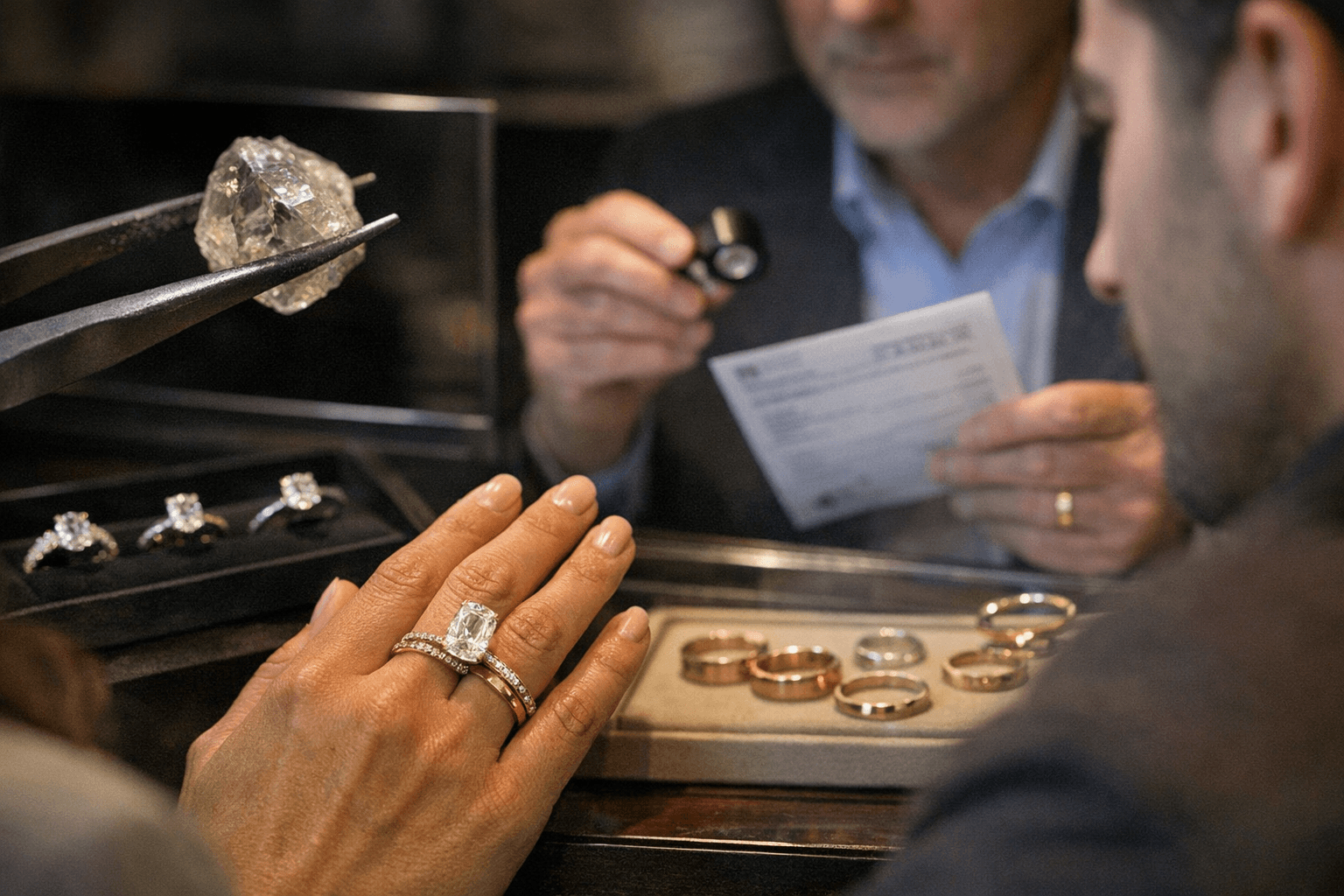
Erik Boone’s practical reminder is a crucial step: “don’t forget about the wedding band!” He stresses that “it’s important to remember when shopping for an engagement ring that the engagement ring will be paired with your wedding ring. Trying on wedding ring styles during the engagement ring search… is beneficial to the overall process.” Bring the wedding band you envision—or try on candidate bands—so prongs, profile and width complement one another and stacking looks are confirmed before purchase.
13. Visuals, image permissions and follow‑ups for buyers and editors
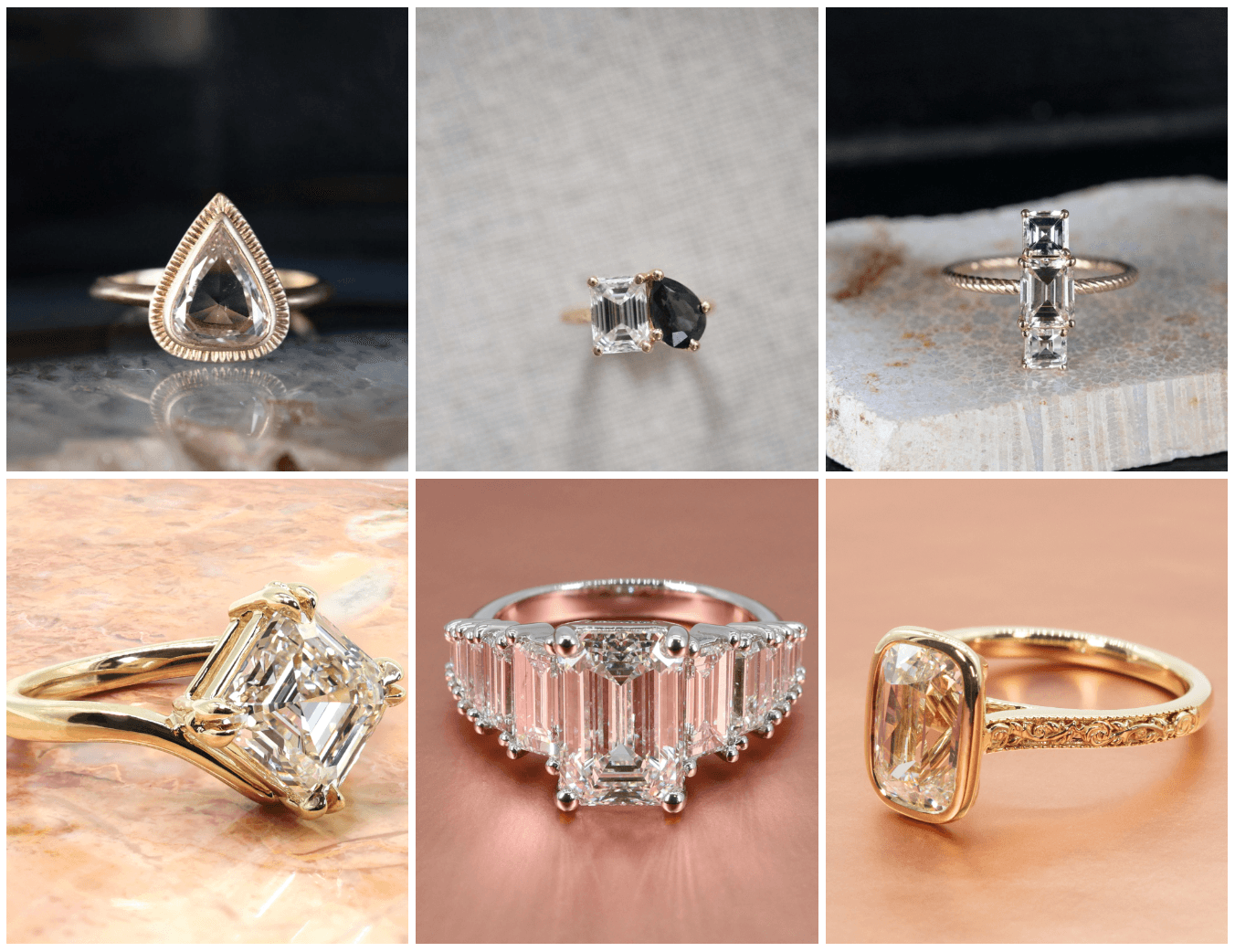
Several shops supplied imagery for local coverage—one caption read, “Engagement rings, top row, by Shelter. Bottom row by Hitched.” If you’re publishing photos or requesting styling shots, secure image credits and high‑resolution files from each store. Note that the Washingtonian summary contains an incomplete fragment—“mixed met”—so confirm any truncated or ambiguous editorial language with the shop or publication before repeating it.
Conclusion D.C.’s independent jewelers are offering a lively, sometimes contradictory market: warmer K–M diamonds and antique cuts sit alongside streamlined modern mounts, while chunkier “cigar” bands and east‑west orientations point to a hands-on, personalized aesthetic. Shop with certificates in hand, insist on provenance and clear answers about treatments and origin, and try wedding bands with your engagement ring—those practical steps protect both value and daily wearability. The smartest purchases come from jewelers who educate rather than obfuscate; demand transparency, and the ring you choose will be beautiful on the hand and defensible on the record.
Know something we missed? Have a correction or additional information?
Submit a Tip