Dead dogfish wash up on Welsh beaches, officials blame discarded catch
Hundreds of dead dogfish lined Saundersfoot, then a net of fish turned up at Pembrey, and officials pointed to discarded fishing by-catch.
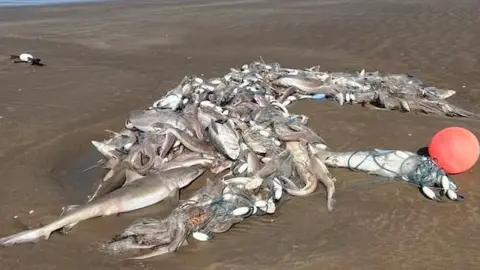
Dead dogfish spread across a 500-yard stretch of Saundersfoot Harbour Beach, then a full net of fish turned up at Pembrey Beach, also known as Cefn Sands, days later, pushing officials toward the same explanation: waste from fishing at sea.
Holidaymaker Colin Hill said he found hundreds of dead dogfish on Saundersfoot Harbour Beach in Pembrokeshire on Thursday, May 21, 2026. He estimated the fish had been dead for no more than about three days and said they covered roughly 500 yards of shoreline, a scale that made the beach look more like a dumping ground than a natural wash-up.

At Pembrey Beach in Carmarthenshire, walker Pauline Morris came across a net full of dead fish on Sunday, May 24, 2026, while out with her dogs. Morris, a 65-year-old nurse from Aberdare who works at Ysbyty Cwm Cynon in Mountain Ash, said the scene was “horrible to see” and a “shocking thing to see,” adding that the fish were spread over a quite large area. She said she could not tell whether they had fallen from a trawler or been thrown away because they were unwanted.
Natural Resources Wales said it found no evidence of a pollution incident at Saundersfoot. An officer later visited the beach but found no trace of the animals because tides had washed them back into the sea. NRW said the fish appeared to be dogfish and that the most likely explanation was fishing by-catch being discarded at sea.
Sea Trust Wales founder Cliff Benson reported the Saundersfoot incident after seeing an image on social media and believed many of the animals were catshark or dogfish. The sequence of events points to a familiar accountability problem: once unwanted catch is dumped offshore, the shoreline evidence can vanish before inspectors arrive, leaving only a brief window to identify who was responsible and how the fish died.
The Welsh wash-ups also fit a pattern seen before. In Burry Port in 2019, fisheries experts suggested dead dogfish found on the shoreline had likely been dumped after fishing nets were cleared. In Barry in 2021, hundreds more washed up, some still attached to hooks and tackle. Together, the cases suggest more than an isolated beach nuisance. They point to the ecological cost of discarding marine life at sea, and to the limits of oversight once by-catch is gone before anyone can document it.
This article was produced by Prism’s automated news system from verified source data, official records, and press releases, then run through automated quality and moderation checks before publishing. The system is built and supervised by the people who set the standards it runs under. Read our full AI policy.
Did this article answer your question?