Deadly rebel attacks in Colombia raise security fears before election
A highway blast that killed 21 and a wave of 26 attacks have jolted Colombia’s southwest, sharpening fears over security before the May presidential vote.
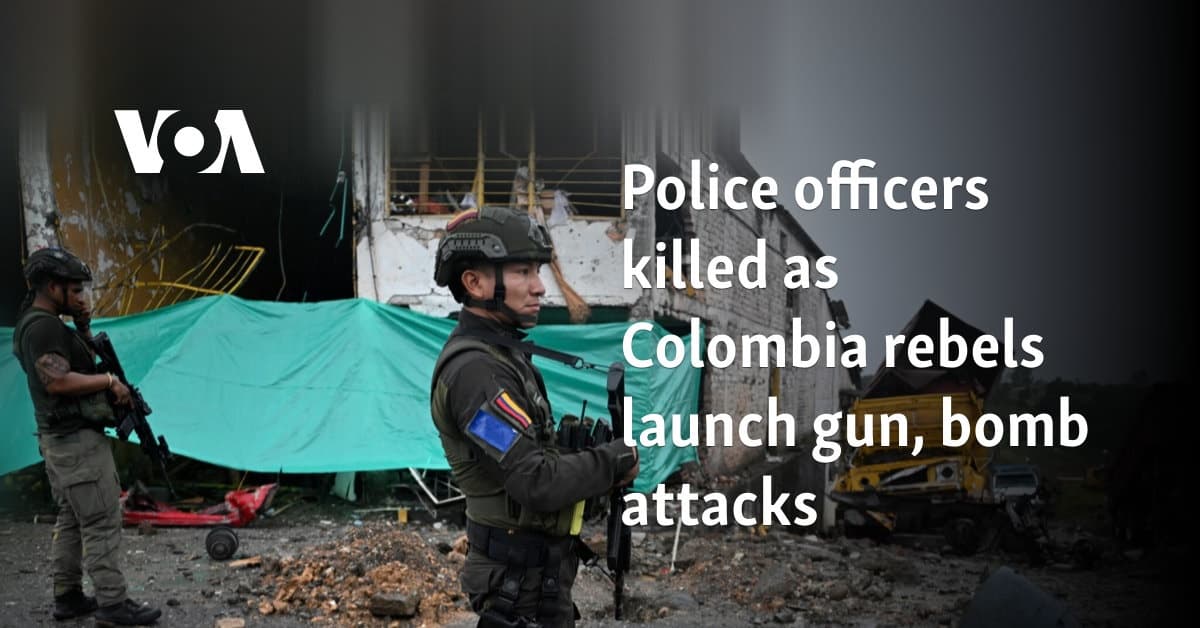
A burst of rebel violence in Colombia’s southwest has turned security into a central election issue, after a highway bombing near Cali and Popayán left 21 people dead and exposed how quickly armed groups can destabilize a region that remains vital to the country’s security and politics.
Colombia’s defense ministry said rebel groups carried out 26 attacks with explosives and drones since Friday, including two vehicles rigged with explosives that were detonated near military units in Cali and Palmira. The deadliest strike hit a stretch of the Pan-American Highway near a tunnel in Cajibío, in Cauca province, where the toll rose to 21 on Monday and at least 38 people were injured. Cauca health officials said five children were among the wounded.
Authorities blamed the attacks on the FARC-EMC and the Jaime Martínez faction, both dissident groups that rejected the 2016 peace deal and still contest territory long shaped by illicit mining, drug trafficking and coca cultivation. The FARC-EMC is led by Néstor Vera, known as Iván Mordisco. Gen. Hugo López, commander of Colombia’s Armed Forces, called the bombing a “terrorist act,” while President Gustavo Petro condemned the perpetrators on X as “terrorists, fascists, and drug traffickers” and noted that many of the victims were Indigenous people.
The violence also spread beyond the highway. Officials said a police station in rural Jamundí came under fire, and an attack on a Civil Aviation radar facility in El Tambo prompted troops to shoot down three drones packed with explosives before they could hit their target. Defense Minister Pedro Sánchez joined regional governors and local officials in Palmira as the attacks unfolded, underscoring how the assault has forced the state to react across multiple fronts at once.
The timing has sharpened the political stakes ahead of the May presidential election, where crime is expected to rank among voters’ biggest concerns. Analysts said the armed groups may be trying to project strength and win leverage before talks with the next government, a sign that battlefield violence is being used as political messaging as much as military pressure. Critics of Petro’s “total peace” strategy say ceasefires have given armed groups room to regroup, rearm and expand their control over communities, raising fresh questions about whether the government’s security approach is protecting civilians or simply managing an increasingly fragmented conflict.
This article was produced by Prism’s automated news system from verified source data, official records, and press releases, then run through automated quality and moderation checks before publishing. The system is built and supervised by the people who set the standards it runs under. Read our full AI policy.
Did this article answer your question?


