Deadly tornadoes hit Illinois as wildfires rage across the West
Two people died in Jefferson County as Illinois set a tornado record. At the same time, 27 large wildfires burned nationwide and Utah's Iron Fire forced evacuations.
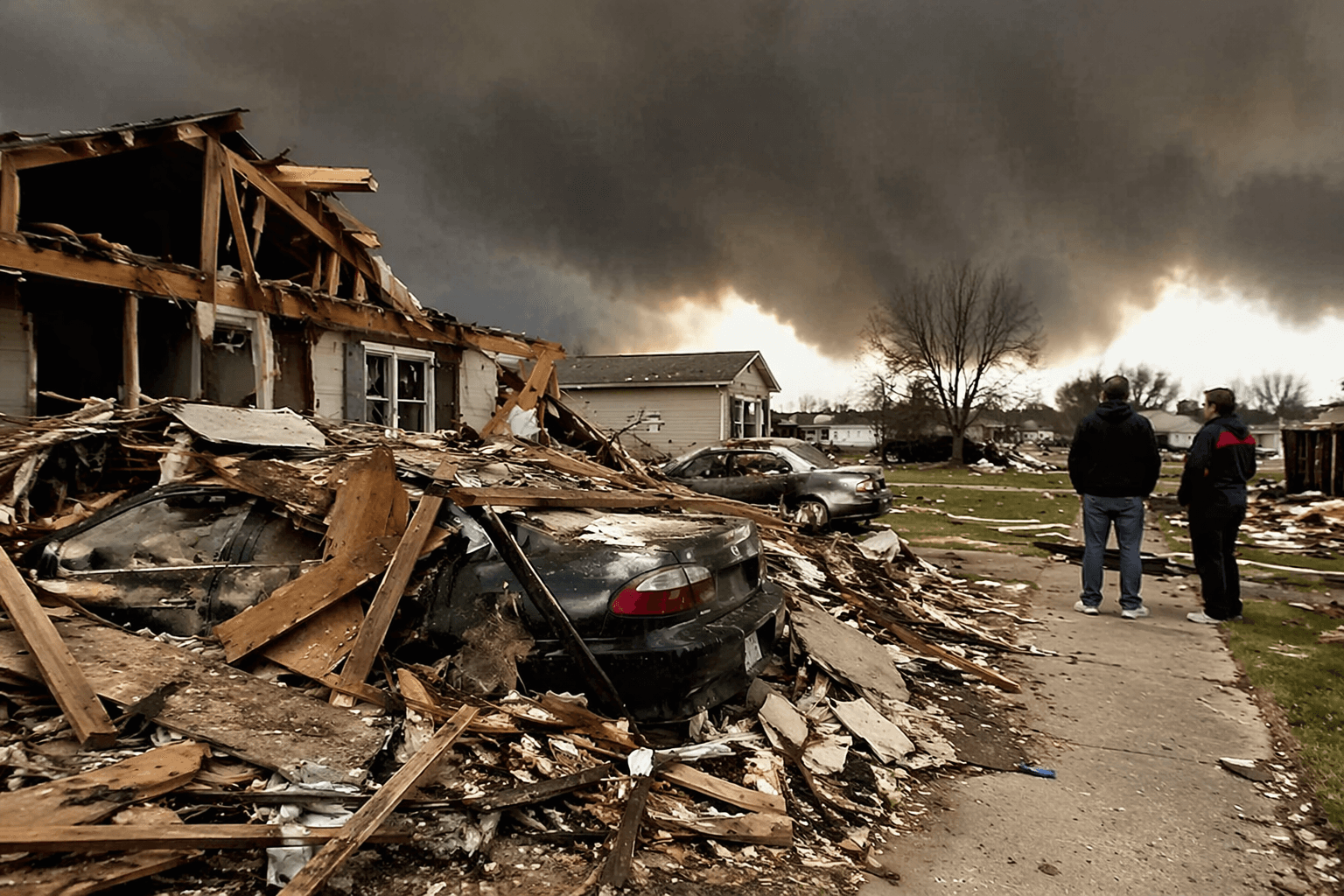
Deadly tornadoes tore through southern Illinois as the Midwest logged at least two dozen tornado reports, while high winds in the West helped fuel at least 70 active wildfires. The parallel emergencies showed how one volatile weather pattern can break out in different forms at the same time, forcing communities far apart to confront the same season of danger.
In Jefferson County, Illinois, officials said two people were killed and five were injured after a tornado destroyed homes, knocked down trees and power lines, and damaged property across the county. The storm left a hard-edged reminder that tornado damage is rarely limited to a single structure or street; it can cut power, block roads and slow emergency crews before the recovery work has even begun.
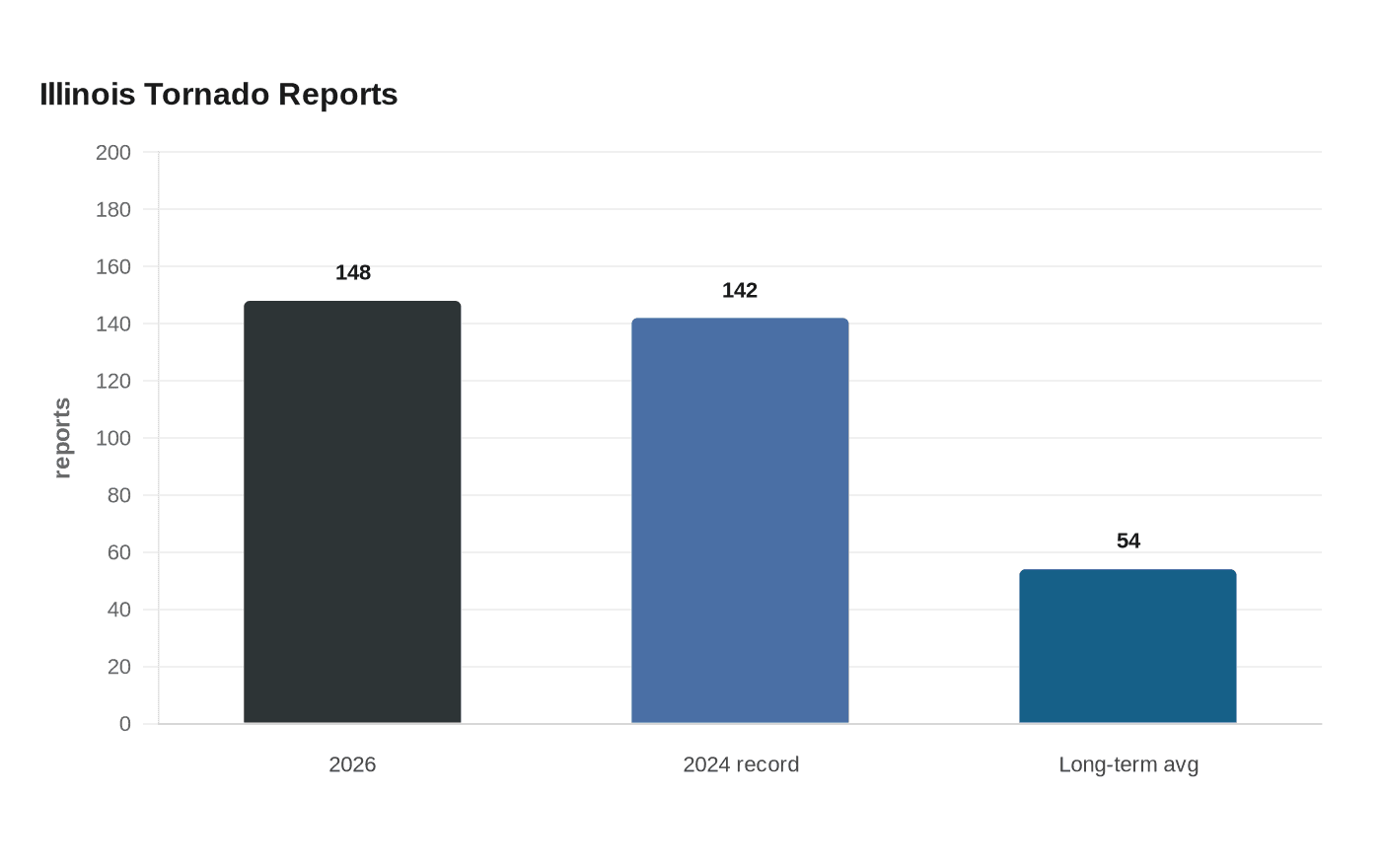
The damage in southern Illinois came on top of an earlier severe weather outbreak. The National Weather Service said several tornadoes, including multiple strong to intense tornadoes, hit parts of northern and central Illinois and northwest Indiana during the late afternoon and evening of Thursday, June 11. Preliminary surveys confirmed 12 tornadoes in that outbreak, including an EF-3 tornado near Washburn. Illinois has now recorded at least 148 tornado reports in 2026, breaking the previous annual record of 142 set in 2024 and far above the state’s long-term average of 54 tornadoes a year.
Out West, the fire fight was escalating just as the tornado threat was still unfolding in the Midwest. The National Interagency Fire Center raised the national preparedness level to 3 on June 18, after 74 new fires were reported in a single day, with 27 uncontained large fires burning nationwide, nearly 5,000 personnel assigned and more than 2.6 million acres burned so far this year. Extreme heat, dry conditions and wind were driving several blazes, and at least 70 active wildfires were burning across the West.
In Utah, the Iron Fire had blackened 34 square miles in Juab County and forced evacuations in Eureka. Officials said the blaze was human-caused and still under investigation. With drought and red flag warnings also deepening risk in Arizona and Colorado, the season is no longer presenting disasters as isolated events. It is demanding that emergency managers, insurers and residents prepare for compound extremes, with one atmosphere delivering tornadoes, fire and cascading disruption all at once.
This article was produced by Prism’s automated news system from verified source data, official records, and press releases, then run through automated quality and moderation checks before publishing. The system is built and supervised by the people who set the standards it runs under. Read our full AI policy.
Did this article answer your question?