Death Valley's 2026 superbloom draws photographers, one drove 1,000 miles from Yellowstone
A photographer identified as Elliot McGucken drove roughly 1,000 miles from Yellowstone to Death Valley in early March 2026, trading minus 10°F in Montana for above 90°F and a 12-hour drive to photograph the superbloom.
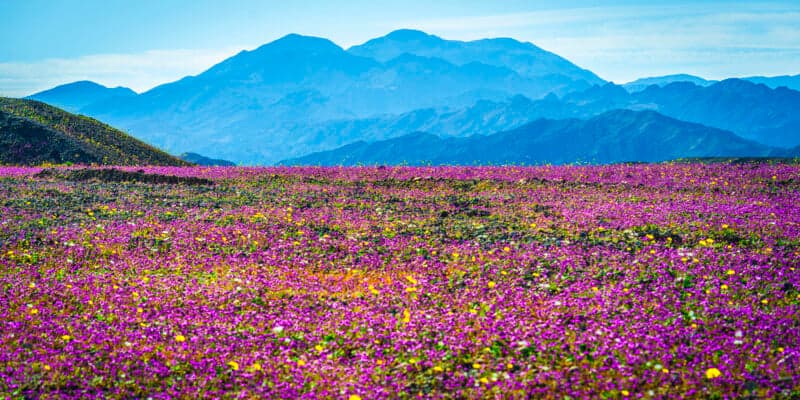
A rare, expansive superbloom in Death Valley National Park in early March 2026 pulled photographers and sightseers into the basin and backroads, including a photographer identified as Elliot McGucken who said he drove roughly 1,000 miles from the Yellowstone region and made the 12-hour trip south. McGucken described swapping frigid Montana temperatures of minus 10°F, or minus 23°C, for daytime highs above 90°F in Death Valley and called the trip a “hell yes” moment for nature photographers.
The bloom followed record rainfalls over preceding months that, according to park assessments, have the potential to produce the best season since the famed 2016 superbloom. McGucken said he knew a desert superbloom was likely and added, “If the superbloom went off and I missed it, I would forever regret it.” Along the usually barren road into Badwater Basin he reported “brilliant displays of Desert Gold,” with newer plants and greenery spreading through much of the park.
On-the-ground reporting and video documentation mapped where the color showed up. A field guide video that visited Badwater Basin, Golden Canyon, Dante’s View, Panamint Valley, Echo Canyon, Inyo Mine, and the Mesquite Dunes noted the Mesquite Dunes parking lot was nearly full by 6:30 a.m., and in Echo Canyon the dominant flowers were “definitely the brittle brush and the sun cups.” The Inyo Mine segment highlighted a visible keyhole rock feature for drivers to watch for, and observers reported a temporary lake at Badwater Basin known locally as Lake Manly.
Community posts and route tips circulated rapidly: one guide recommended driving Badwater Basin to Jubilee Pass for variety, Reddit updates stated “Flowers are currently blooming on 190 between Stovepipe and Furnace Creek,” and other users noted “Blooms everywhere basically south end of the park all the way up to furnace creek!” Timing advice varied by elevation, with low-elevation peaks suggested for mid-to-late March and higher-elevation blooms projected April through June. Practical concerns in the threads included EV charging logistics, parking congestion at early hours, and repeated reminders to “Leave no trace.”

Interest online mirrored the field activity: a trip video posted March 2, 2026 logged over 16,000 views with more than 500 likes and dozens of comments, while social posts included an Instagram caption noting medium-format gear, “Fuji GFX100s,” used for fine-art landscape work in the desert. Reporting and community posts contain a few inconsistencies to note: one national report used the name variant “Eric McGucken,” and some transcripts and copy include the typographical word “wildfires” where context and photographs clearly indicate “wildflowers.”
For photographers planning a visit, the practical picture is concrete: Desert Gold and carpets of pink and yellow are already visible along routes into Badwater Basin and up Highway 190, Mesquite Dunes draws early crowds by sunrise, and higher-elevation areas should be watched through June. The park’s unusually wet winter turned parts of one of the hottest, driest landscapes into a brief but spectacular season of color.
Know something we missed? Have a correction or additional information?
Submit a Tip

