Decades of U.S.-Iran talks, from 1953 coup to nuclear deal battles
A half-century of coups, hostage crises, sanctions and nuclear brinkmanship explains why U.S.-Iran talks keep reopening, then hardening and collapsing.
How distrust became the default
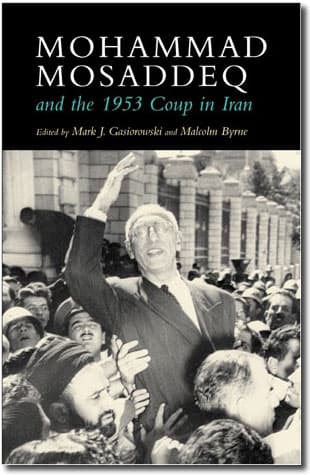
The hardest part of any U.S.-Iran negotiation is not the text on the table. It is the history sitting in the room. The grievance most often traced to the start of modern mistrust is the August 19, 1953 coup that removed Iran’s elected prime minister, Mohammad Mosaddegh, after U.S. and British backing. That episode still shapes how Iranian leaders and much of the public read American promises: as reversible, conditional, and ultimately tied to power rather than law.
That distrust deepened after the 1979 Islamic Revolution and the November 4, 1979 seizure of the U.S. Embassy in Tehran. Fifty-two Americans were held hostage for 444 days and released on January 20, 1981. The crisis froze the relationship in a way no later diplomatic opening has fully escaped. Even when the two sides have found common ground, the memory of rupture has made each side assume the other is preparing for betrayal.
Secret contacts and the nuclear file
The record is not one of total silence. During the 1980s, the Iran-Contra scandal and other covert contacts showed that hostility and back-channel diplomacy can coexist. Oliver North and Reagan-era officials were part of a web of secret dealings that did not create a lasting breakthrough, but it did prove that even the most public standoff can hide pragmatic contact behind the scenes.
The nuclear issue eventually became the central arena for that pragmatism. In August 2002, previously undisclosed facilities at Natanz and Arak were publicly revealed, and the International Atomic Energy Agency expanded scrutiny. Throughout the 2000s, the agency and member states pursued questions about possible military dimensions, while the United States and others layered on sanctions. That period matters because it taught negotiators that any future agreement would have to be built around intrusive verification, not trust.
The JCPOA tried to turn time into security
The most serious opening came with the P5+1 talks, which brought China, France, Russia, the United Kingdom, the United States, Germany, and the European Union into a single diplomatic track with Iran. The political agreement was announced on July 14, 2015, and the deal entered implementation and IAEA verification in 2016. Its purpose was not to eliminate Iran’s nuclear program, but to make any dash toward a bomb visible in time for the world to respond.
That is why the technical limits mattered so much. Under the JCPOA, Iran agreed to cap enrichment at 3.67 percent U-235 and limit its stockpile of enriched uranium hexafluoride to 300 kilograms, about 202.8 kilograms of uranium by weight. The agreement also restricted centrifuge numbers, curbed research and development, and imposed an extensive monitoring system. Arms control analysts described the effect in plain terms: the deal lengthened Iran’s “breakout time,” the period needed to produce enough weapons-grade fissile material for a bomb, to roughly one year under full compliance.
The political reaction was as revealing as the technical text. European allies backed the deal and tried to keep it intact. In Washington, Congress created a review process through the Iran Nuclear Agreement Review Act, while many Republicans and Israeli officials opposed the pact. Benjamin Netanyahu publicly condemned it, and those domestic divides ensured the agreement was accepted as a temporary constraint rather than a settled peace.
Sanctions relief, then reversal
The deal’s central bargain was sanctions relief in exchange for verified limits. That logic collapsed on May 8, 2018, when President Donald J. Trump announced the United States was withdrawing from the JCPOA and re-imposing sanctions. The renewed pressure targeted Iran’s energy, petrochemical, financial, and related sectors. The administration argued that the agreement was too weak; European signatories expressed regret and tried to preserve it.
The economic effects were immediate and severe. Iran’s oil exports, which had been around 2.6 million to 2.7 million barrels per day in 2018, fell to well below 500,000 barrels per day by late 2019 in some tracking estimates. The World Bank projected Iran’s economy would contract by about 8.7 percent in 2019/20 as oil and gas output was hit and banking restrictions tightened. For Tehran, sanctions relief was no longer an abstract diplomatic prize. It was tied to state revenue, currency stability, and the government’s ability to show its own population that negotiation still had value.
How the nuclear clock accelerated
Iran responded step by step. In May 2019, it announced it would stop observing certain JCPOA limits, and by July 1, 2019, the IAEA confirmed that Iran had exceeded the 300-kilogram enriched-uranium cap. Iran also expanded enrichment, including material enriched to 20 percent and later to 60 percent at different points. The agency continued reporting on verification and safeguards, but access issues and gaps became part of the record.
This is the technical turning point that explains the urgency in later diplomacy. Independent analysts at the Institute for Science and International Security and the Arms Control Association have warned that breakout time shrank from about a year under the JCPOA to a matter of months, or even weeks depending on enrichment levels and centrifuge deployments, after the post-2018 expansion. That change did not just raise proliferation risk. It changed bargaining power, because every delayed round of talks made restoration harder.
Why Vienna and Doha stalled
Efforts to restore mutual compliance resumed in Vienna on April 6, 2021, with the United States participating indirectly while the other parties met Iran more directly. The talks moved through technical rounds, but they repeatedly ran into the same core dispute: Iran wanted sanctions relief first, along with guarantees that Washington would not walk away again, including on some Islamic Revolutionary Guard Corps-related designations. The United States wanted verifiable nuclear steps first.
That sequencing fight helped stall the process after Iran’s presidential transition in 2021. By June 2022, the parties were still trying to keep talks alive through indirect contacts in Doha, with Josep Borrell and Enrique Mora helping coordinate European efforts. The talks never produced a fully restored deal. European mediators warned that the window was closing while Iran’s nuclear capacity kept growing.
The domestic politics that keep closing the door
Inside Iran, the politics of negotiation have shifted with each cycle. Reformists and moderates, especially under Hassan Rouhani and Mohammad Javad Zarif, treated the JCPOA as a path to sanctions relief and economic stabilization. Hardliners, later strengthened under Ebrahim Raisi, pushed for tougher demands and guarantees against renewed U.S. pressure. Public opinion followed the same arc: early support for the 2015 deal was high, then softened as the promised benefits failed to materialize.
Outside Iran, the regional and global reaction has also shaped the talks. Israel and some Gulf Arab states favored pressure and welcomed the 2018 U.S. withdrawal. Russia, China, and European governments generally preferred keeping JCPOA constraints alive. The IAEA, under Rafael Grossi, remained focused on the one issue that has defined every phase of this story: whether inspectors can verify what Iran is doing before a crisis becomes irreversible.
The pattern is now unmistakable. Each opening has been narrow, each trust-building step has been fragile, and each collapse has left the next round harder to revive. That is why U.S.-Iran diplomacy is never just about one agreement. It is about whether either side believes the other can be constrained long enough to make verification matter.
This article was produced by Prism’s automated news system from verified source data, official records, and press releases, then run through automated quality and moderation checks before publishing. The system is built and supervised by the people who set the standards it runs under. Read our full AI policy.
Did this article answer your question?


