Deezer lets users filter AI music, Spotify still lacks the option
Deezer now tags millions of AI tracks and lets listeners filter them out, while Spotify still offers no simple off switch.
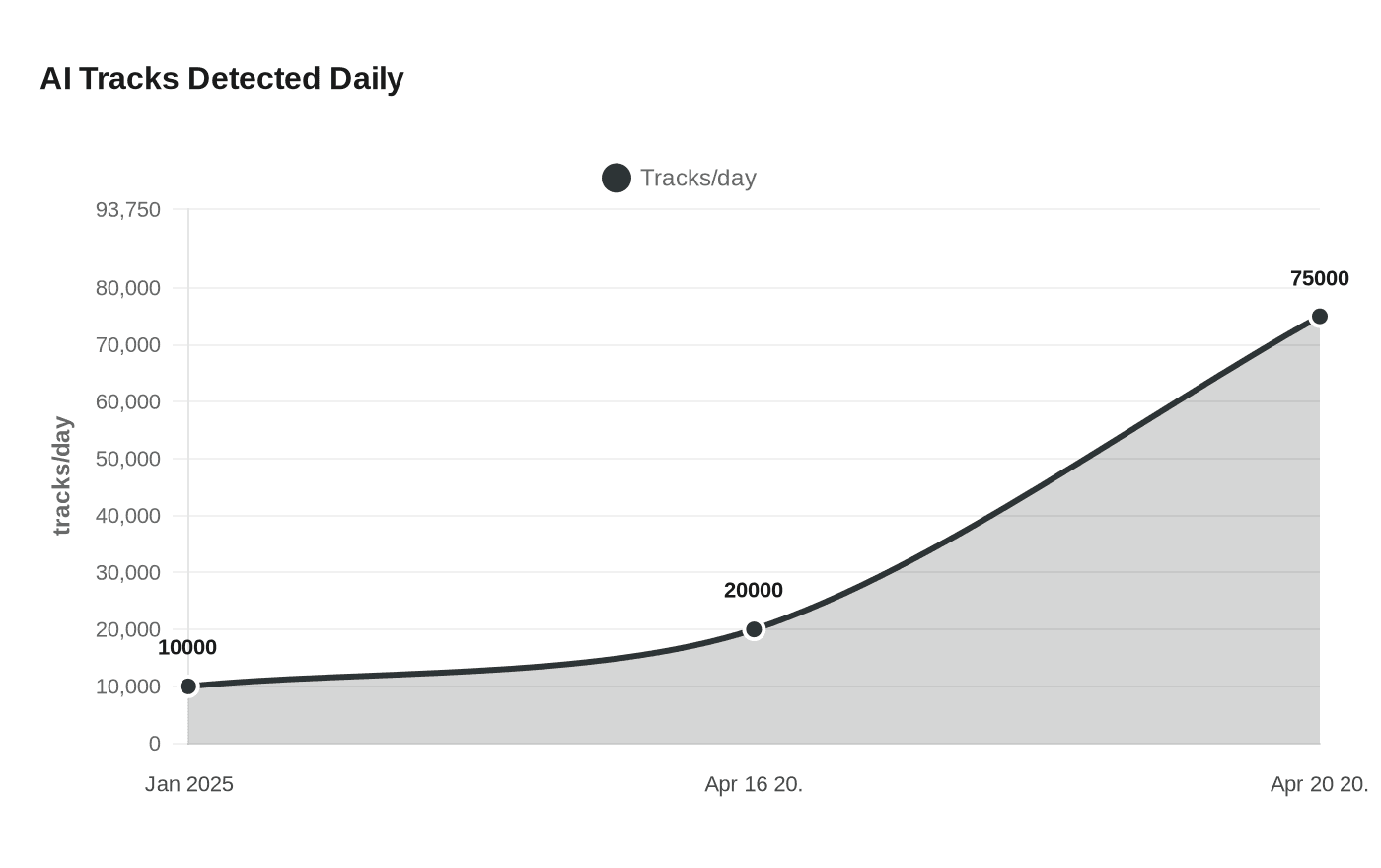
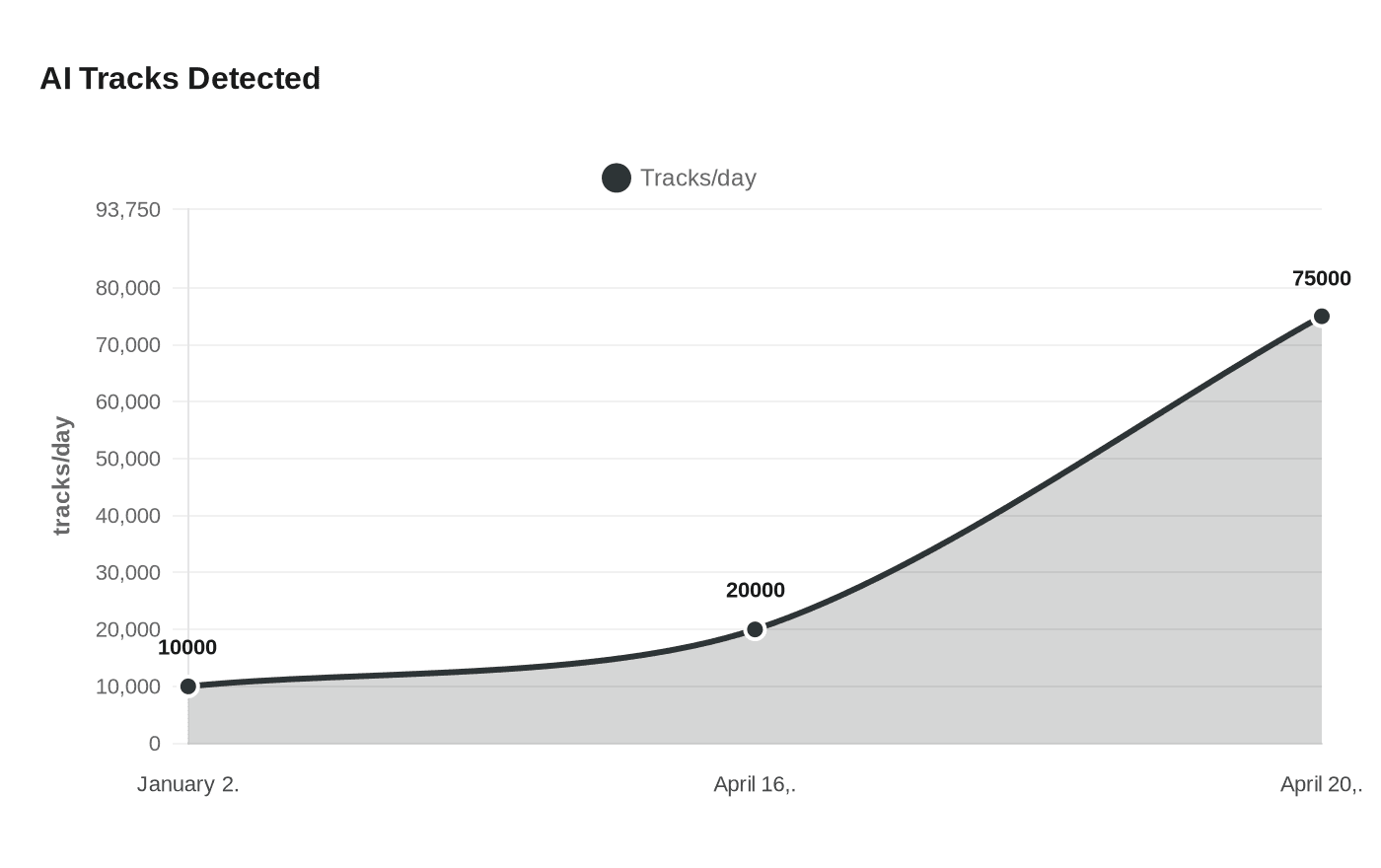
Deezer has turned AI music into a consumer-choice issue, not just a backend moderation problem. The Paris-based streamer says it is the only major platform that explicitly tags AI-generated songs, and it gives users a way to filter them out after rolling out a patent-pending detection tool on January 24, 2025. Deezer said that tool found about 10,000 fully AI-generated tracks a day in January 2025, roughly 10% of daily content delivery, then more than 20,000 a day by April 16, 2025, and almost 75,000 a day by April 20, 2026, about 44% of all uploads.
The numbers help explain why the debate has sharpened. Deezer says AI-generated music still makes up only 1% to 3% of total streams on its service, but 85% of those streams are detected as fraudulent and demonetized. The company said it tagged more than 13.4 million AI tracks in 2025 and stopped storing hi-res versions of AI tracks, a sign that it sees the issue as both a cataloging problem and a trust problem. Deezer chief executive Alexis Lanternier has argued that the data shows AI music is far from marginal and that the wider ecosystem needs to protect artist rights and fan transparency.

Spotify has taken partial steps, but it still does not offer a user-facing button to filter out AI music. In April 2026, it launched a test feature that shows in song credits how an artist used AI. In September 2025, it said it would adopt DDEX labeling and roll out a music spam filter to catch bad actors and stop recommending those tracks. Spotify has also said unauthorized AI voice clones, deepfakes and other vocal replicas are not allowed and will be removed. Its position is that AI use in music sits on a spectrum, and that a standard disclosure system can show whether AI was used in vocals, instrumentation or post-production without forcing a false yes-or-no label.
That distinction has not satisfied everyone. Cedrik Sixtus, a software developer in Leipzig, Germany, built a Spotify AI Blocker after finding tracks in his playlists that he suspected were AI generated. The point, he said in effect, is choice: whether listeners want AI music or not. A Deezer-Ipsos poll cited in recent reporting found that 97% of listeners could not correctly tell AI-generated and human-made tracks apart, which makes the absence of a simple filter more than a technical quibble.
The fight is now about who the platforms are designed to serve. Deezer has chosen blunt transparency, even if it means labeling millions of tracks and confronting fraud head-on. Spotify has chosen a narrower path, leaning on industry standards and selective disclosures while avoiding a listener-facing switch. In a market flooded by synthetic music, that difference decides who keeps control: the listener, or the platform.
This article was produced by Prism’s automated news system from verified source data, official records, and press releases, then run through automated quality and moderation checks before publishing. The system is built and supervised by the people who set the standards it runs under. Read our full AI policy.
Did this article answer your question?