Dell Pulls Back AI-First Marketing as Consumers Favor Basics
At CES 2026, Dell executives conceded that buyers are not choosing new PCs because of AI and deliberately softened "AI-first" messaging, even as every announced model includes a neural processing unit. The move signals a recalibration by a major PC maker as consumers prioritize traditional features over experimental AI promises.
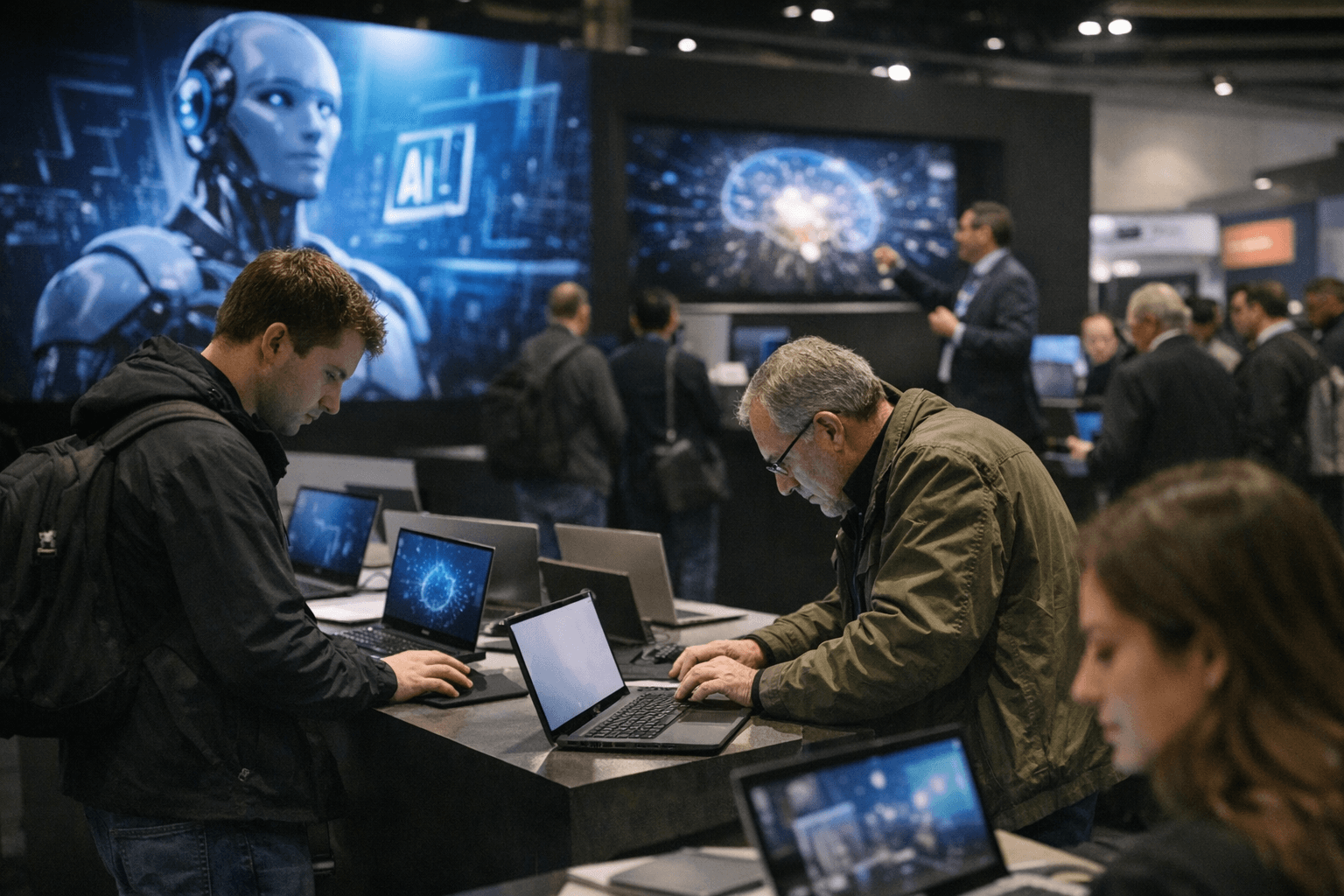
Dell arrived at CES 2026 with a quieter message about artificial intelligence, telling customers that hardware upgrades and familiar performance attributes would take precedence over bold AI-first claims. The company’s executives acknowledged that, despite equipping every new 2026 model with a neural processing unit, consumers were not being motivated by AI marketing to replace or upgrade their machines.
Kevin Terwilliger, Dell’s head of product, said in pre-CES and CES-week interviews that the company had intentionally altered its approach. “One thing you’ll notice is the message we delivered around our products was not AI-first,” he said, adding that “they’re not buying based on AI.” Terwilliger went further, observing that “In fact, I think AI probably confuses them more than it helps them understand a specific outcome.” Those comments marked a public retreat from the high-profile AI messaging Dell used a year earlier.
Dell’s decision to quiet its marketing did not mean the company abandoned AI capabilities. Terwilliger confirmed that “everything that we’re announcing has an NPU in it,” meaning Dell’s new laptops and desktops carry dedicated neural processing hardware intended to accelerate on-device AI tasks. The distinction between simply shipping AI-capable components and building marketing narratives around AI became central to Dell’s strategy at the show.
The pivot reflects broader industry friction. Jeff Clarke, Dell’s chief operating officer, acknowledged the mismatch between early expectations and real customer demand, describing the situation as “this un-met promise of AI, and the expectation of AI driving end user demand.” That realism comes amid a larger push from Microsoft and chip partners to differentiate machines with Copilot+ certification, a designation that requires NPUs capable of roughly 40 trillion operations per second or more. Not every device with AI-capable hardware meets that threshold, and older PCs with powerful GPUs may run many AI workloads without qualifying as Copilot+ or as what marketing departments label an AI PC.
Dell executives cited consumer research showing buyers care first about battery life, display quality, price, reliability and a device that “feels fast today.” The message to retailers and reviewers at CES was practical: prioritize tangible, familiar benefits rather than speculative, hard-to-communicate AI features. The company also used the show to revive its XPS line for 2026, a product move meant to reconnect with customers on conventional grounds of design and performance after acknowledging previous missteps.
The shift has implications for PC makers, software partners and consumers. For vendors, the lesson is that hardware upgrades alone do not justify a full-scale marketing pivot unless the user benefit is clear and immediate. For Microsoft and the Copilot+ rollout, Dell’s stance complicates a unified industry narrative that AI functionality alone will spur upgrades after Windows 10 reached end of support in 2025. For consumers, the change may bring clearer buying guidance and fewer confusing claims, but also slower mainstream exposure to on-device AI features.
In practical terms, Dell’s CES posture signaled a recalibration rather than retreat: the company is building AI-capable machines while making a strategic choice to sell them on familiar, demonstrable advantages. How competitors respond will shape whether AI becomes a selling point or recedes into a background feature of modern PCs.
This article was produced by Prism’s automated news system from verified source data, official records, and press releases, then run through automated quality and moderation checks before publishing. The system is built and supervised by the people who set the standards it runs under. Read our full AI policy.
Did this article answer your question?


