Democrats gain ground in key Senate races as 2026 map favors Republicans
Democrats have moved into contention in four Republican-held Senate seats, as Cook shifted Georgia, North Carolina and Ohio toward the party and Roy Cooper joined the North Carolina race.

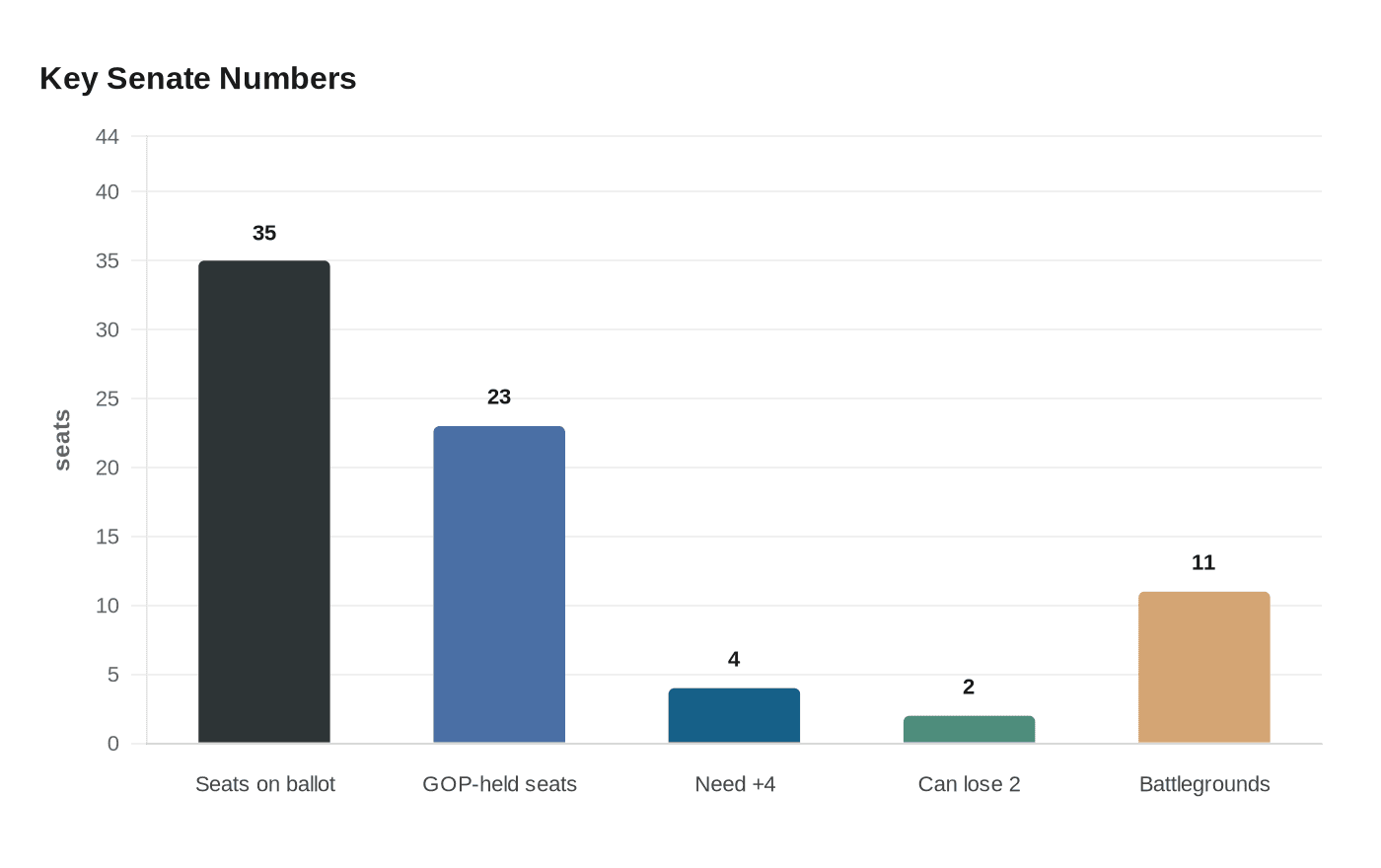
The 2026 Senate map still tilts toward Republicans, but Democrats have turned it into a competitive battlefield by forcing pressure in seats that once looked safe on paper. With 35 Senate seats on the ballot on November 3, including special elections in Florida and Ohio, Republicans hold 23 of those seats and entered the cycle with a 53-47 majority, plus two independents who caucus with Democrats.
That math means Democrats need a net gain of four seats to take control in 2027, while Republicans can afford to lose only two and still keep the chamber. Even so, Democrats are tied or ahead in four Republican-held races, and Ballotpedia has identified 11 battlegrounds in Alaska, Florida, Georgia, Maine, Michigan, Montana, Nebraska, New Hampshire, North Carolina, Ohio and Texas. The list underscores how much of the fight is centered in states where the partisan baseline still favors the GOP.
The clearest sign of movement came on April 13, when the Cook Political Report moved Georgia and North Carolina from toss-up to lean Democrat, shifted Ohio from lean Republican to toss-up, and nudged Nebraska from safe Republican to likely Republican. Analysts still describe Republicans as favored to keep control, but the ratings changes reflected a sourer national environment for the party and a Democratic bench that has recruited more aggressively than in recent cycles.
Roy Cooper’s entry into the North Carolina race has been treated inside Democratic circles as a major recruiting win. The former governor gives Democrats a well-known statewide candidate in a contest against Thom Tillis, and his presence helps explain why North Carolina moved into the lean Democrat column. Georgia, where Jon Ossoff is defending a seat in a state Donald Trump won in 2024, has also become more competitive than the traditional Senate map would suggest.
The broader picture remains historically difficult for Democrats. They have not won a Senate race in Tennessee since Al Gore’s reelection in 1990, have not won in Iowa since Tom Harkin’s reelection in 2008, and have gone decades without Senate victories in Kansas, Wyoming, Idaho, Mississippi, Kentucky, Oklahoma, South Carolina and Tennessee. That history is why a Democratic path to the majority once seemed far-fetched. This cycle, however, strong recruitment, unfavorable crosscurrents for Republicans, and a handful of unexpectedly live races have made that path plausible enough to shape the entire campaign.
This article was produced by Prism’s automated news system from verified source data, official records, and press releases, then run through automated quality and moderation checks before publishing. The system is built and supervised by the people who set the standards it runs under. Read our full AI policy.
Did this article answer your question?

