President set to break media boycott at press celebration event
Trump will return to the White House Correspondents' Dinner on April 25, ending a boycott he built around years of attacks on the press.
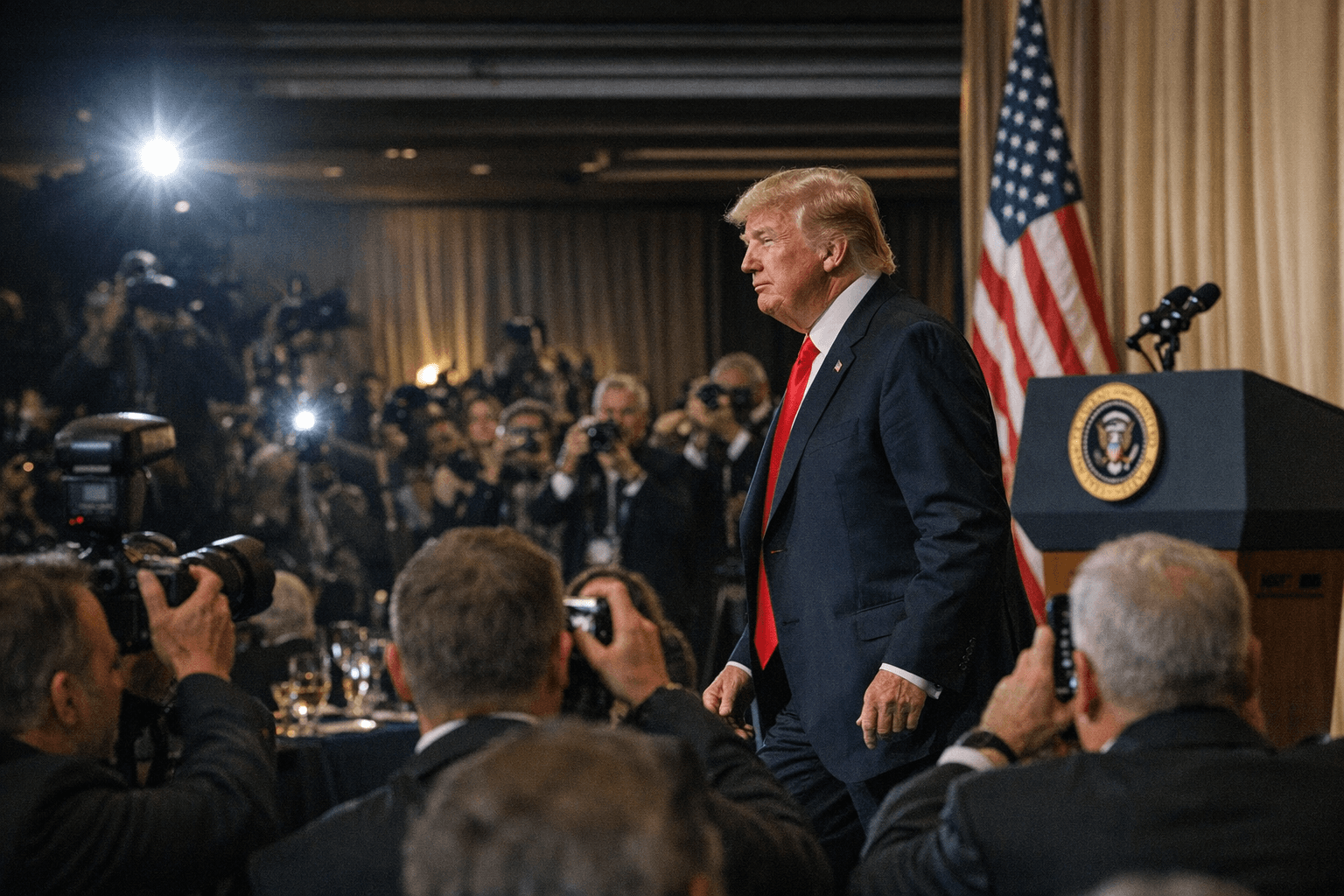
President Donald Trump will return to the White House Correspondents’ Dinner on April 25, breaking with a boycott that defined his relationship with the Washington press corps through his first term and the opening year of his second. The appearance puts a president who has long attacked journalists inside the room for the industry’s biggest annual celebration, a contrast that will be hard to miss at the Washington Hilton.
Trump said in a social media post that the White House Correspondents’ Association had asked him to serve as the evening’s honoree and tied his decision to the nation’s 250th birthday. He also framed the invitation as recognition from a group he has repeatedly denounced, saying he had skipped the event because the press was “extraordinarily bad” to him.
The dinner is more than a social stop on the Washington calendar. The association says proceeds from the annual event underwrite scholarships, awards and other work tied to covering the presidency, and that tickets are sold only to news organizations with association members. Association president Weijia Jiang said the group was glad Trump had accepted the invitation.
Trump’s return also reopens an old wound in the president-press relationship. The correspondents’ dinner began in 1921 and has been held since 1924, when Calvin Coolidge became the first president to attend. Trump attended once as a guest in 2011, when Barack Obama mocked his White House ambitions; he later skipped the gala throughout his first term and again last year. After the backlash to Michelle Wolf’s 2018 performance, the association moved away from comedians for several years, underscoring how volatile the event had become.
For Trump, the dinner offers a rare stage in front of the journalists he has spent years trying to delegitimize. For the White House press corps, it is a stress test of whether the ritual still serves as a shared civic moment, or whether it has become another arena for managed confrontation, image control and a politics of permanent combat.
This article was produced by Prism’s automated news system from verified source data, official records, and press releases, then run through automated quality and moderation checks before publishing. The system is built and supervised by the people who set the standards it runs under. Read our full AI policy.
Did this article answer your question?

