Democrats revive oil windfall tax as Iran war drives prices higher
Oil prices jumped 50% this year as Democrats revived a crude windfall tax, reopening a fight over whether Washington can stop wartime profiteering.
Democratic lawmakers have revived a familiar but difficult idea: taxing extraordinary oil-company gains while war in Iran has pushed fuel costs higher. Sen. Sheldon Whitehouse and Rep. Ro Khanna reintroduced the Big Oil Windfall Profits Tax Act on March 17, 2026, as S. 4111, and the Senate sent it to the Finance Committee the same day. The bill would impose a windfall profits excise tax on crude oil and send the proceeds back to individual taxpayers through a new trust fund, putting Washington squarely back into a debate over whether government can claw back wartime gains without backfiring on consumers.
The political case is straightforward. Whitehouse’s office said gas prices were up 80 cents in just weeks and oil prices had risen 50% from the start of the year. The U.S. Energy Information Administration said Brent crude settled at $94 per barrel on March 9, about 50% above the beginning of the year and the highest since January. The same market shock has lifted gasoline and oil price forecasts, while lawmakers backing the bill argue that oil companies should not capture profits created by instability in the Middle East. Original Senate cosponsors included Tammy Baldwin, Richard Blumenthal, Cory Booker, Tim Kaine, Ed Markey, Jeff Merkley, Chris Murphy, Jack Reed, Bernie Sanders, Tina Smith and Elizabeth Warren.

The practical obstacles are much harder. Congress would have to define what counts as a windfall, decide whether to target crude producers, refiners or integrated firms, and build a tax that does not simply get passed through into higher prices at the pump. Critics warn that a badly designed tax could distort investment and weaken domestic production at the very moment energy markets are already strained. The problem is not abstract. A tax on crude profits can be written to sound simple and still become a fight over margins, transfer pricing, capital spending and whether the burden lands on shareholders or consumers.
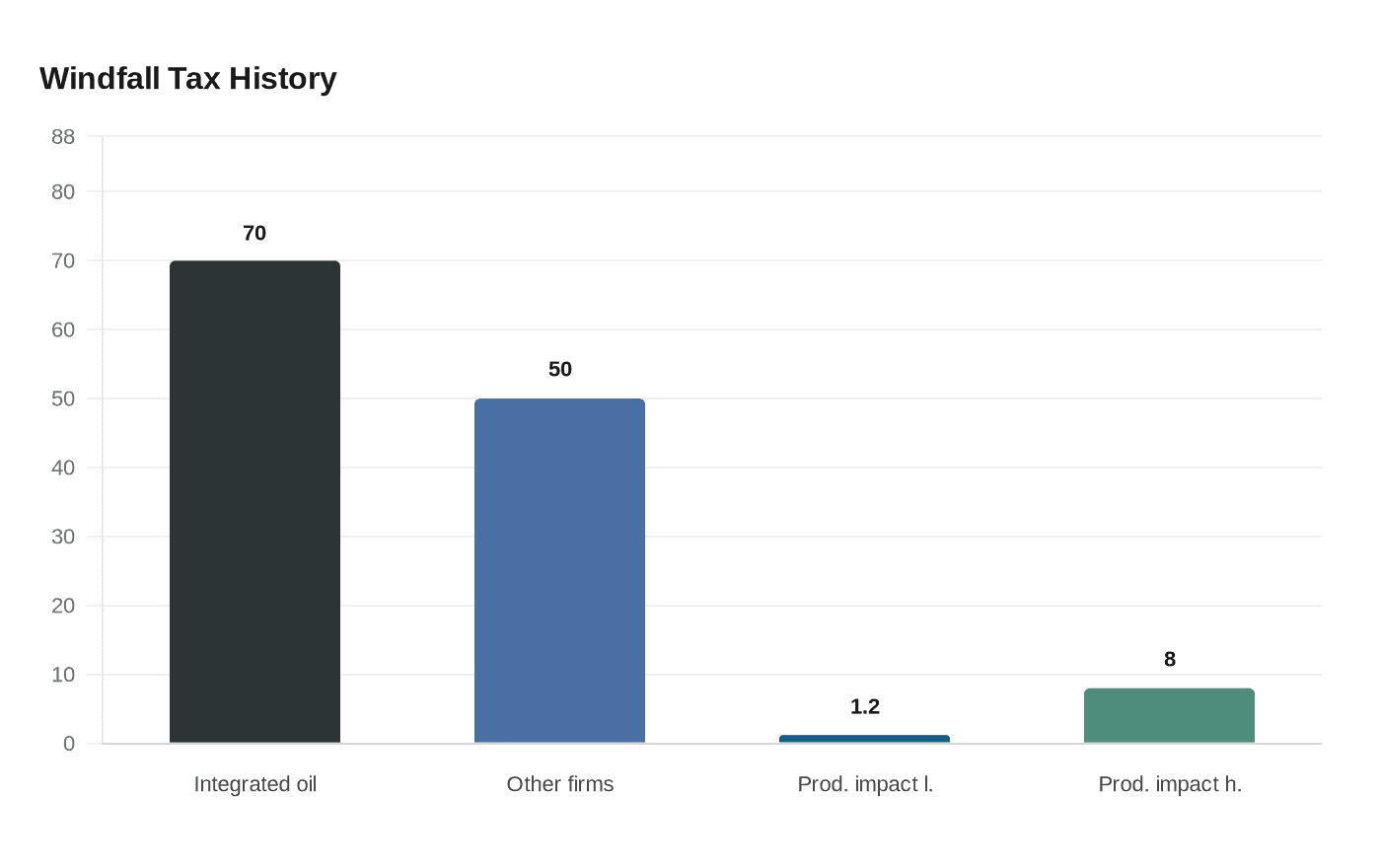
History offers a cautionary example. Congress enacted the Crude Oil Windfall Profit Tax Act in 1980 after the late-1970s oil shocks and the end of federal price controls, but the Congressional Research Service later described it as an excise tax rather than a true profits tax. Rates reached 70% for integrated oil companies and 50% for others, with lower rates for stripper wells and some harder-to-produce oil. The tax was repealed in 1988 after becoming an administrative burden for the IRS and a compliance burden for industry, and CRS found it may have reduced domestic oil production by 1.2% to 8.0% from 1980 to 1988.
The renewed U.S. push also follows a broader European pattern. Governments across Europe used temporary windfall taxes during the 2022 energy crisis after Russia invaded Ukraine, and European officials again discussed taxes and relief measures in 2026 as prices jumped after the Iran war. That leaves Democrats with a politically potent proposal and a steep legislative test: whether Washington can design a tax tough enough to look meaningful, and precise enough to survive the market, the industry and the law.
This article was produced by Prism’s automated news system from verified source data, official records, and press releases, then run through automated quality and moderation checks before publishing. The system is built and supervised by the people who set the standards it runs under. Read our full AI policy.
Did this article answer your question?

