Democrats Seize on Report of President Accepting Foreign Steel Donation
ArcelorMittal, a Luxembourg steelmaker, donated $37M in European steel for Trump's White House ballroom, two days before the White House cut tariffs that could directly benefit the firm.
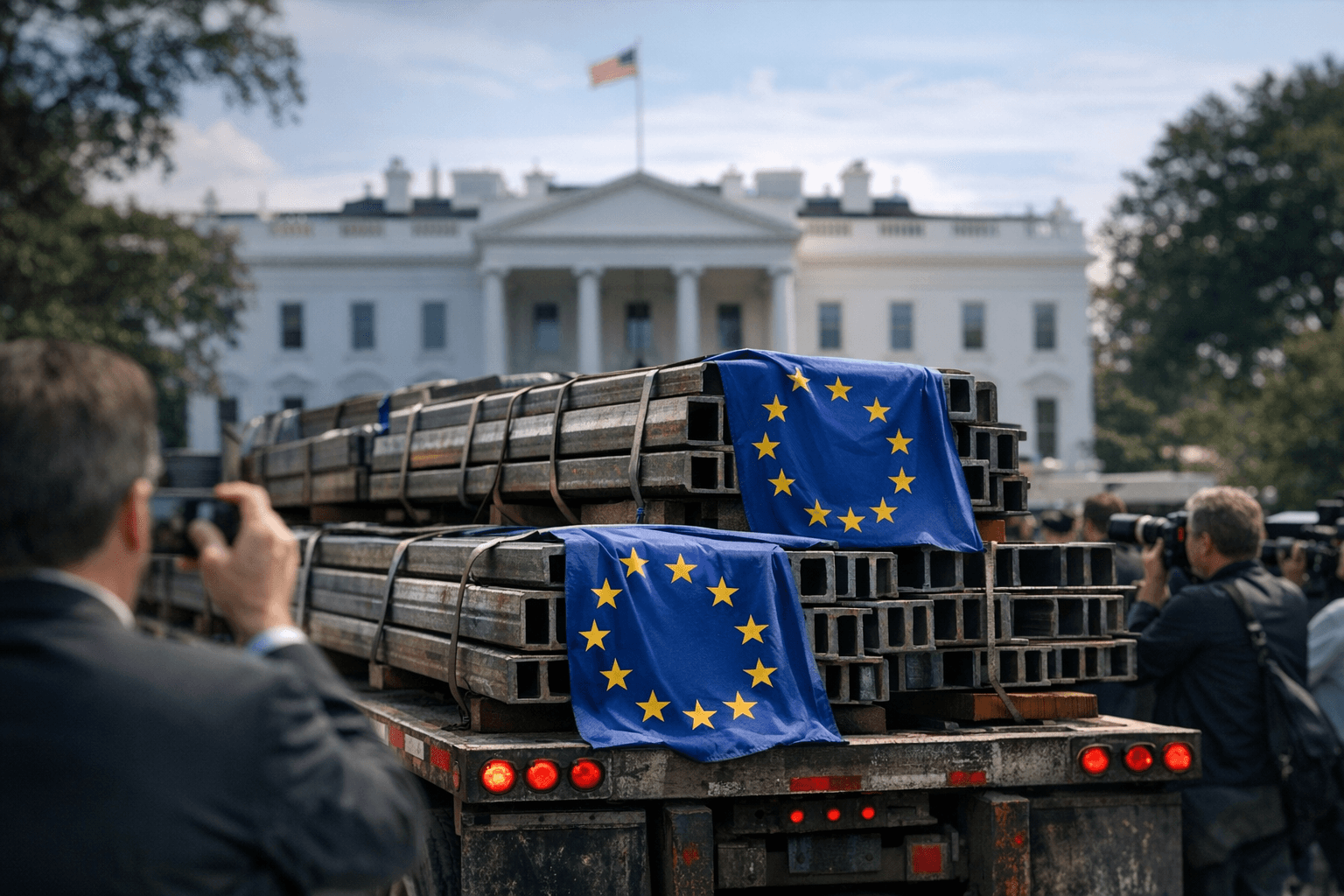
The timing was hard to ignore. Days after President Trump publicly praised a $37 million steel donation for his White House ballroom last October, describing the anonymous contributor only as a "great steel company," the White House issued a trade proclamation that cut in half the tariffs on automotive steel exported from ArcelorMittal's Canadian plant. The Luxembourg-based steelmaker, the world's second-largest producer, was subsequently identified by the New York Times as the company that donated the steel, which was produced in Europe.
Democrats seized on the disclosure Wednesday, casting the episode as the sharpest possible contradiction of the administration's "America First" trade posture. California Governor Gavin Newsom posted "Make America Luxembourg Again?" on social media, while his office noted that California is opening its first new steel plant in 50 years. Minnesota State Senator Grant Hauschild, a Democrat representing the Iron Range region, was more pointed: "Foreign steel in the White House? Are you kidding? We've got Iron Range mines shut down and hundreds of steelworkers laid off. Instead, they're outsourcing one of the most iconic American buildings overseas. American steel built this country, it should build the White House too."
The White House did not dispute the core reporting. A spokeswoman said the administration would not discuss "specific materials" used in the construction, while a White House official separately characterized the proximity of the donation and the tariff adjustment as coincidental.
The ballroom project, which Press Secretary Karoline Leavitt once called Trump's "main priority," has generated legal and financial controversy since its announcement in July 2025. The planned 90,000-square-foot structure required the demolition of the 123-year-old East Wing, and its estimated cost has doubled from $200 million to $400 million. In March, federal judge Richard Leon blocked construction after ruling that Trump had not obtained congressional approval required by law.
The union representing the industry Trump has repeatedly vowed to protect offered no cover. "Tens of thousands of American steelworkers stand at the ready to supply our nation with high-quality products," said Roxanne Brown, president of the United Steelworkers International.
The tariff timeline sits at the center of the political fallout. Trump imposed a 50 percent tariff on imported steel in June 2025 and has made the domestic industry a cornerstone of his economic identity. The October proclamation authorized Commerce Secretary Howard Lutnick to reduce those tariffs by up to half for companies with facilities in Canada or Mexico that supply U.S. automotive manufacturers. ArcelorMittal, which exports automotive steel from a Canadian plant, fits that profile precisely.
The nonpartisan Campaign Legal Center has separately raised concerns that the ballroom's private funding model may run afoul of federal law. Whether the ArcelorMittal arrangement constitutes a reportable gift or carries broader ethical implications under federal procurement rules is a question the White House has not publicly addressed.
This article was produced by Prism’s automated news system from verified source data, official records, and press releases, then run through automated quality and moderation checks before publishing. The system is built and supervised by the people who set the standards it runs under. Read our full AI policy.
Did this article answer your question?

