Denmark's Election Leaves Frederiksen's Future Uncertain After Inconclusive Vote
Frederiksen's Social Democrats won just 21.9% of the vote on March 24 — their worst result in 120 years — leaving neither bloc with a majority and her future as prime minister in doubt.

Denmark's Social Democrats remained the biggest single party in Tuesday's general election, but their 21.9% vote share fell well below the 27.5% they took in the 2022 election, delivering what amounts to the worst result for the party in 120 years.
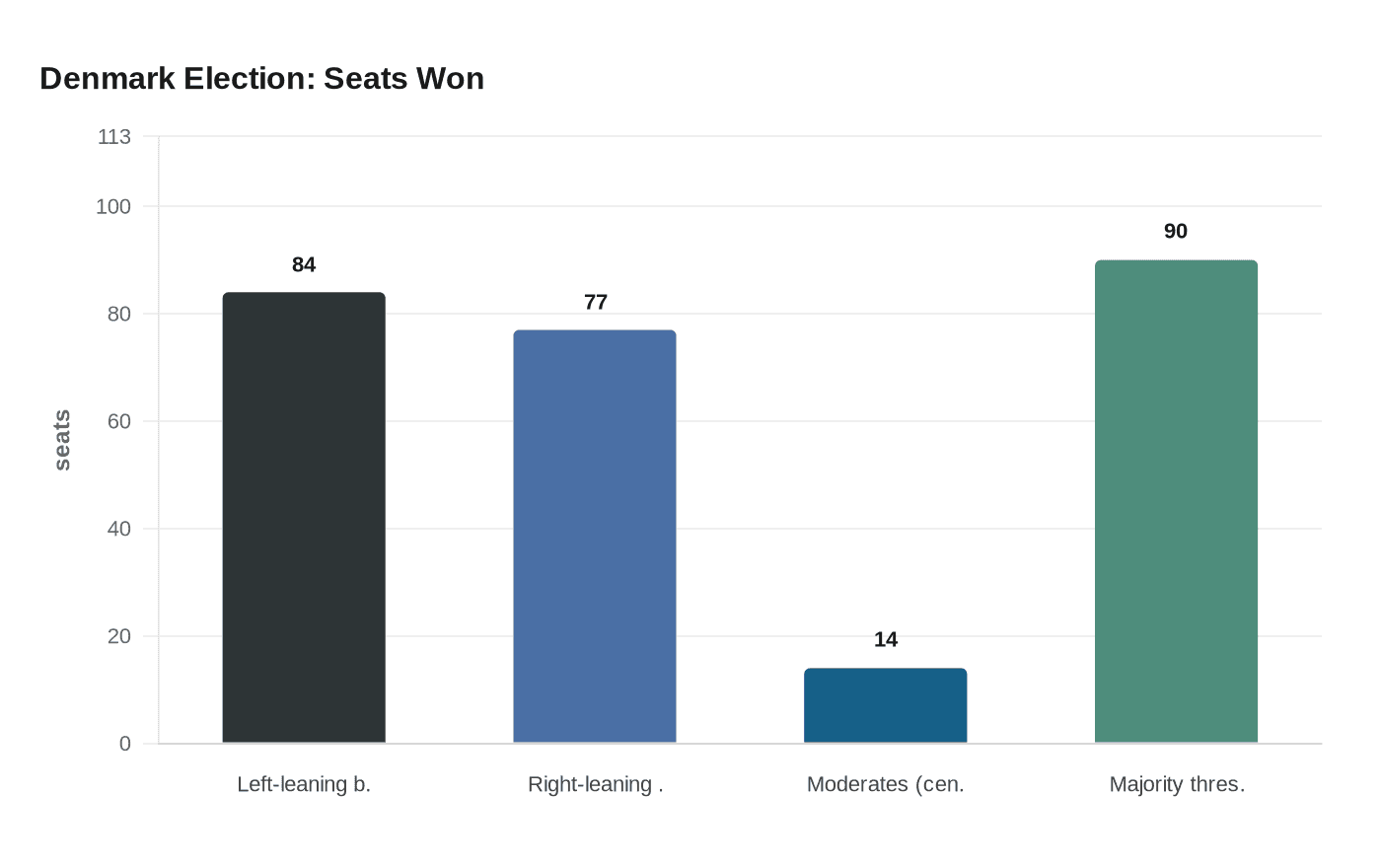
The Social Democrats and the others in the left-leaning bloc finished with 84 seats, short of the 90 needed for an outright majority in the 179-seat Folketing. Right-leaning parties also failed to exceed the threshold, with 77 seats, putting Foreign Minister Lars Løkke Rasmussen's centrist Moderate Party on track to emerge as potential kingmakers, with 14 seats.
Prime Minister Mette Frederiksen called the snap election in February, months before she was required to. She apparently hoped that her resolute image in the standoff over Trump's push for control of Greenland, rallying European allies behind Denmark, would help her with voters. The gamble did not pay off. The Greenland issue did not figure largely in the election, which was dominated by economic issues.
Her support had previously waned as the cost of living rose, something that, along with pensions and a potential wealth tax, has been a prominent campaign issue. Disillusioned voters felt she hadn't done enough to curb Denmark's rising housing prices, food prices and energy costs.
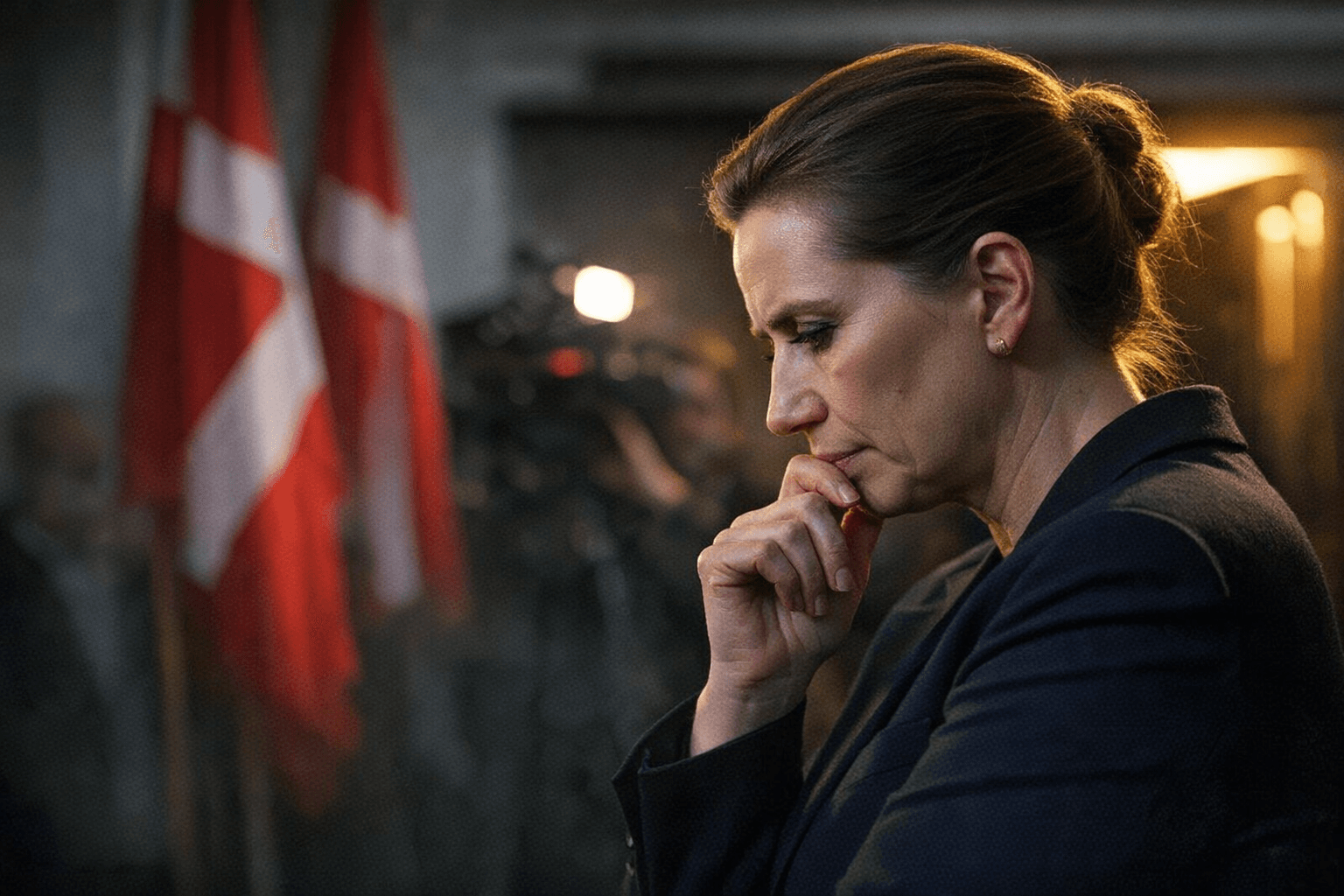
Frederiksen, who has been in office since 2019, had been praised for her leadership after standing her ground against Trump's repeated demands to annex Greenland, a semi-autonomous territory of the Kingdom of Denmark Trump claims the U.S. needs for national security reasons. After Trump backed down on threats to impose tariffs on Denmark and other European countries that opposed the U.S. taking control of the vast Arctic island, the U.S., Denmark and Greenland started technical talks on an Arctic security deal. With the crisis no longer dominating headlines, the political boost Frederiksen anticipated had already faded by election day.
Frederiksen said: "I have been in charge of this wonderful country for nearly seven years. We have weathered the pandemic; we have had to deal with war. We have been threatened by the American president, and in those nearly seven years, we have seen a four percent decline."
Defense Minister Troels Lund Poulsen, the best-placed center-right challenger to Frederiksen, made clear that he and his Liberal party do not intend to go into government with her Social Democrats again. That declaration narrows the coalition arithmetic considerably. Lars Løkke Rasmussen, having reportedly spent much of the night smoking his pipe, emerged at the Moderates' party late into the night and urged Frederiksen and Poulsen to "come down from the trees" and join him in the centre ground.
The far-right Danish People's Party, which campaigned on barring Muslim immigration and abolishing the country's petrol tax, surged to 9 percent of the vote, up from a previous slump in 2022. Four additional overseas seats held by Denmark's two autonomous territories, two for Greenland and two for the Faroe Islands, could also tip the balance given how close the result proved to be.
The election repeated a pattern that has become familiar in Europe in recent years, with a centre-left establishment seeking to fend off populist challenges from the left and the right amid growing dissatisfaction over cost-of-living issues. Thorny negotiations are expected in the days and weeks ahead to build a coalition government backed by a majority in parliament. Whether Frederiksen emerges from those talks still holding the prime ministership remains an open question.
Sources:
Know something we missed? Have a correction or additional information?
Submit a Tip