Denmark's Prime Minister Frederiksen Resigns After Election Defeat
Frederiksen submitted her resignation to King Frederik X at 10:15 a.m. at Amalienborg Palace after her coalition fell far short of the 90 seats needed to govern.
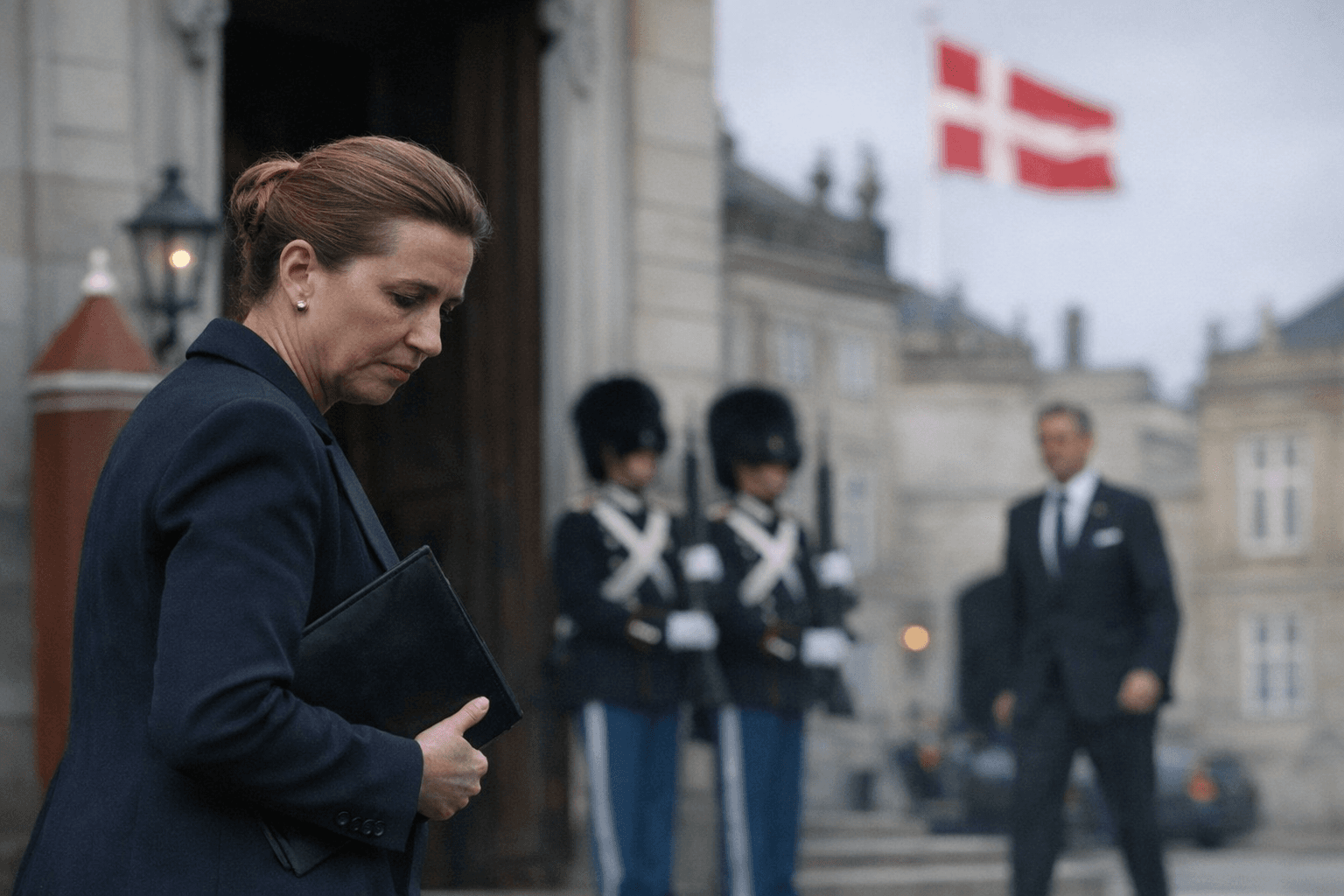
At 10:15 on a Wednesday morning, Mette Frederiksen walked into Amalienborg Palace and formally ended her government's hold on power.
Danish Prime Minister Frederiksen submitted her government's resignation to King Frederik X on March 25, after her three-party coalition suffered a large defeat in a general election. Parties are now set to launch potentially tough and long negotiations to determine whether the next government will be formed by Frederiksen or another party leader.
The Royal Palace Press Office confirmed that "after explaining the election results and the parliamentary situation, the Prime Minister submitted the government's resignation and advised that representatives of the political parties that have been elected to the Folketing should now be given the opportunity to speak about the upcoming government formation."
Tuesday's parliamentary election produced no outright majority in the 179-seat Folketing. Frederiksen's Social Democrats remained the largest party, securing 38 seats, while neither the left-leaning "red bloc" nor the right-leaning "blue bloc" won the 90 seats needed for a majority. The centrist Moderates, with 14 seats, are widely seen as a pivotal player in the coming coalition talks.
Denmark's government formation process largely follows long-standing political practice rather than detailed constitutional rules. Based on the parties' recommendations, a negotiation leader, also known as a royal investigator, is appointed to explore the possibility of forming a new government. In some cases, more than one round of consultations is required. Before the establishment of a new government, Frederiksen will continue her service in a caretaker capacity.
The defeat carries particular weight given Frederiksen's recent international profile. The political transition in Copenhagen follows a period of intense international leadership for Frederiksen, who previously led Denmark into the EU Council Presidency with a focus on scaling up European defense production, a strategy she sought to leverage during the 2026 campaign to bolster her "crisis-manager" image.
Whether that profile is enough to return her to the prime minister's office now depends entirely on the Moderates and the arithmetic of a parliament that delivered no clear mandate to anyone.
This article was produced by Prism’s automated news system from verified source data, official records, and press releases, then run through automated quality and moderation checks before publishing. The system is built and supervised by the people who set the standards it runs under. Read our full AI policy.
Did this article answer your question?

