Denmark's Social Democrats Win Election but Face Tough Coalition Talks
Denmark's Social Democrats won Tuesday's election with just 21.9% of the vote, their worst result since 1903, leaving PM Mette Frederiksen short of a majority and facing weeks of coalition talks.
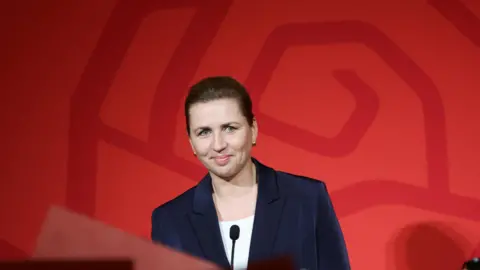
Supporters inside Christiansborg, Denmark's parliament, cheered and applauded Mette Frederiksen as she acknowledged a result that was, by any historical measure, a defeat dressed as a victory. The Social Democrats won the most seats of any party with 38, but their vote share of 21.9% was their lowest finish since 1903. That figure was well below the 27.5% the party took in the 2022 election.
"I'm sorry that we did not get more votes. I had also hoped for a better result," Frederiksen told the crowd. "But there is nothing today that can make me sad that the Social Democrats have once again become the Danes' absolute favourite political party."
The result left the party and others in the left-leaning bloc with 84 seats, short of the 90 needed for an outright majority in the 179-seat Folketing. Right-leaning parties also failed to exceed the threshold, with 77 seats, putting Foreign Affairs Minister Lars Løkke Rasmussen's centrist Moderate Party in position to emerge as kingmaker with 14 seats.
Although it grabbed the international headlines, the Greenland issue did not dominate the election, which was largely fought on domestic issues, including a Social Democrat pledge for a "wealth tax" to fund smaller class sizes in primary schools, as well as the cost of living crisis and the tightening of Denmark's already hardline immigration laws. Frederiksen had spent part of election day in Aalborg, her electoral stronghold in the country's northwest, alongside Greenlanders living in Denmark, a symbolic gesture tied to her months-long resistance to U.S. President Donald Trump's repeated demands to annex Greenland, which she had been widely praised for navigating.
Frederiksen called the election in February, several months before she had to. She apparently hoped that her resolute image in the standoff over Trump's push for control of Greenland, rallying European allies behind Denmark, would help her with voters. Instead, the election ended in an inconclusive result that left the prime minister's future unclear, after a campaign focused on bread-and-butter issues. Official results showed that Frederiksen's Social Democrats lost ground compared with 2022, as did her two partners in the outgoing government.
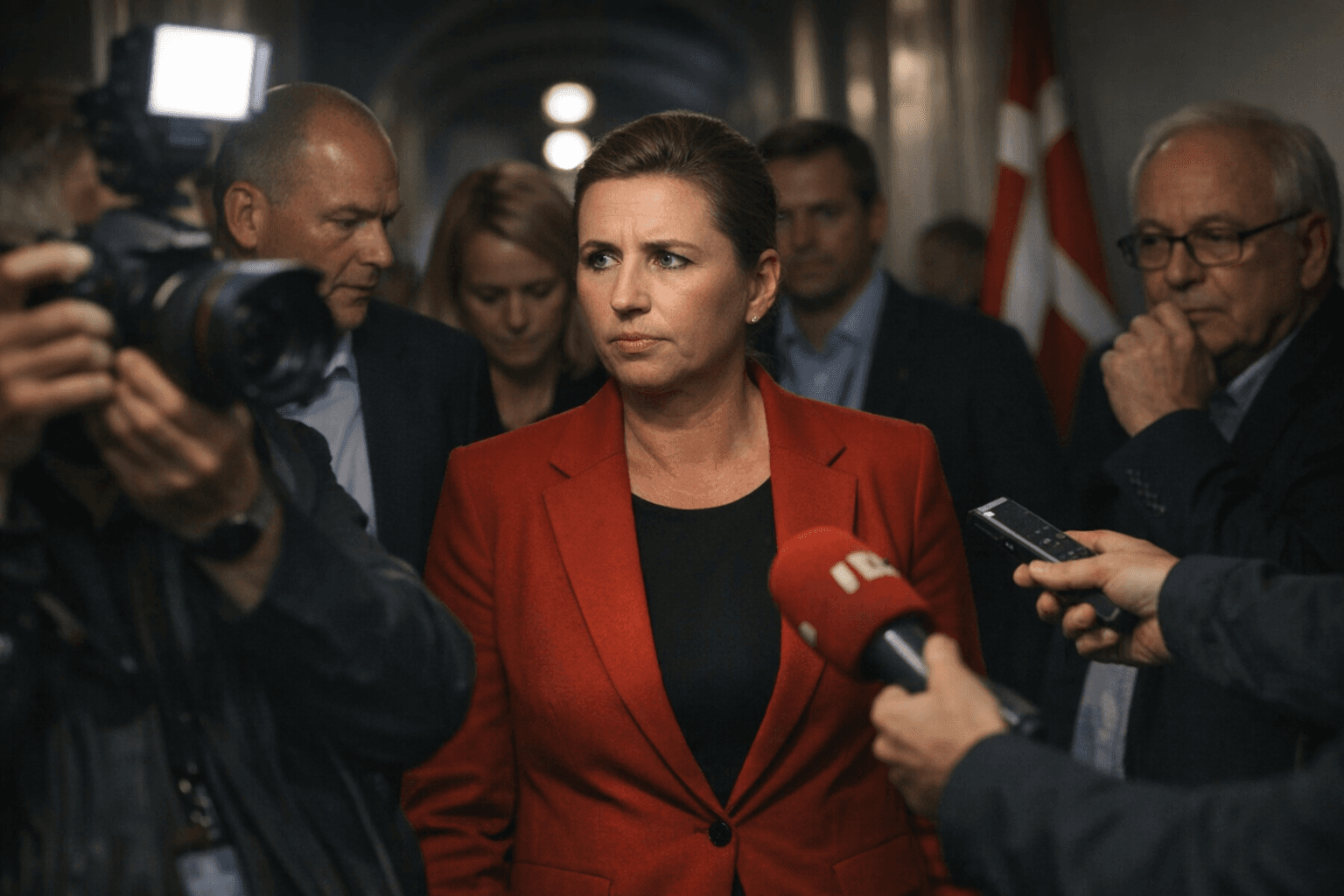
With twelve political parties on the ballot, the arithmetic now falls squarely on Rasmussen's shoulders. "We're standing in the middle," he said. "We're ready." But he also drew a stark line: "Either we have a centre-right government, or we go in opposition." Hours earlier, he struck a more conciliatory note, telling supporters, "We must not be divided. We must not be red. We must not be blue. We have to work together."
The most direct obstacle to a Frederiksen-led government came from Troels Lund Poulsen, who leads the Liberals, the blue bloc's largest party. Poulsen flatly ruled out returning to government with the Social Democrats and urged Rasmussen to align with the right instead. "It is possible to get a new direction in Denmark," he said.
DR's political correspondent Christine Cordsen suggested the most likely outcome is a center-left government composed of the Social Democrats, the Red-Greens, the Moderates and the Danish Social Liberal Party. Denmark now faces weeks of coalition talks, after which another centrist coalition appears likely to emerge.
Frederiksen is known for strong support of Ukraine in its defense against Russia's invasion and for a restrictive approach to migration, continuing what has become a tradition in Danish politics. But six years in office have taken a toll on her standing, even as many Danes credit her with steering the country through repeated international crises. Whether she secures a third term now depends entirely on whether Rasmussen, a former prime minister himself, decides to deal left, right, or across the aisle.
This article was produced by Prism’s automated news system from verified source data, official records, and press releases, then run through automated quality and moderation checks before publishing. The system is built and supervised by the people who set the standards it runs under. Read our full AI policy.
Did this article answer your question?


