DENR Takes Custody of Nine Confiscated Critically Endangered Philippine Hanging Parrots
Nine critically endangered Philippine Hanging Parrots were handed to DENR custody after a police maritime unit confiscated them, reinforcing wildlife protection and reminding owners to follow permit rules.

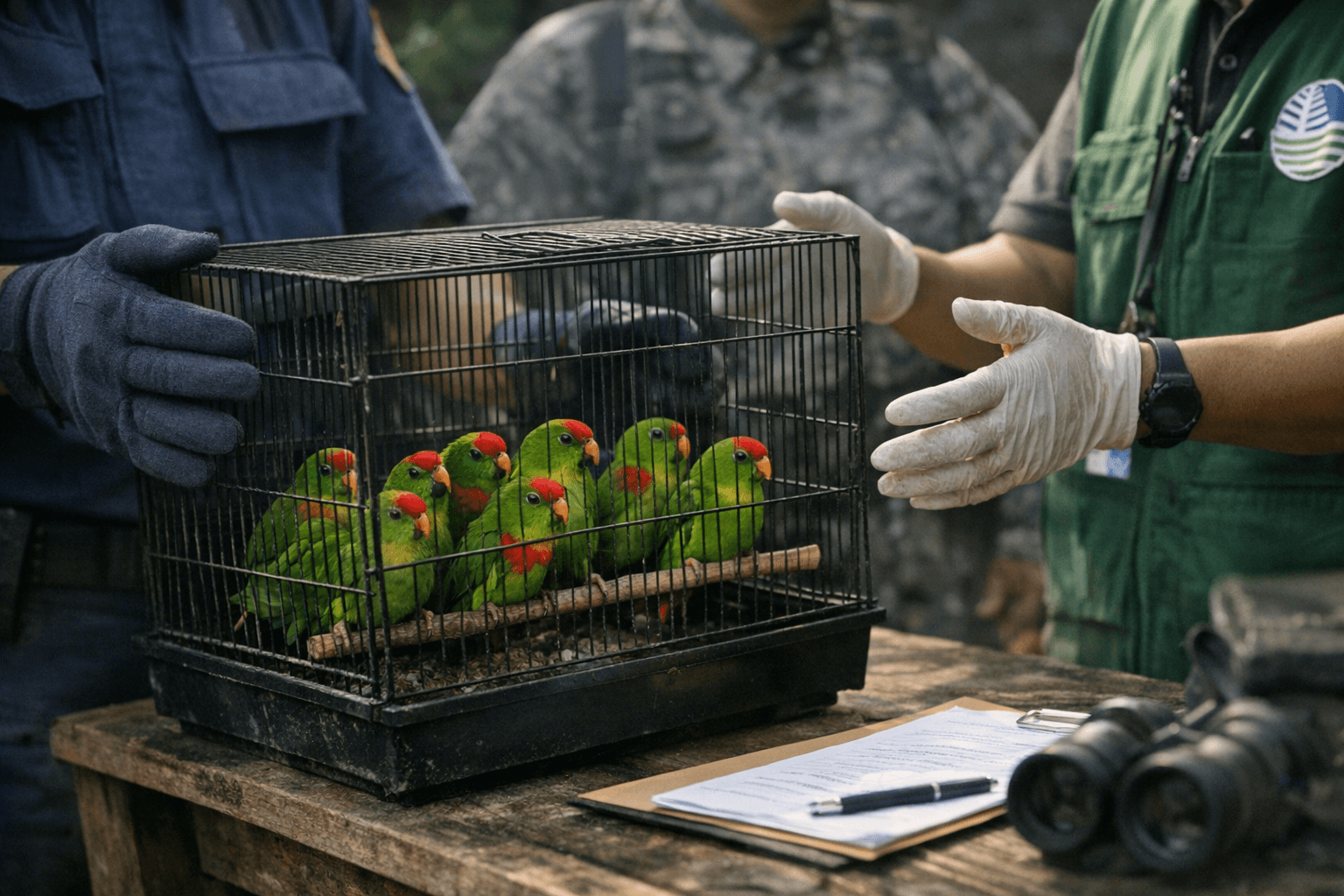
Nine Philippine Hanging Parrots, locally known as Kulasisi, were turned over to the Department of Environment and Natural Resources for care and legal processing after a maritime police unit confiscated the birds. The handover on January 20, 2026 placed the parrots under the Community Environment and Natural Resources Office Olongapo City for proper handling, documentation, and case filing.
The Philippine National Police Maritime Group–Regional Maritime Unit 3, led by PCPL Jayson Montesa of the Olongapo City Maritime Police Station, conducted the seizure and formally surrendered the animals to CENRO Olongapo. Edward Sernadilla, head of CENRO Olongapo, said the seized wildlife will be subject to inquest proceedings, with corresponding charges being prepared for filing before the proper court in accordance with existing laws and regulations.
The species involved, Loriculus philippensis, is listed as Critically Endangered under DENR Administrative Order No. 2019-09. DENR Regional Executive Director Ralph Pablo reiterated the agency’s enforcement stance and reminded the public of legal requirements for wildlife possession. “According to our law, it is illegal to collect, possess, trade, import, or export wildlife in the Philippines without the necessary permits,” Pablo stressed. Pablo also called on the public to remain vigilant and report illegal wildlife trade or related activities to environmental authorities.
For the Parrots Care community, this is a clear signal that enforcement of Republic Act No. 9147, the Wildlife Resources Conservation and Protection Act, remains active and that endangered native species are a high enforcement priority. The custody transfer means the nine birds will be documented and held as part of ongoing legal procedures rather than entering private aviaries. Owners and breeders who keep native species must ensure they hold the necessary permits and documentation to avoid seizure and prosecution.
Practical next steps for readers include confirming permit status for any native parrots in your care and reporting suspicious sales or trafficking activity to the appropriate environmental authorities. The immediate next developments to watch are the inquest proceedings and any formal charges filed in court. The case also serves as a reminder that community vigilance and cooperation with enforcement agencies help protect the Kulasisi and other vulnerable Philippine wildlife.
Know something we missed? Have a correction or additional information?
Submit a Tip