DeSantis says Florida will eventually dismantle Alligator Alcatraz facility
DeSantis called Alligator Alcatraz temporary, but Florida still spent more than $1 million a day on a site built in days, with no reimbursement in hand.

Ron DeSantis said Florida’s Everglades detention center “always was meant to be temporary,” but the state’s own timeline shows a facility built fast, run at high cost and defended as a long-term pressure point in immigration policy.
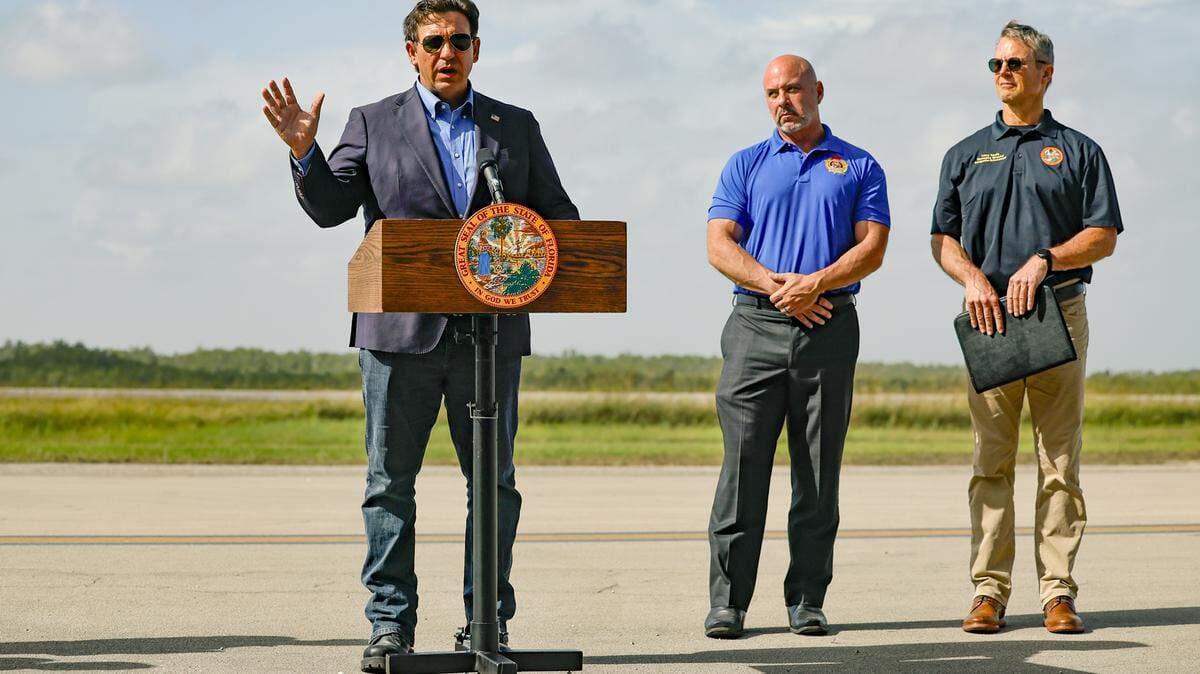
At a news conference in Lakeland on Thursday, May 7, 2026, DeSantis said, “At some point, we will, of course, break it down,” adding that the goal had always been to wind down the site once the Department of Homeland Security had other detention space available. He said the facility has processed and deported 22,000 detainees since it opened last summer, while Florida has spent more than $1 million a day to operate it and has not yet received the $608 million it requested in federal reimbursement.
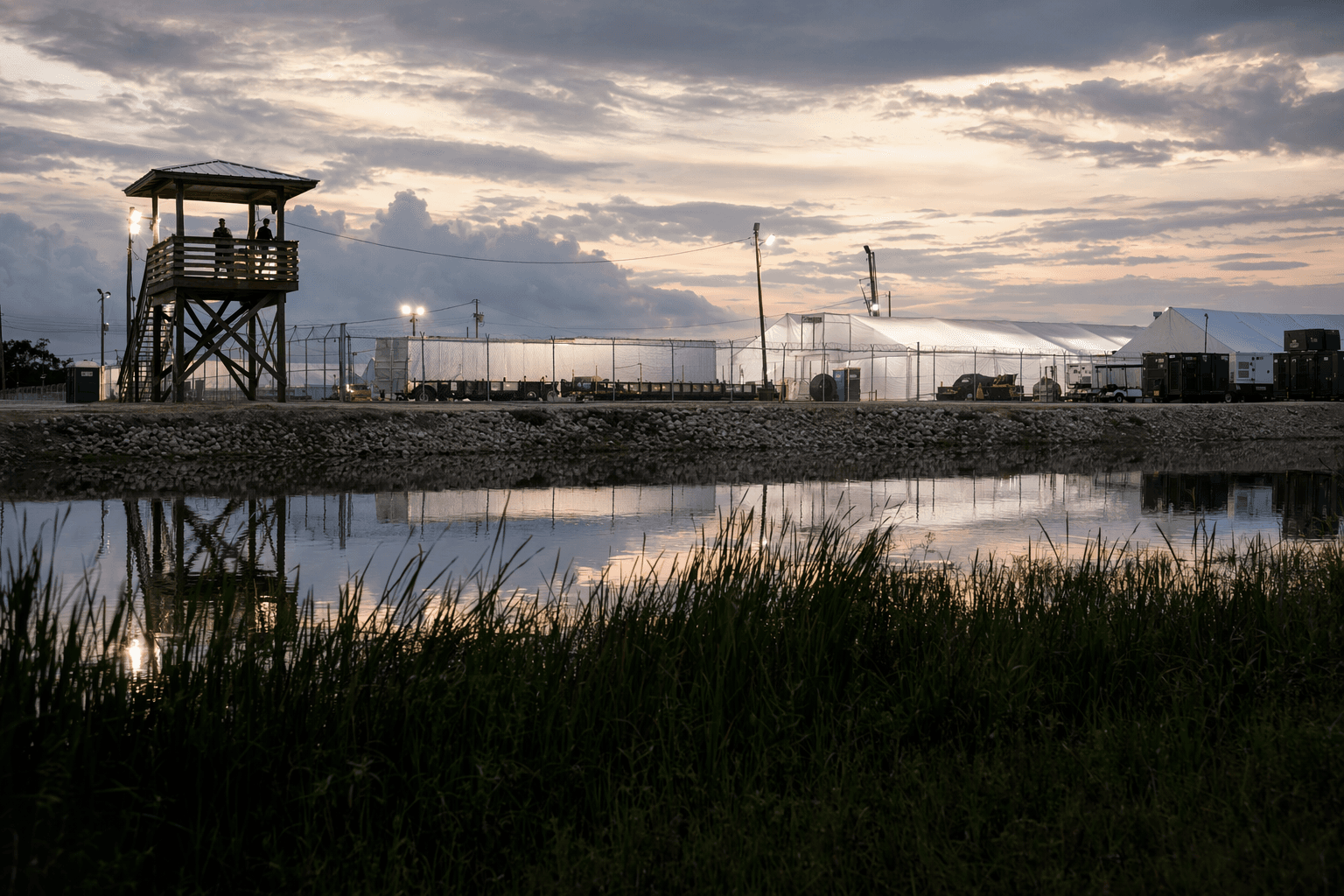
The site, known as Alligator Alcatraz, sits at the Dade-Collier Training and Transition Airport in Collier County, about 45 miles west of downtown Miami. It was erected in a matter of days in summer 2025 and was designed to house thousands of migrants, making it one of the state’s most visible enforcement projects and one of its most controversial. DeSantis and other state officials leaned on the remote Everglades location and the nickname itself as a deterrent.
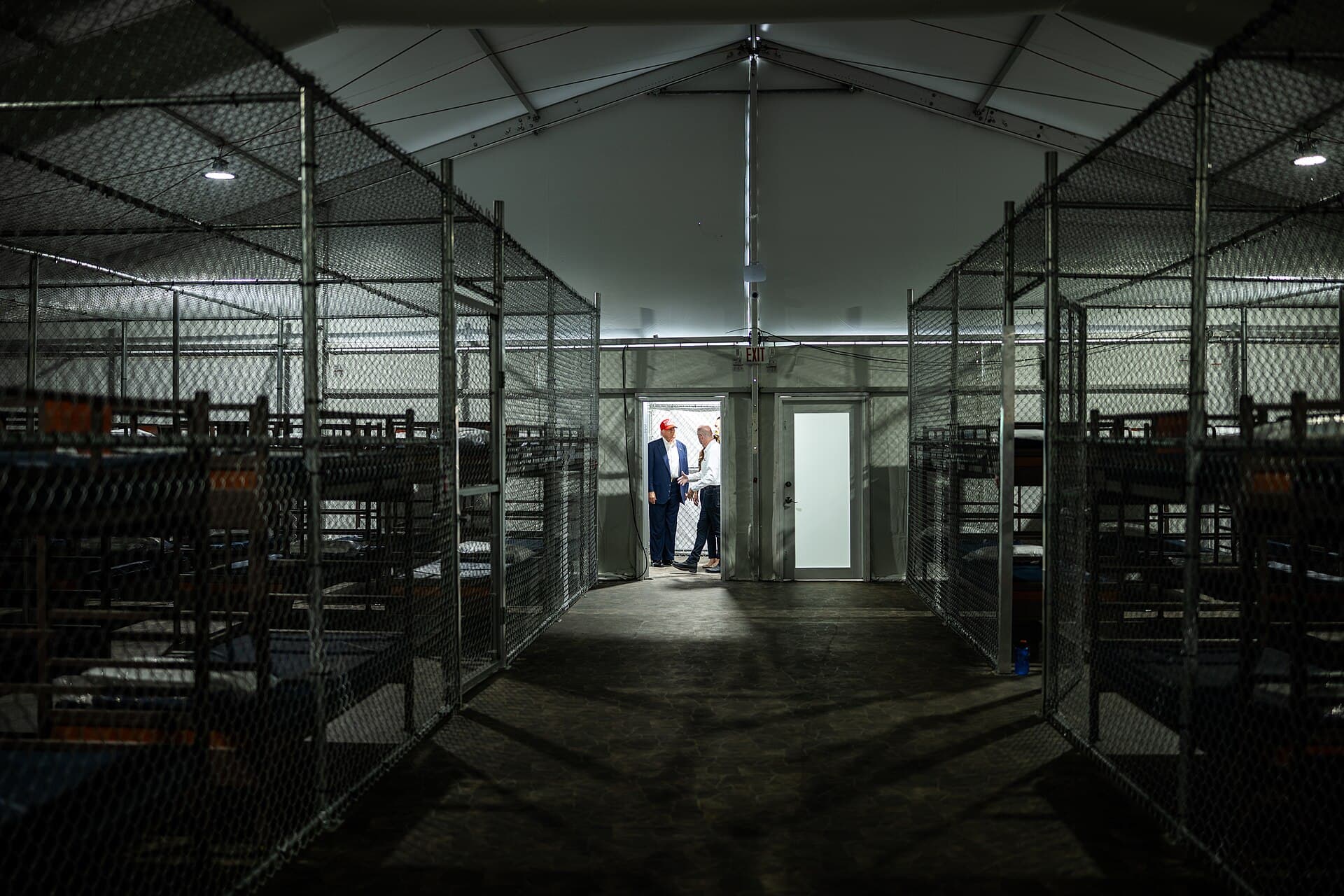
That temporary label is harder to square with the on-the-ground reality detainees described. People held at the site have reported poor physical conditions and difficulty reaching lawyers. A handbook made public in litigation says detainees are segregated by criminal history and flight risk and can be punished for talking during head counts, details that suggest a tightly controlled operation rather than a short-lived holding area.
The federal government has not said Florida must shut the site down. The Department of Homeland Security said it is continuously evaluating detention needs and denied that it was urging Florida to cease operations. That leaves open a central question for taxpayers: if the facility was always temporary, where was the exit plan, and who would pay for it?
Legal challenges forced that question into sharper focus. On June 27, 2025, Friends of the Everglades and the Center for Biological Diversity sued DHS, Immigration and Customs Enforcement, Florida officials and Miami-Dade County, arguing the site was more than 96% wetlands and surrounded by Big Cypress National Preserve. Emails later showed local officials were still chasing down a rumor while state officials were already moving ahead. On August 21, 2025, federal Judge Kathleen Mary Williams issued a preliminary injunction blocking new detainee transfers and additional construction over environmental concerns.
For now, DeSantis is pledging eventual dismantling. But after a rushed buildout, a $1 million-a-day price tag and months of litigation, the record suggests “temporary” has meant something far more expensive and far less clear in practice.
This article was produced by Prism’s automated news system from verified source data, official records, and press releases, then run through automated quality and moderation checks before publishing. The system is built and supervised by the people who set the standards it runs under. Read our full AI policy.
Did this article answer your question?

