DeSantis Signs Law Giving Florida Power to Label Domestic Terrorist Groups
Florida's new domestic terrorism law lets officials strip nonprofits of their status and expel college students, weeks after a federal judge blocked DeSantis's earlier executive order targeting Muslim groups.
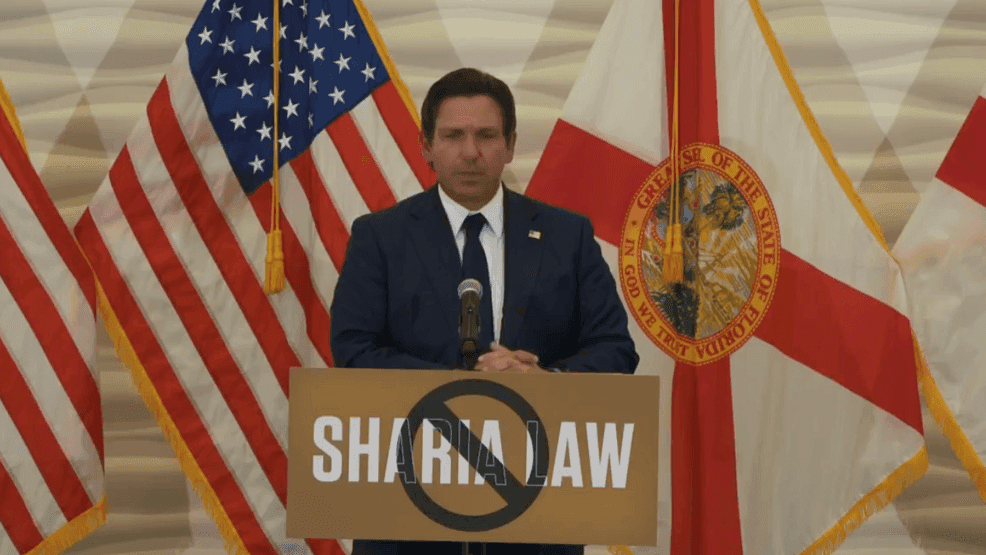
Governor Ron DeSantis signed House Bill 1471 at the University of South Florida's Gibbons Alumni Center in Tampa on Monday, enacting what he called "the strongest action Florida has ever taken" against extremist influence in the state, a law that gives him and a handful of state officials new statutory power to formally designate organizations as domestic terrorist groups and attach sweeping civil and institutional penalties to that label.
The bill, which takes effect July 1, codifies and expands a December 2025 executive order in which DeSantis declared the Muslim Brotherhood and the Council on American-Islamic Relations, known as CAIR, terrorist organizations. U.S. District Judge Mark Walker blocked that order in March, ruling it violated CAIR's constitutional rights by targeting the group. DeSantis predicted at the signing that litigation would follow the new law as well.
Under the statute, the state's chief of domestic security, currently Florida Department of Law Enforcement Commissioner Mark Glass, holds the power to designate both domestic and foreign terrorist organizations, subject to approval by the governor and Cabinet. The designation carries significant downstream consequences: schools affiliated with designated groups lose eligibility for state K-12 scholarship funds, and college students at public universities who "promote" support for a designated organization can face expulsion if their actions can be "reasonably interpreted" as a threat of violence, disrupt the learning environment, or constitute material support or recruitment for such groups.
The law also bars Florida courts and other adjudicatory bodies from enforcing foreign or religious legal codes, with sponsors explicitly citing Sharia law as a target. DeSantis framed the provision in civilizational terms at the signing. "What I see happening in Europe, I see a migration not to assimilate, but to displace the current cultures that are there," he said. "We obviously are not going to allow that to happen here in the state of Florida."

The bill passed the Florida House 80 to 25 and cleared the Senate 25 to 11 along partisan lines. Democrats warned during floor debates that the vague language around promoting or supporting designated organizations could be used to target liberal students at state universities, or Islamic schools receiving taxpayer-funded vouchers. Civil liberties organizations said they were reviewing the law for constitutional challenges, noting that similar statutes in other states have drawn lawsuits over vagueness and equal-protection claims.
CAIR had already sued DeSantis over the executive order that preceded the bill. The new law raises the legal stakes considerably: nonprofit status can now be revoked under state authority, and designation could affect any institution, organization, or student whose association with a listed group is deemed to meet the statute's thresholds. With no public clarity yet on which agency will maintain the official designation list or what a formal delisting process looks like, the law hands broad discretionary authority to the governor and his appointees with few codified checks on how that authority gets used.
This article was produced by Prism’s automated news system from verified source data, official records, and press releases, then run through automated quality and moderation checks before publishing. The system is built and supervised by the people who set the standards it runs under. Read our full AI policy.
Did this article answer your question?

