Diagnosing and Repairing a Seized Deck Saloon Wiper on Degero DS331
Free a seized Degero DS331 deck saloon wiper by grinding back a peened drive arm, drifting the shaft out, then cleaning bearings and greasing before reassembly.
A Degero DS331 with a deck saloon needs working wipers for safe passages into marinas, coastal rain transit, and to handle bow spray; a failed wiper compromises lookout and berthing operations. After roughly 20 years in service one saloon wiper began running slowly and then seized completely, leaving visibility impaired and prompting a hands-on teardown.
On March 3, 2026 GetBoat published a practical, step-by-step guide documenting the diagnosis and repair of a seized deck saloon windscreen wiper on a Degero DS331, and Practical Boat Owner ran a first-person account and photos from Richard Stone, who says, “I sail a Degero DS331 … after 20 years of use, one wiper had begun to run slowly and finally stopped working altogether. A quick inspection showed nothing obviously wrong, and on removing the connecting arm, the electric motor spun freely, but it was impossible to move the shaft, which was seized solid.”
What you will see and why it matters On inspection the motor turning while the driven shaft remains immobile is the classic seized-drive symptom reported in both accounts. Salt intrusion into seals is a typical suspect on older vessels, but soaking the shaft in vinegar produced no movement, indicating the obstruction was internal and required full disassembly. That sequence matters because the correct diagnosis saves time: you do not replace the motor when the problem is a seized shaft and peened retention.
A concise, proven repair sequence Follow the exact sequence used on this Degero DS331 to free the shaft and service the drive gear. The order is important; each step exposes the next visible cause.
1. Remove the external wiper arm and mark orientation, then test the motor. The motor spun freely when the wiper arm was removed on the DS331, confirming the drive side was at fault rather than the motor itself.
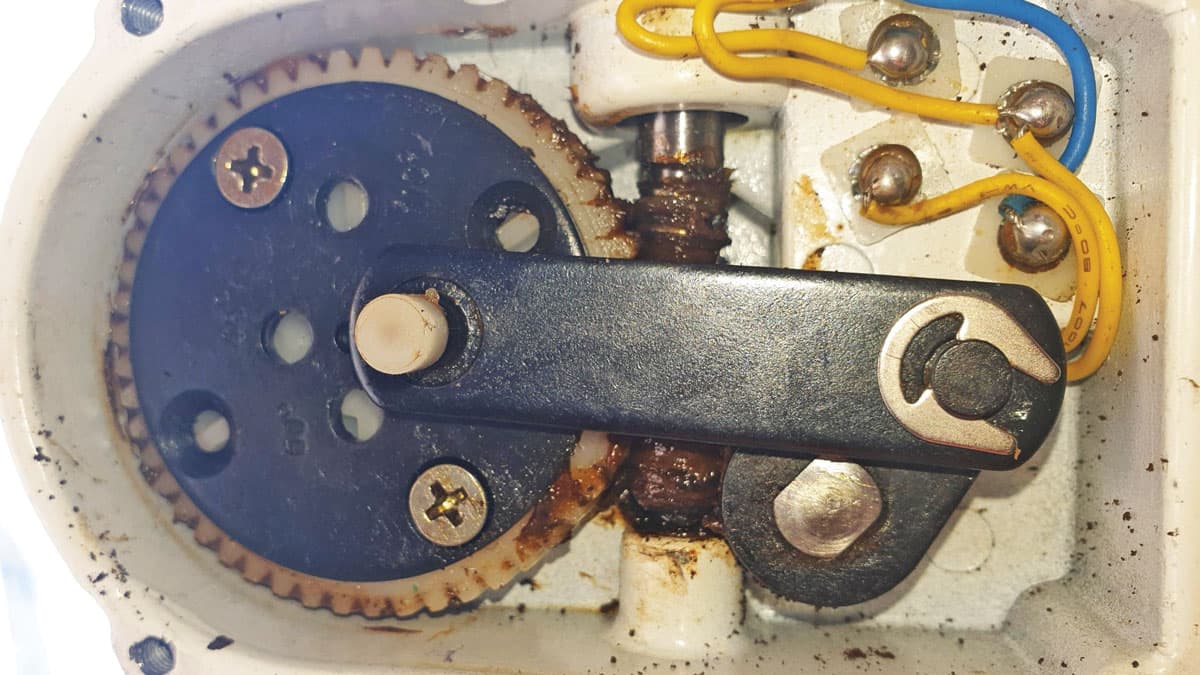
2. Remove the drive housing cover to expose the drive assembly. Practical Boat Owner’s photos show the wiper drive assembly with the housing cover removed. Credit: Richard Stone.
3. Extract the circlip that secures the drive arm. The circlip was “the first thing to come off” in the PBO account. Removing it is the controlled way to free the drive arm if the parts are serviceable.
4. Inspect the short drive arm end. On this unit the short drive arm end had been peened over the shaft during manufacture, effectively preventing easy disassembly. That peened metal is the physical obstruction.
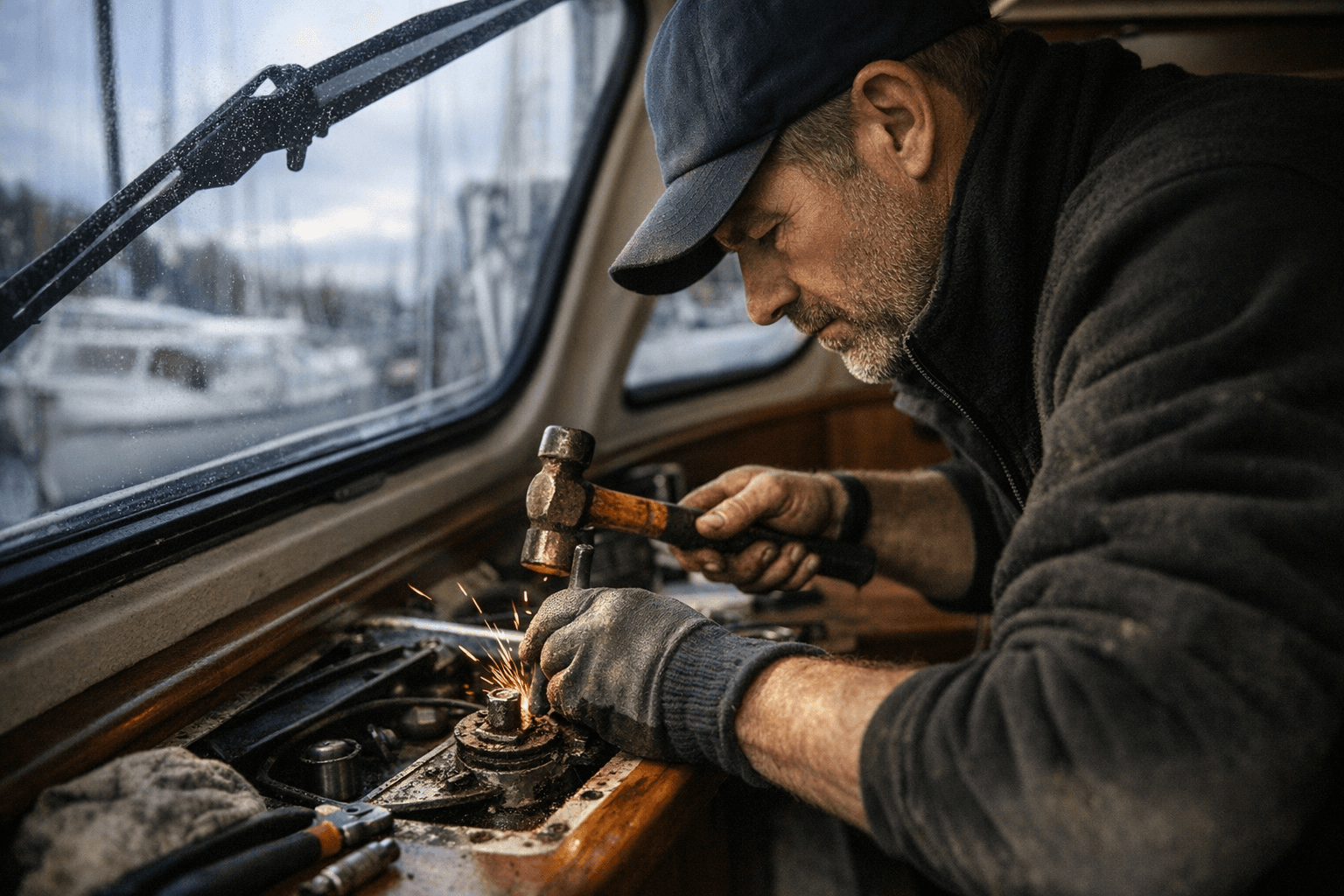
5. Use a small rotary tool to grind the peened metal down flush with the arm face. A small rotary tool was used to grind the peened metal down flush with the arm face so the shaft could be driven out. Work carefully to avoid removing more material than needed.
6. With the face made flush, use a drift and hammer to push the shaft out. After the grinding step a drift and hammer pushed the shaft free. Expect a firm impact to release a shaft that has been immobile for years.
7. Clean bearings and the shaft housing, then apply suitable grease. The repair accounts emphasize cleaning and greasing: “Shaft and housing cleaned and greased ready for assembly. Credit: Richard Stone.”
8. Reassemble, protect the motor, and improve retention. The GetBoat guide summarizes the repair as freeing a seized shaft, cleaning bearings, protecting the motor, and improving retention.
- Small rotary tool, used to grind the peened metal flush.
- Drift and hammer, for pressing the shaft out once the peened metal was removed.
- Vinegar, used in an initial soak test that produced no movement.
- Grease, applied to the shaft and housing before reassembly.
Tools and materials explicitly used
Note: the repair accounts do not provide part numbers, torque specs, or exact grease type; those specifics were not supplied and should be confirmed with the motor/wiper maker if required.
- Confirm the symptom: confirm you can spin the motor with the arm removed before committing to a full teardown, since that pinpoints drive-side seizure.
- Expect manufacturing peening: on this Degero DS331 the short drive arm end was intentionally peened at manufacture, so stubborn retention may be by design rather than corrosion alone.
- Use minimal grinding: remove just the peened metal necessary to allow the drift to engage, to avoid weakening the arm.
- Document orientation and parts order during disassembly, and photograph before you undo the circlip or separate the housing.
Practical tips and cautions from the two accounts
What the repair achieved and wider implications GetBoat framed the fix as pragmatic and targeted, noting regular attention to such systems prevents operational headaches: “Regular inspection and servicing reduce charter downtime and enhance safety for all on board.” The practical win here is straightforward: freeing a seized shaft, cleaning bearings, protecting the motor, and improving retention restores a vital system on the Degero DS331 and reduces the risk of being caught without visibility when you need it most.
Visual record and credits Practical Boat Owner supplied photographs that document the teardown and reconditioning: “The wiper drive assembly with the housing cover removed. Credit: Richard Stone” and “Shaft and housing cleaned and greased ready for assembly. Credit: Richard Stone.” These images back the sequence and show the cleaned components ready for reassembly.
Limits, unknowns, and follow-ups The published accounts do not list the wiper unit’s manufacturer or part numbers, nor do they state exact time or cost for the repair, or the detailed measures taken to “protect the motor” and “improve retention.” If you need those specifics for procurement or long-term maintenance planning, contact the owner/operator credited in the PBO piece, Richard Stone, or the authoring site for more detail. Alexandra Dimitriou is referenced in the GetBoat content where the guide was published on March 3, 2026.
Final takeaway This is a low-cost, hands-on fix that restores a critical visibility system: when the motor runs but the shaft is seized, expect internal obstruction, check for peened retention, grind the peen flush with a small rotary tool, drift the shaft free, then clean and grease the bearings and housing. That focused sequence gets your saloon wiper back to service and helps avoid charter downtime and safety compromises at the helm.
Know something we missed? Have a correction or additional information?
Submit a Tip