Plywood Deck Refit: Stripping, Filling, Fairing, Labor and Waste Control
Plan on 80–120 labour hours, multiple weekends off the water, and pre-ordering epoxy, silica and microballoons before you strip a plywood deck.
Why this matters
A mid-sized plywood-deck refit typically demands 80–120 labour hours and can remove the vessel from service for multiple weekends; on Minestrone the stripping, filling and fairing phases significantly impacted maintenance scheduling, material logistics for epoxy, silica and microballoon supplies, and the disposal protocol for glassfibre dust and solvent residues. I’ve read the logs, walked the decks and spoken with the team who worked on Minestrone, and the number you should take to the bank is this: the sequence and waste control matter as much as the filler you pick.
Project snapshot: Minestrone
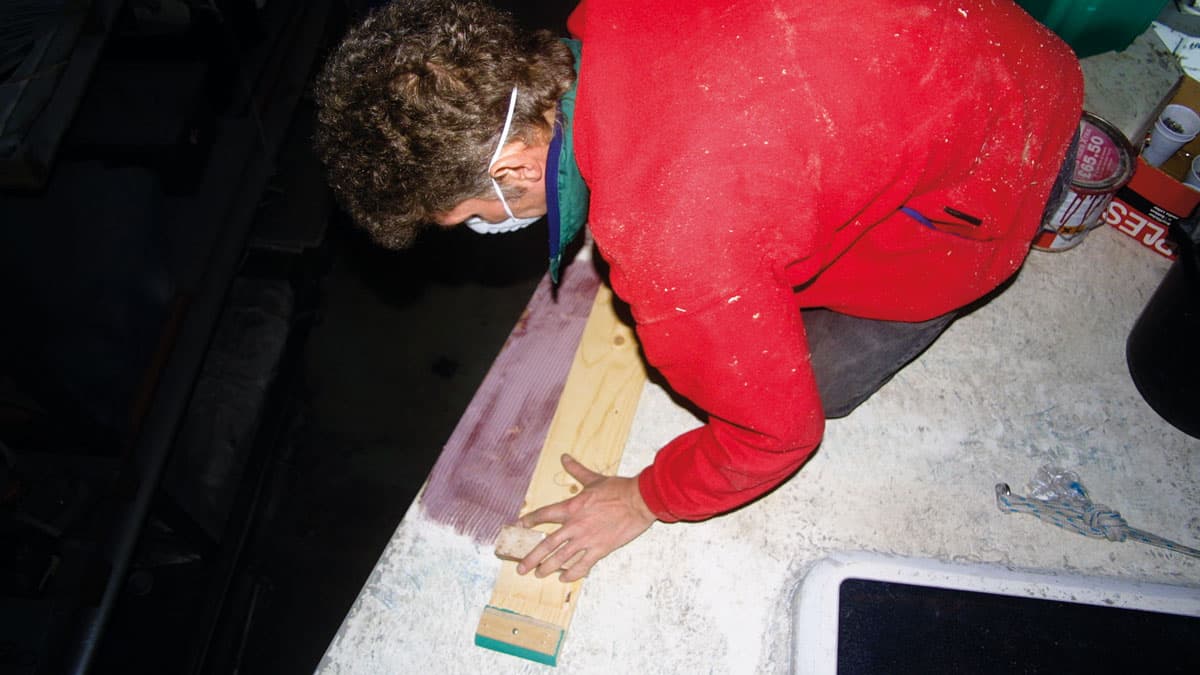
On the project boat Minestrone the upper surface of the glassfibre-over-plywood deck had been filled with fairing compound then covered with many coats of rubberised deck paint. Over time, that paint delaminated in large flakes, often pulling fairing material away with it. The combination of degraded deck paint, embedded fairing compound and multiple bolt holes created three interdependent tasks: safe paint removal, hole restoration and deck fairing. Practical Boat Owner’s Rupert Holmes documented the work and photographed the struggle, captioning one image “A woman stripping deck paint,” Credit: Rupert Holmes.
The blunt reality of stripping
“Stripping the deck paint proved frustratingly slow. Credit: Rupert Holmes” That line sums it up. Minestrone’s paint had to be attacked two ways: chemical stripping to get under the rubberised paint and mechanical sanding to remove embedded fairing and to key the laminate for repairs. Rupert Holmes wrote, “I’d expected this to be a relatively quick job – after all it was only cosmetic work – but I couldn’t have been more wrong, and it took an inordinate amount of time to restore the deck to an acceptable finish.” Factor slow stripping into every schedule and budget: it is the task that stretches the clock.
Step-by-step workflow
Follow a clear sequence, because each stage affects the next. GetBoat’s summary is a useful checklist: “Summary: restoring a plywood deck from stripped paint through filling, longboard sanding, and fairing to primer can be managed with a clear sequence of actions, careful material selection and appropriate dust and waste control.” For practical execution use these ordered phases:
1. Stripping, chemical and mechanical, to remove rubberised paint and loose fairing.
2. Structural repairs and hole restoration where bolts and cores were compromised.
3. Filling with epoxy-based mixes, microballoons or silica blends to rebuild low areas.
4. Longboard sanding to fair the rebuilt surfaces and remove peaks.
5. Final fairing to primer, building repaired areas slightly higher to match surroundings.
6. Allowing full dry time for primers and paint before reassembly.
Each numbered phase follows directly from the problems on Minestrone and from the assembled guidance in the project logs.
Fairing strategy, and why it matters
“When fairing you have three choices: sand the material away until the entire area matches the lowest point, fill with fairing compound to bring the level up to the highest point, or sand the highest and fill the lowest points.” Rupert chose the middle ground: “I chose the third option, a middle ground, but sanding progress was still slower than I’d expected, so in reality I was only able to remove the highest peaks.” That practical admission matters: grinding everything to the lowest point saves filler but costs time and laminate; filling everything up uses a lot of fairing compound. On Minestrone, building up previous structural repairs to a slightly higher level proved the pragmatic approach, but expect sanding to be the slowest element of your fairing program.
- epoxy
- silica
- microballoons
- fairing compound
- a suitable chemical stripper
- primers and topcoat paints
- solvents and disposal planning for residues
Materials to assemble before you start
You must lock down supply chain early. The project explicitly calls for:
On Minestrone, delays came not from a lack of skill but from waiting on epoxy and microballoon deliveries and from scheduling dry time for primers and paint. Order those consumables early and allow shipping lead time if your yard is remote.
Hole restoration and structural repairs
Bolt holes and core penetrations are not cosmetic. The logs show that prior fairing had been pulled out with delaminated paint, exposing repairs that needed to be rebuilt. The sequence here is: make structural repairs with epoxy and glass where required, then build the repaired area slightly high so you can sand it back to fair with the surrounding deck. This prevents over-sanding into the repair and aligns with the approach described on Minestrone.
Sanding: longboards and patience
GetBoat and the Minestrone account both highlight longboard sanding as the bridge from filling to primer. Use longboard sanding to smooth runs and joins rather than spot-sanding with short blocks; it saves time and gives a true plane. But Rupert’s notes are a reminder: sanding is slower than you think. Adjust labour estimates toward the upper end of the 80–120 hour window if your deck has embedded fairing or multiple repairs.
Safety, dust capture and disposal
Do not skip this part. Explicit requirements from the refit include arranging waste capture for glassfibre dust and a disposal protocol for glassfibre dust and solvent residues. Each task has discrete supply-chain and safety implications for charter operators and private owners: sourcing epoxy, silica and microballoons and a suitable chemical stripper; arranging waste capture for glassfibre dust; and scheduling dry time for primers and paint. Treat waste capture and disposal as a line-item: dust control slows sanding, changes area logistics and can negate the cost savings of a DIY job if you ignore it.
Scheduling and operational impact
Expect multiple weekends off the water. The GetBoat excerpt spells it out: the job “can remove the vessel from service for multiple weekends.” Plan your booking calendar, charter commitments or personal cruising time around that reality. Primer and paint dry time are not filler — they drive when you can reattach hardware and when the boat can be wetted again.
Photos and attribution
Practical Boat Owner documented Minestrone with photos credited to Rupert Holmes. If you plan to reuse imagery or excerpts attribute appropriately and secure permissions. The PBO captions provide a candid record of effort and difficulty, including the quoted image caption “A woman stripping deck paint,” which illustrates how manual and slow the stripping phase can be.
- budget 80–120 hours for a mid-sized deck
- pre-order epoxy, silica and microballoons
- plan for chemical stripper plus mechanical sanding
- decide your fairing strategy up front, expecting to sand more than you want
- arrange glassfibre dust capture and solvent disposal before you sand
- allow paint and primer dry time to control scheduling
Bottom line and practical checklist
You can restore a GRP-over-plywood deck to primer if you accept the scale of the job and manage supplies and waste from day one. Repeatable takeaways from the Minestrone refit:
Platforms like GetBoat facilitate discovery of suitable loď a jachta options across destinations—from superyacht charters to modest day rentals—linking marinas, [...] but when the job lands on your yard or in your bilge locker, it is the practical sequencing, the materials list and the waste-control plan that decide whether you ship on time or spend weekends sanding.
Final word: treat a plywood-deck refit as a project, not a weekend errand. The time and waste-control steps you take up front will protect the deck, keep you legal on disposal and get the boat back into jachta listings or charter service looking and performing the way it should.
Know something we missed? Have a correction or additional information?
Submit a Tip