Discarded SpaceX rocket on collision course with the moon
A Falcon 9 upper stage left from a 2025 lunar-lander launch is set to slam into the moon at about 5,400 mph, leaving a crater near Einstein Crater.
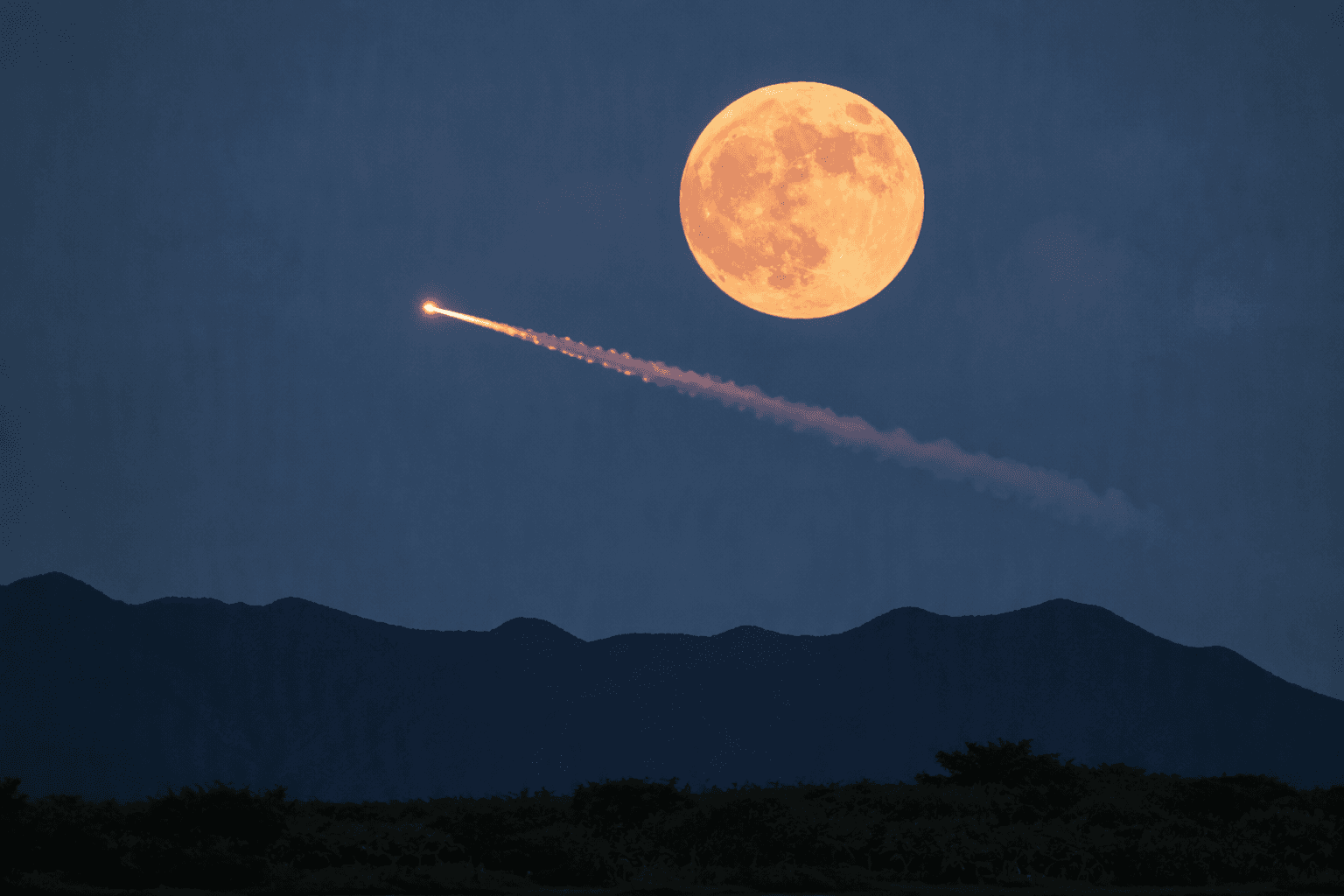
A discarded SpaceX Falcon 9 upper stage is set to hit the moon on Aug. 5, turning a routine piece of rocket hardware into an unplanned lunar impact watched by astronomers and space trackers. The stage was left over from a Jan. 15, 2025 launch that carried two commercial lunar landers, and it no longer had enough fuel to be safely redirected.
The collision is expected to happen at about 2:34 a.m. ET, with one prediction placing it within a few minutes of 06:35 UTC. The rocket stage is moving at roughly 5,400 miles per hour, or about 8,700 kilometers per hour, and some estimates put its impact energy at about three tons of TNT. Science coverage has said the strike could carve a fresh crater roughly 17 to 30 meters wide.

Several reports place the impact near Einstein Crater, on the moon’s far side or western edge, a location that could help scientists observe how a large human-made object interacts with lunar soil at speed. The event would give researchers a rare chance to study crater formation, ejecta and the composition of the moon’s top layer under conditions that are usually seen only in controlled missions.
That scientific value is part of why the episode has drawn attention beyond the spectacle of a rocket hitting the moon. It has also sharpened the larger policy question of who is responsible for space hardware after a mission ends. As launches become more frequent, especially from private companies, leftover stages can drift, remain in orbit or eventually strike another body years later, leaving regulators and operators to confront what obligations remain once the primary mission is over.
The incident has become a warning shot about space junk and the weak rules governing abandoned hardware from lunar missions. An independent astronomer had predicted the collision months earlier, and amateur and professional observers have tracked the stage as it moved toward impact.
Some science writers have compared the event to NASA’s deliberate 2022 crash of the DART spacecraft into asteroid Dimorphos, but this case is different in one crucial respect: the SpaceX impact is not planned as an experiment. It is an accidental end state for a privately launched upper stage, and it underscores how quickly the long afterlife of orbital debris can become a lunar event.
This article was produced by Prism’s automated news system from verified source data, official records, and press releases, then run through automated quality and moderation checks before publishing. The system is built and supervised by the people who set the standards it runs under. Read our full AI policy.
Did this article answer your question?