DJI asks federal court to block FCC ban that halts new drone imports
DJI filed a petition this week seeking to overturn the FCC’s December decision that blocks imports of its China-made drones and parts, threatening repairs and new-model sales in the U.S.

DJI filed a petition in a federal appeals court this week asking the court to vacate and enjoin the Federal Communications Commission’s decision last December to add foreign-made drones to its Covered List, a move that blocks imports of China-made models and related components and would prevent new DJI models from reaching U.S. customers.
In the filing, DJI argues the agency “exceeded its statutory authority” and says the commission’s action has “severely” harmed the company. The petition accuses the FCC of violating the Fifth Amendment and asks the court to declare the agency’s decision unlawful. DJI told Reuters that the action, in its words, “carelessly restricts DJI’s business in the U.S. and summarily denies U.S. customers access to its latest technology.”
The FCC’s Covered List is designed to block communications equipment “deemed to pose an unacceptable risk” to national security. The commission’s December action blocks new FCC equipment authorizations for covered foreign-made drone models and related radio-frequency devices, effectively preventing those models from being approved, imported, or sold in the United States unless the Department of Defense grants an exception.
Industry analysts and vendors say the regulatory mechanics are clear: “New DJI drones are banned. Any new DJI drone that hasn’t received FCC approval is effectively banned,” while “Existing DJI drones aren’t banned. Any DJI drone that has received FCC approval, up to the unreleased Avata 360 and Lito X1, are not banned. This is because all of these drones have received FCC approval.” DJI and others contend that the FCC also gave itself authority to retroactively block equipment that it had previously permitted, raising the possibility that devices once cleared could later be barred.
The move follows language in the 2025 National Defense Authorization Act that required a federal security agency to audit certain foreign drone manufacturers by December 23, 2025. “A clause in the 2025 National Defense Authorization Act (NDAA) requires a U.S. federal security agency to conduct a formal audit of DJI by December 23, 2025. If no audit is completed, DJI must be added to the FCC Covered List, effectively blacklisting the company in the U.S. market,” the petition papers note.
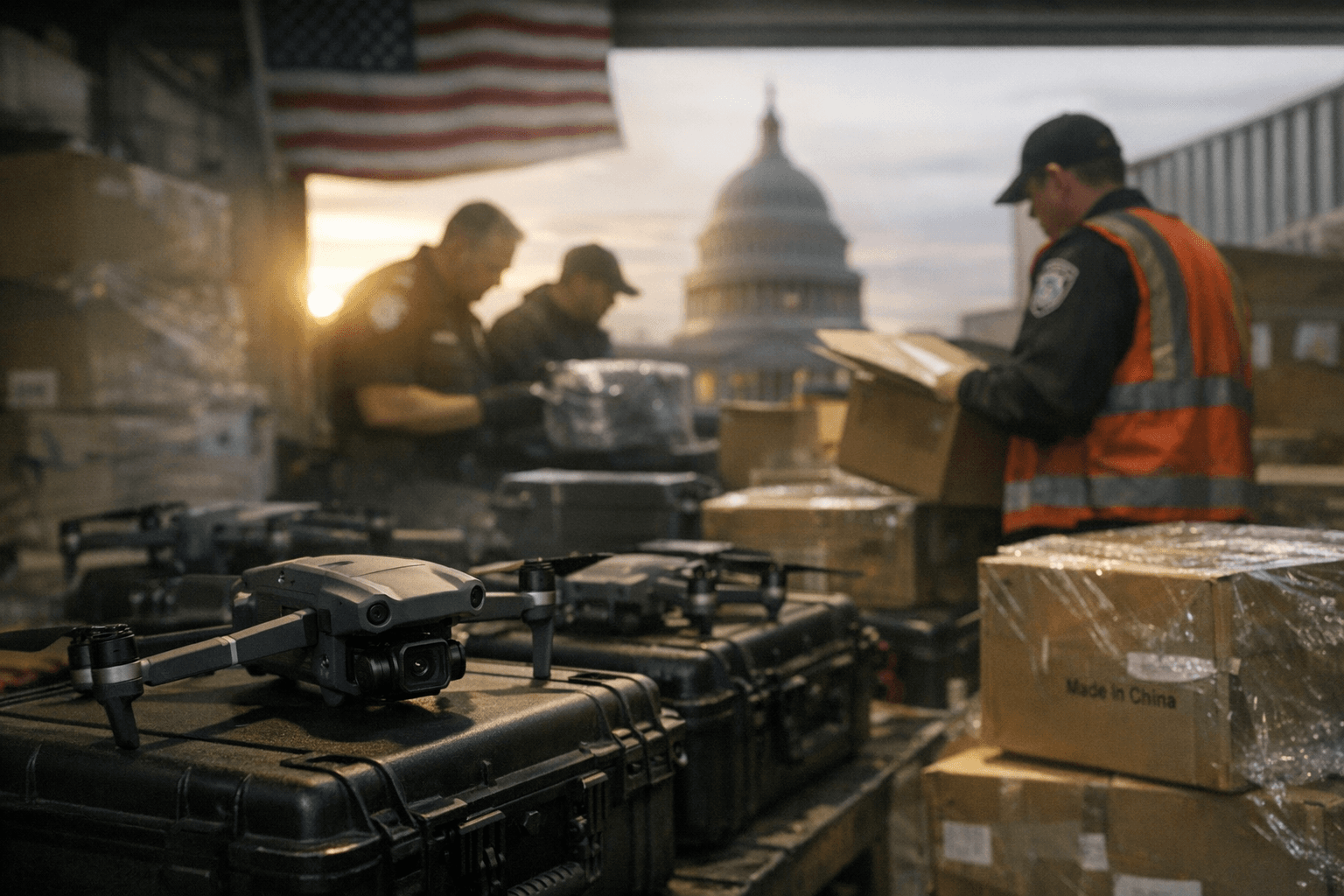
Some DJI models already have FCC equipment authorizations. “DJI has already secured FCC equipment authorization for multiple unreleased products. These include the DJI Avata 360, the newly introduced DJI Lito series, specifically the DJI Lito 1 and DJI Lito X1, as well as the DJI RC Mini and the Agras T55,” the company’s filings say. Still, vendors and service centers warn of immediate operational impacts: “DJI may no longer be able to ship replacement parts; U.S. resellers may be blocked from restocking essential components; Warranty repairs and service claims may be delayed at customs. Key takeaway: Supply chains will tighten. Parts will spike in price. And unexpected downtime could kill your delivery timelines and profitability.”
The regulatory uncertainty reaches beyond hobbyists. Commercial operators, public safety agencies, utilities and agricultural firms that depend on DJI hardware face procurement and maintenance risks. Officials have emphasized that owners can still operate existing, authorized DJI aircraft and that the Federal Aviation Administration has not banned DJI products. “You can still fly DJI drones you already own; the FAA has not banned DJI; DJI cannot remotely disable your aircraft,” company guidance reiterates.
DJI has said it will defend its rights and is “confident its products can withstand scrutiny,” and it vowed to safeguard the company’s interests. The appeals court now must weigh whether the FCC exceeded its authority and whether the agency’s new power to bar imports sets a novel precedent for equipment regulation, with consequences for U.S. supply chains and for how national security is balanced against commercial and consumer access to technology.
This article was produced by Prism’s automated news system from verified source data, official records, and press releases, then run through automated quality and moderation checks before publishing. The system is built and supervised by the people who set the standards it runs under. Read our full AI policy.
Did this article answer your question?


