DOE Removes ALARA Principle From Radiation Rules, Sparks Safety Concerns
DOE has removed the ALARA principle from its radiation directives, a change Energy Secretary Chris Wright approved in a memo that critics say favors “legal limit is enough” over continuous exposure minimization.
The U.S. Department of Energy has removed the As Low As Reasonably Achievable, or ALARA, principle from its directives and regulations, a policy shift Energy Secretary Chris Wright approved in a memo earlier this month and a directive Charlie Yu said was issued on January 12, 2026 that “moves away from ALARA-style optimization toward a ‘legal limit is enough’ mindset.” The change is part of a broader DOE push framed by supporters as streamlining rules to speed advanced reactor projects and cleanup work such as Hanford.
ALARA has been the operational backbone of radiation protection for decades, rooted in the Linear No-Threshold model from the 1950s. Landauer summarizes ALARA’s practical toolkit as Time, Distance, Shielding, and TheHindu notes that “The linear no-threshold (LNT) model and the ALARA principle have served as the conceptual and operational foundations of the global radiation protection framework for many decades.” Radiation-safety practitioners in radiology, cath labs, and hybrid ORs routinely teach ALARA as the “golden rule” to minimize worker exposure.
The new DOE orders strip out several explicit safety requirements. In addition to deleting ALARA language, the department removed the requirement to designate a cognizant system engineer for each reactor critical safety system and eliminated a mandate to use the “best available technology” to protect water supplies from radioactive discharge. NPR-observed documents indicate DOE had begun removing the ALARA requirement from new rules as early as August, months before Secretary Wright’s memo formally approved the change.
DOE’s justification appears in a department memorandum and in Secretary Wright’s memo. The memorandum states, “The DOE’s decades of nuclear facility operating experience confirms that DOE’s mission to foster nuclear innovation and advanced nuclear technologies could be met more effectively if the current radiation framework were reformed.” Wright’s memo, cited in NPR coverage, said the change was intended in part to “reduce the economic and operational burden on nuclear energy while aligning with available scientific evidence.” The department also told reporters, “The Department of Energy is, and always will be, committed to the highest standards of safety for workers and communities,” and that “the ALARA standards have not changed.”
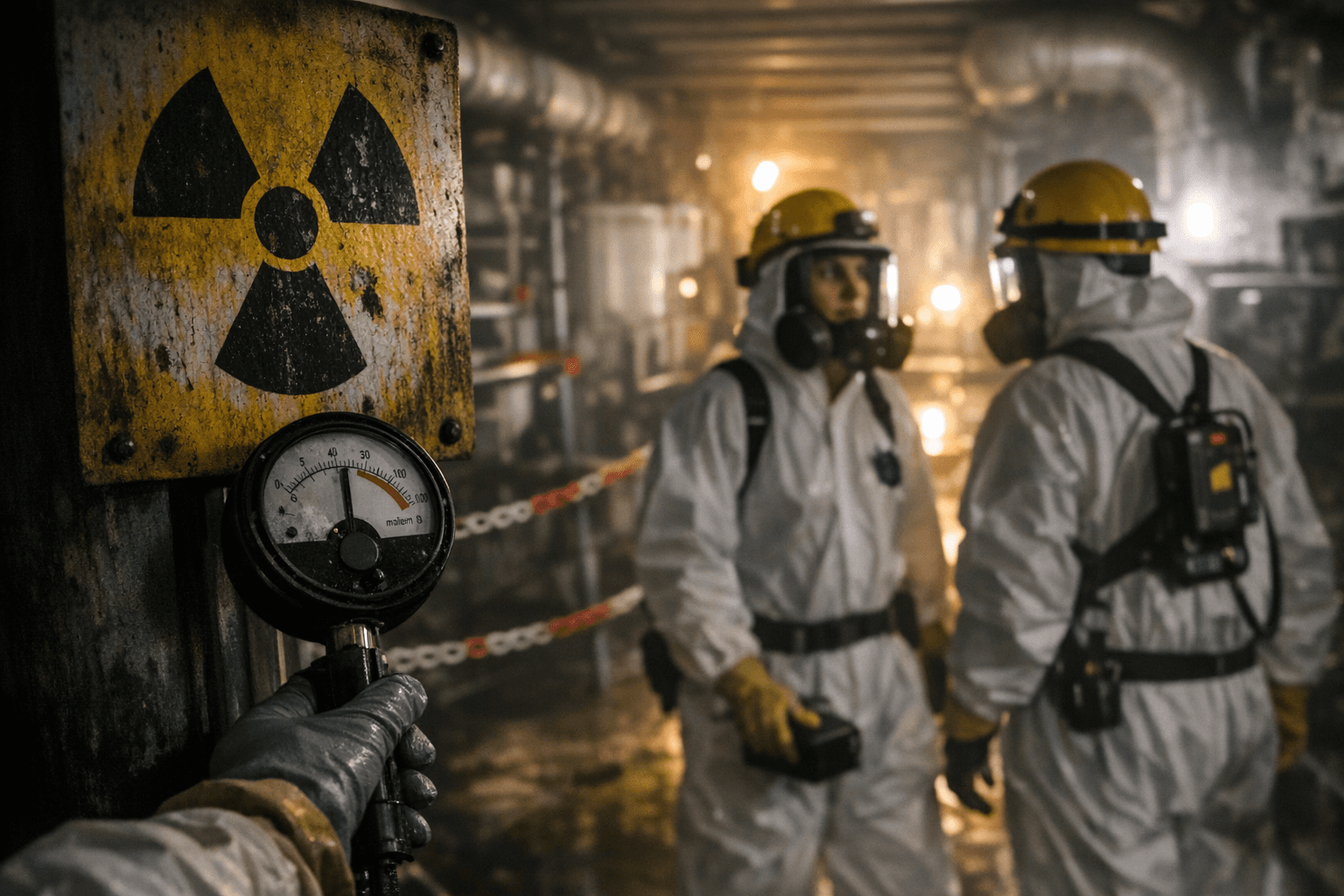
Safety experts and industry critics warn of tangible operational consequences. Tison Campbell, a partner at K&L Gates and former Nuclear Regulatory Commission lawyer, warned the removal “means that new reactors could be constructed with less concrete shielding, and workers could work longer shifts, potentially receiving higher doses of radiation.” Charlie Yu and Protech Medical have framed the move as a wake-up call, arguing ALARA is “non-negotiable” in clinical settings and that relaxing optimization risks higher cumulative exposures, especially at large cleanup sites like Hanford.
Key gaps remain. The directive excerpts supplied do not specify a replacement standard, and the timeline for the August deletions lacks a stated year. Observers urging further scrutiny include analysts who want the full Wright memo, the January 12 directive text, and the E&E News reporting that first disclosed the memo. The National Interest has recommended the Nuclear Regulatory Commission consider whether to adopt similar reforms as the debate over worker protection and nuclear innovation proceeds.
Know something we missed? Have a correction or additional information?
Submit a Tip

_82415.jpg&w=1920&q=75)