DOJ Expected to Drop Powell Probe, Clearing Path for Fed Nominee
DOJ is poised to abandon a criminal probe of Jerome Powell, removing a blockade that had stalled Kevin Warsh’s path to the Fed chair.
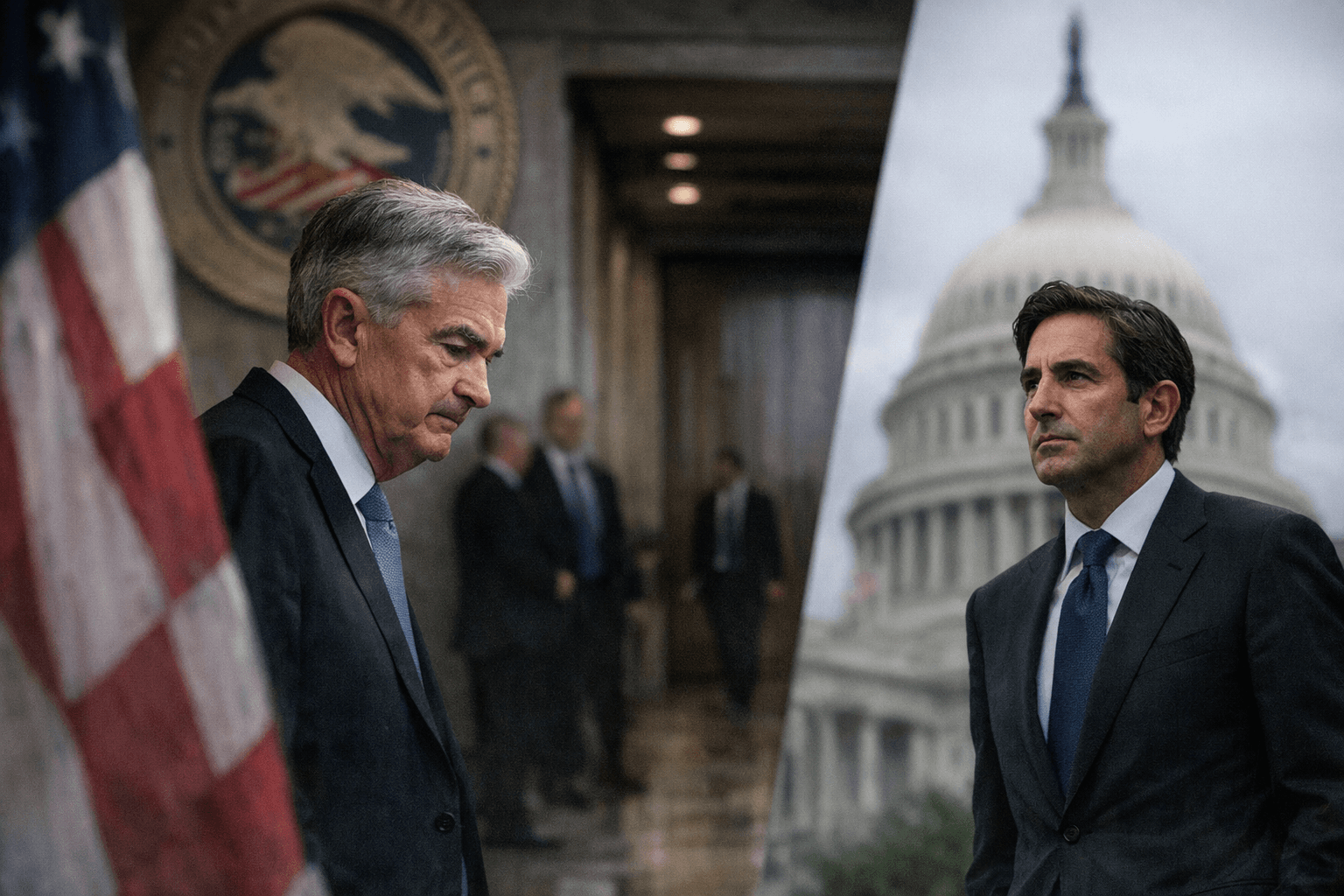
The Justice Department is expected to end its criminal investigation of Federal Reserve Chair Jerome Powell, a move that would remove a major obstacle to confirming President Donald Trump’s nominee to lead the central bank, Kevin Warsh.
The case centered on alleged cost overruns tied to the Federal Reserve’s Washington headquarters renovation and Powell’s congressional testimony about the project. Senior Justice Department officials had reached out in recent days to senators, including Republican Thom Tillis of North Carolina, to say the matter would be sent to the Federal Reserve’s internal watchdog instead of continuing as a criminal case.
That shift matters well beyond Powell’s personal fate. It underscores how easily a central-bank dispute can spill into the Senate confirmation process, where Tillis had said he would not move Warsh’s nomination until the Powell probe was resolved. Powell’s current term as Fed chair ends in May, but he said in March that he would stay on until Warsh is confirmed.
The renovation itself has become a symbol of the broader clash between Powell and Trump. The project has been described as a $2.5 billion overhaul, and Powell asked the Fed’s inspector general in 2025 to take a fresh look at the costs. The Fed’s independent watchdog had already audited the project in 2021.
The legal footing for the investigation had also weakened. In March, U.S. District Judge James Boasberg quashed Justice Department subpoenas tied to the inquiry, calling them a “mere pretext” to pressure the Fed. That ruling raised questions about whether the probe was driven by evidence of wrongdoing or by a political campaign aimed at forcing Powell to bend on interest rates and other policy decisions.
Jeanine Pirro, the U.S. attorney for the District of Columbia, said on Friday that the office was closing its investigation while the inspector general review proceeds. She said the Fed watchdog had been asked to examine the building cost overruns “in the billions of dollars” borne by taxpayers. NBC News reported that the inspector general has already reviewed the project twice and found no wrongdoing.
The result is a clear institutional win for Warsh’s confirmation prospects and a warning signal for regulators. If the case is being dropped because the evidence was weak, the Justice Department is backing away from a case it could not sustain. If it is being dropped because the White House and Senate pressure campaign reached a political limit, the message to independent agencies is sharper still: scrutiny can become leverage, and leverage can become intimidation.
This article was produced by Prism’s automated news system from verified source data, official records, and press releases, then run through automated quality and moderation checks before publishing. The system is built and supervised by the people who set the standards it runs under. Read our full AI policy.
Did this article answer your question?

