DOJ Opinion Could Let Trump Withhold Official Documents From National Archives
The Justice Department declared the 1978 Presidential Records Act unconstitutional, potentially allowing Trump to keep his official White House documents from the National Archives when he leaves office.
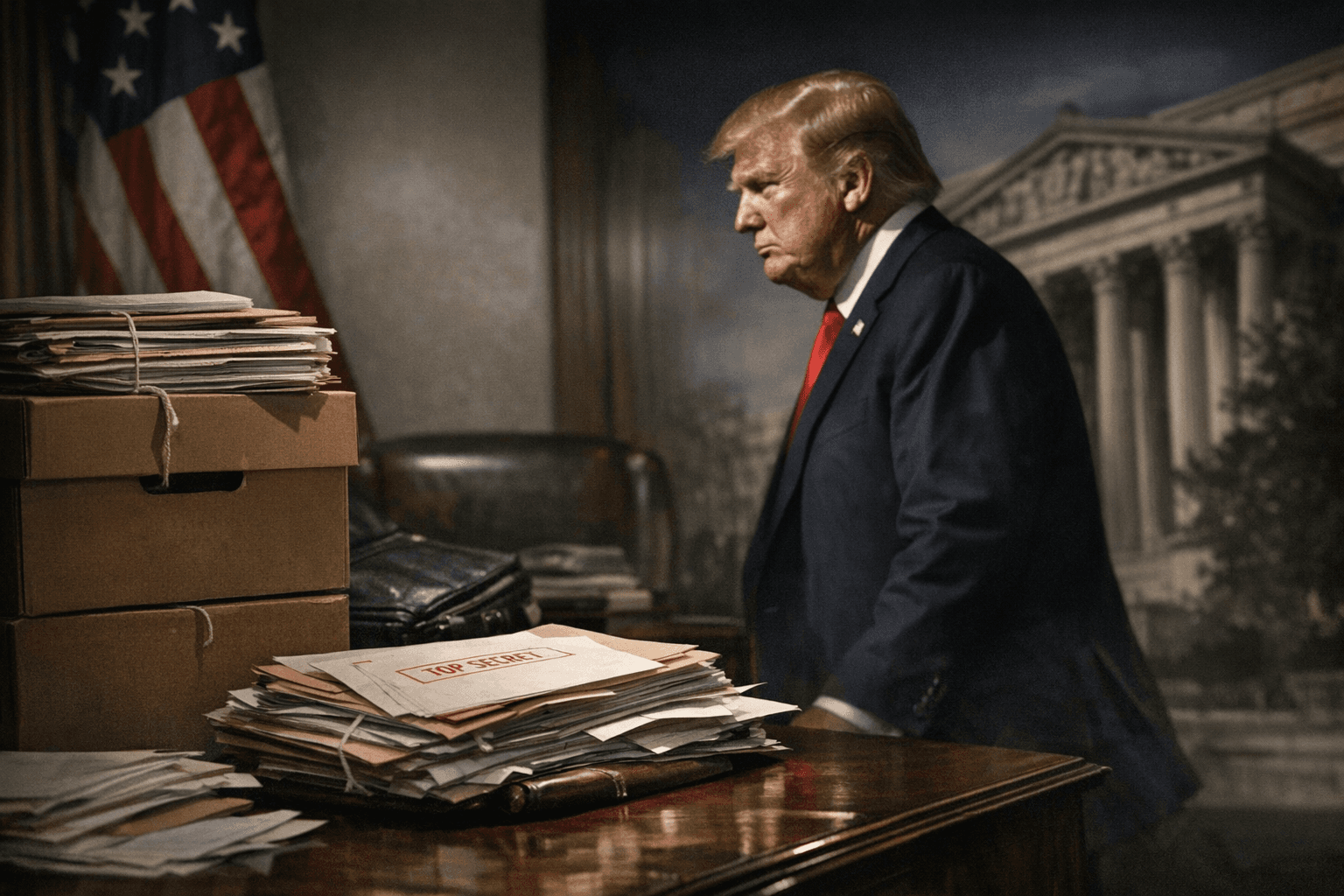
The Justice Department's Office of Legal Counsel declared the Presidential Records Act unconstitutional Thursday, issuing a legal opinion that could allow President Trump to keep his official White House documents away from the National Archives and, by extension, away from Congress, historians, and the public for generations.
The opinion, written by Assistant Attorney General T. Elliot Gaiser, who leads the Office of Legal Counsel, concluded that the Presidential Records Act exceeds Congress' power and "aggrandizes the legislative branch" at the expense of the independence of the executive branch. Gaiser found the law "is unconstitutional for two independent but interlocking reasons." In practical terms, the opinion means Gaiser believes Trump does not need to comply with it.
The stakes reach well beyond paperwork. The Presidential Records Act of 1978, passed in the post-Watergate era as a hedge against government corruption, states that every official record regarding a president's duties is property of the government. Under the law, NARA takes custody and control of records at the end of each administration, and the public can access those documents through Freedom of Information Act requests beginning five years after a presidency ends, with a president able to invoke up to six specific restrictions for as long as twelve years. If the government never receives those records in the first place, that entire pipeline of accountability closes permanently.
What qualifies as a presidential record is broad by design. The PRA requires the president to ensure preservation of records documenting the performance of his official duties, covering everything created or received by the president as part of his constitutional, statutory, or ceremonial responsibilities. That includes memos, emails, meeting notes, and policy deliberations spanning every consequential decision an administration makes.
The opinion carries an additional complication: the Office of Legal Counsel only offers guidance to the president; it does not make law. But it signals intent. The determination is a signal that the president will not turn over his documents to the archives. Compounding that signal is the law's own weakness: the Presidential Records Act includes no enforcement mechanism, and a former president has never been punished for violating it.
A senior White House official said internal legal counsel found the law improperly intrudes on the executive branch's independence by forcing presidents to hand over all official records to NARA when they leave office. "Congress does not have the power to compel an entire branch of government to create and save every single possible piece of paper," the official said. The White House also maintained it had not been destroying documents, and that Trump has instructed staff to preserve records for historical value.
Gaiser, who previously clerked for Supreme Court Justice Samuel Alito, was part of Trump's 2020 campaign team. His opinion draws a pointed comparison: he noted that Congress cannot order the papers of Supreme Court justices to be sent to the archives, arguing the same logic should protect presidential records from congressional reach.
The opinion arrives with particular resonance given Trump's history. Trump was previously hit with felony charges accusing him of keeping classified documents from his first term, a case that was dropped after he was re-elected in 2024. The OLC finding now provides a legal framework, however contested, to justify withholding records from a second term as well.
It remains unclear whether the administration will try to get Congress to overturn or change the Presidential Records Act, or will instead challenge it in court. Either path would force a legal confrontation that could define the transparency obligations of every future presidency, not just Trump's.
This article was produced by Prism’s automated news system from verified source data, official records, and press releases, then run through automated quality and moderation checks before publishing. The system is built and supervised by the people who set the standards it runs under. Read our full AI policy.
Did this article answer your question?

