DOJ scrambles to rebuild U.S.S. Cole case as trial timing slips
Department of Justice prosecutors are rebuilding the terrorism case 25 years after the U.S.S. Cole attack, while defense lawyers say they are not ready and the trial timeline remains uncertain.
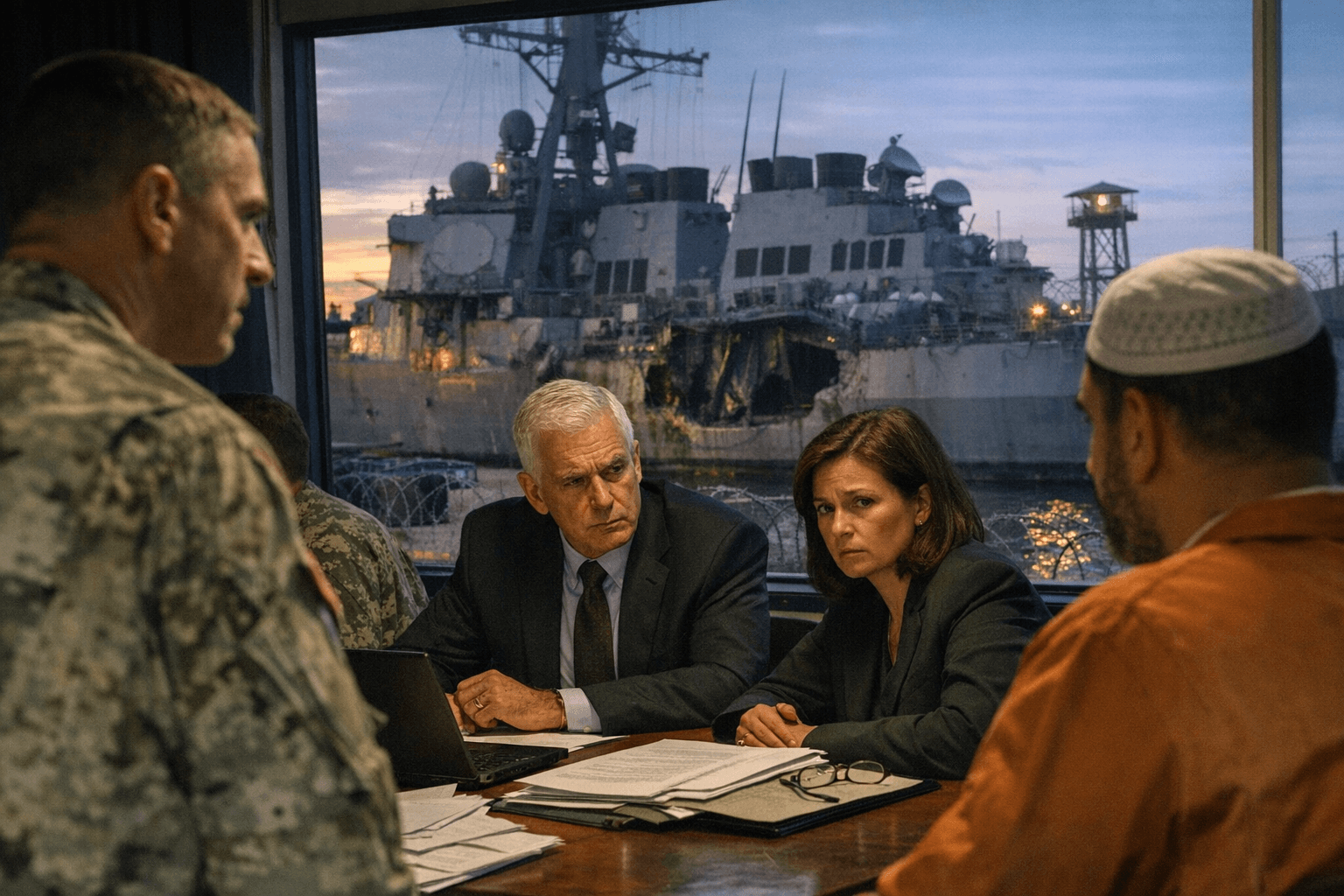
Department of Justice prosecutors are actively working to shore up the long-delayed criminal case stemming from the U.S.S. Cole bombing, but adverse judicial rulings and unresolved defense objections have left the trial date uncertain and victims without closure 25 years after the attack. The effort by prosecutors to reconstruct their record has intensified legal friction and raised broader questions about accountability, classified evidence and institutional readiness to try historic terrorism cases.
Federal prosecutors say recent court decisions stripped or limited key pieces of evidence, forcing them to reassess theories and recompile admissible material. Those rulings have accelerated a behind-the-scenes effort to gather supplemental records, reinterview witnesses where possible and reframe filings to survive renewed judicial scrutiny. The immediate consequence has been a delay in moving the case forward and growing frustration among survivors and families who expected a final adjudication.
Defense counsel have responded by asserting they are not prepared to go to trial. Lawyers for the accused have lodged procedural objections and indicated substantial outstanding issues remain, including the integrity of the evidence chain and the ability of witnesses to testify given the passage of time. Those defenses have prompted judges to consider additional pretrial proceedings rather than setting a firm trial calendar, further prolonging resolution.
The legal impasse exposes structural tensions in how the federal system handles terrorism prosecutions that stretch across decades. Courts must balance rules designed to ensure fair trials against national security constraints that can limit public disclosure of classified material. When judges rule to suppress or exclude contested evidence, prosecutors face a choice between pursuing crippled cases, seeking alternative legal pathways, or pursuing noncriminal remedies. Each option carries trade-offs for justice, national security transparency and institutional credibility.
For policymakers the case underscores an enduring challenge: how to preserve prosecutorial viability in long-running national security matters while protecting defendants’ rights. Lawmakers responsible for oversight of the Department of Justice and the intelligence community will confront pressure from victims’ families, veterans groups and civic organizations to ensure trials proceed with both rigor and speed. The contest between the need for accountability and the realities of aging evidence is likely to influence congressional debates over rules for handling classified material in criminal proceedings and mechanisms for preserving testimony and records.
Public confidence in federal institutions risks erosion when high-profile prosecutions stall. The uncertainty leaves a public narrative in which accountability is deferred and the costs of delay are borne by those directly affected by the attack. As prosecutors work to rebuild their case and defense lawyers press unresolved objections, the judiciary remains the final arbiter of whether the government can convert a decades-old indictment into a constitutionally sound verdict. For now, the trial’s timing and ultimate outcome remain in question, extending a legal and moral limbo for victims, the military community and policymakers alike.
This article was produced by Prism’s automated news system from verified source data, official records, and press releases, then run through automated quality and moderation checks before publishing. The system is built and supervised by the people who set the standards it runs under. Read our full AI policy.
Did this article answer your question?

