DOJ warns firms: prove AI merger claims with evidence, not buzzwords
The DOJ told dealmakers AI is not a free pass in merger reviews. Omeed Assefi said companies need evidence, not buzzwords, to justify consolidation.
Artificial intelligence is no shield from antitrust scrutiny, the Justice Department’s top merger enforcer said Thursday, warning companies not to dress up ordinary consolidation arguments in the language of disruption. Omeed Assefi, the acting assistant attorney general for the DOJ Antitrust Division, said firms may be tempted to argue that AI is remaking entire industries, but the department will expect actual evidence before treating those claims seriously.
Assefi delivered the warning at NYU School of Law’s Engelberg Center on Innovation Law & Policy in New York City, in a speech titled “Shirley Temple Antitrust: A Fresh Take on an Old Classic.” His message was careful but unmistakable: parties are welcome to engage with the division at any point in the merger process, yet the government can tell when companies are trying to mislead it. In practical terms, that puts a premium on market data, transaction-specific facts and concrete competitive effects, not broad claims that AI has changed everything.
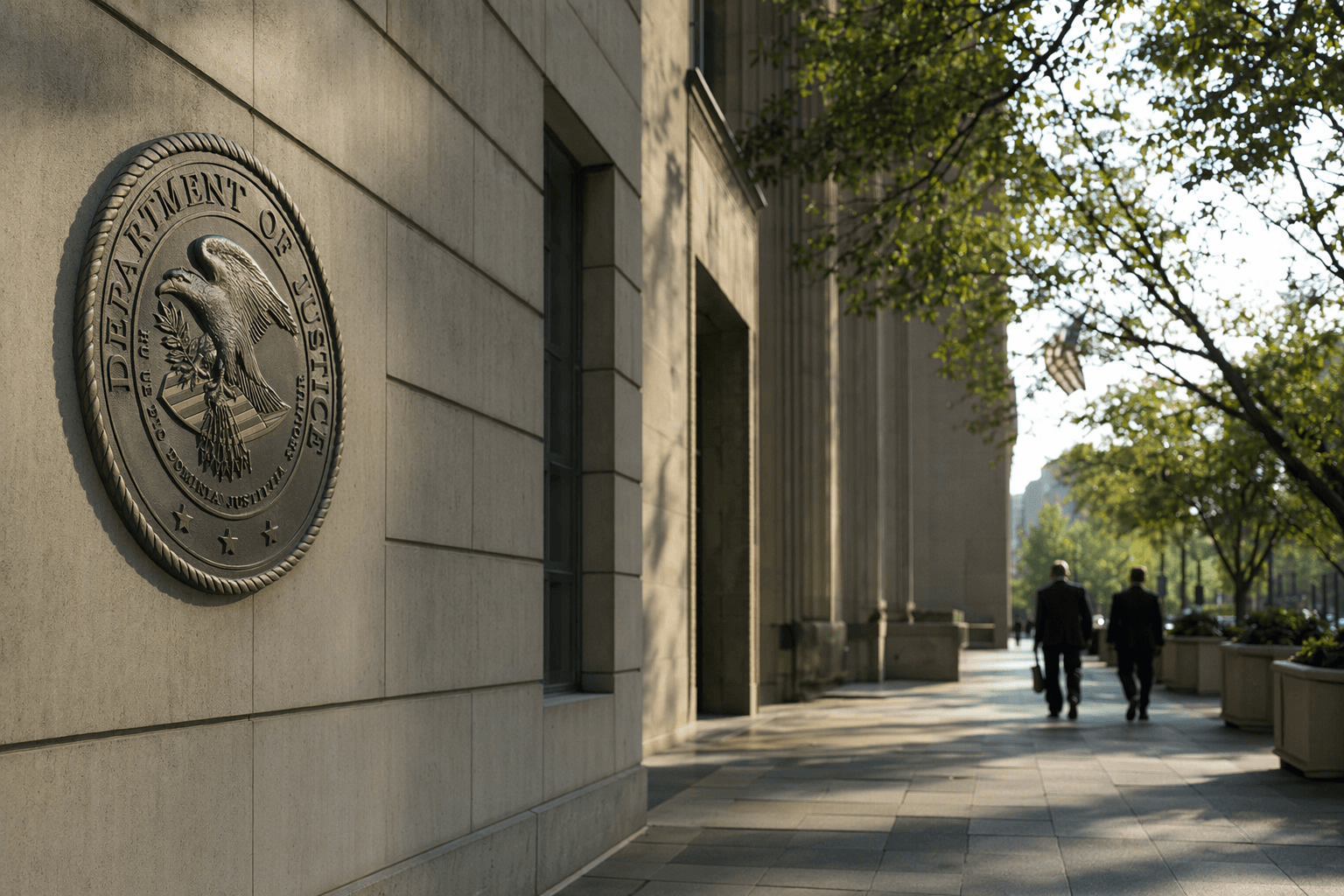
He also used the occasion to defend the basic posture of merger review. In his prepared remarks, Assefi said the Antitrust Division’s job is to protect competition and that the “vast majority of mergers do not threaten competition.” He noted that the division approved 99.5% of all mergers submitted to DOJ for Hart-Scott-Rodino review in fiscal 2025, a figure that undercuts any claim that the department is broadly hostile to dealmaking even as it toughens its skepticism toward unsupported narratives.
The warning lands as the government continues to tighten the mechanics of merger screening. The FTC and DOJ finalized major changes to Hart-Scott-Rodino premerger filing requirements in October 2024, and the FTC said in March 2026 that it was again seeking public comment on the premerger notification report form. Together, those steps point to a regulatory regime that is asking for more detail up front while expecting parties to justify their theories of market change with more than rhetoric.
The AI angle has also become a larger policy fight in Washington. In April 2026, Assefi said the DOJ wants the United States to be a global giant in AI while making sure firms do not collude or share information unlawfully. Earlier this year, Senators Elizabeth Warren, Ron Wyden and Richard Blumenthal urged the FTC and DOJ to scrutinize AI-related reverse acqui-hiring deals, citing Meta’s $14.3 billion investment in Scale AI, Google’s $2.4 billion nonexclusive licensing deal with Windsurf and Nvidia’s $20 billion December transaction involving Groq assets.
Assefi’s remarks suggest the antitrust agencies are drawing a sharper line between genuine technological change and buzzword defenses meant to ease merger approval. For dealmakers, the message is straightforward: AI may reshape markets, but in a merger filing, it will have to be proved, not merely asserted.
This article was produced by Prism’s automated news system from verified source data, official records, and press releases, then run through automated quality and moderation checks before publishing. The system is built and supervised by the people who set the standards it runs under. Read our full AI policy.
Did this article answer your question?

