Dover suspends new EU border checks after queues top four hours
French officials halted new EU checks at Dover after holiday queues stretched past four hours in the heat, exposing how fragile the border rollout remains.
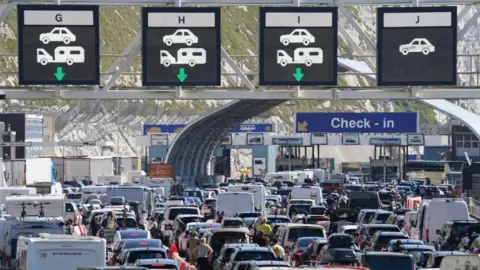
Dover suspended the new EU entry system after holiday traffic snarled at the port and passengers faced waits of more than four hours in soaring temperatures, a sharp reminder that Europe’s post-Brexit border reset is now being felt in real time by families, drivers and children in packed cars.
The Port of Dover said around 18,000 travellers were expected between Friday and Sunday, with Saturday set to be the busiest day of the year so far. Instead, the first bank holiday weekend to bring the European Union’s Entry/Exit System fully into force for tourist car traffic at Dover became a stress test for a border regime that is supposed to register non-EU travellers, including British nationals, with passport data, fingerprints and facial images before they enter the Schengen area.
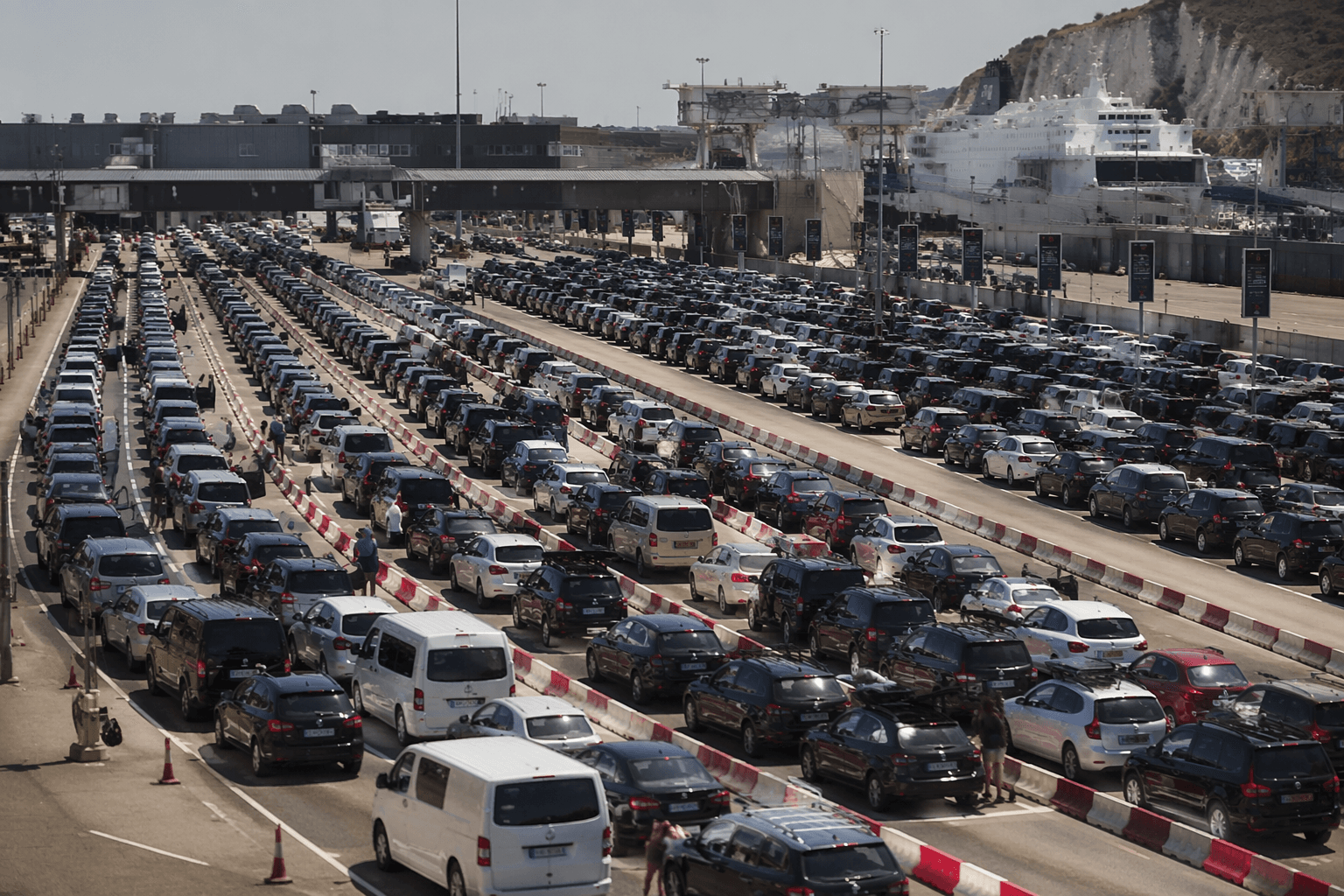
French border officials temporarily suspended the checks under a legal provision allowing the system to be paused when queues become unmanageable, reverting to manual passport stamping to clear the congestion. The Port of Dover said it had raised the situation with French border authorities, and chief executive Doug Bannister said Police aux Frontières had been “fantastic” in helping ease the gridlock.
The disruption exposed how the new system collides with peak demand at one of Europe’s busiest crossings. The Entry/Exit System began on October 12, 2025, and has been phased in across Schengen border points over six months. Dover had previously warned that checks under the system would take significantly longer than the old stamping process, and its own guidance said different border requirements could be encountered through April 2026 as rollout continued.
For travellers, the delays were more than an inconvenience. Hours spent in stationary cars during hot weather can quickly become a public health issue, particularly for older passengers, young children and anyone with chronic conditions who may struggle with heat, dehydration or disrupted medication schedules. The bottleneck also underscored a broader equity problem: the people least able to absorb delay, from families on limited holiday time to workers crossing for short stays, bear the brunt when a new security system is introduced before border staffing and processing speed are fully aligned.
The French Police aux Frontières carry out Schengen entry checks at Dover under the UK-France juxtaposed controls arrangement, a setup that keeps the border enforcement line on British soil but leaves the operational pressure squarely on a port that handles major trade and passenger volumes. Saturday’s suspension showed that the regime can be switched off when it chokes, but it also showed how quickly a politically chosen border technology can turn a holiday departure into a four-hour wait.
Know something we missed? Have a correction or additional information?
Submit a Tip