Sentinel trees abroad help scientists spot invasive forest pests early
Trees planted overseas are exposing invasive insects before they reach U.S. forests, turning foreign gardens into an early-warning network for costly pests.
Sentinel gardens as border sensors
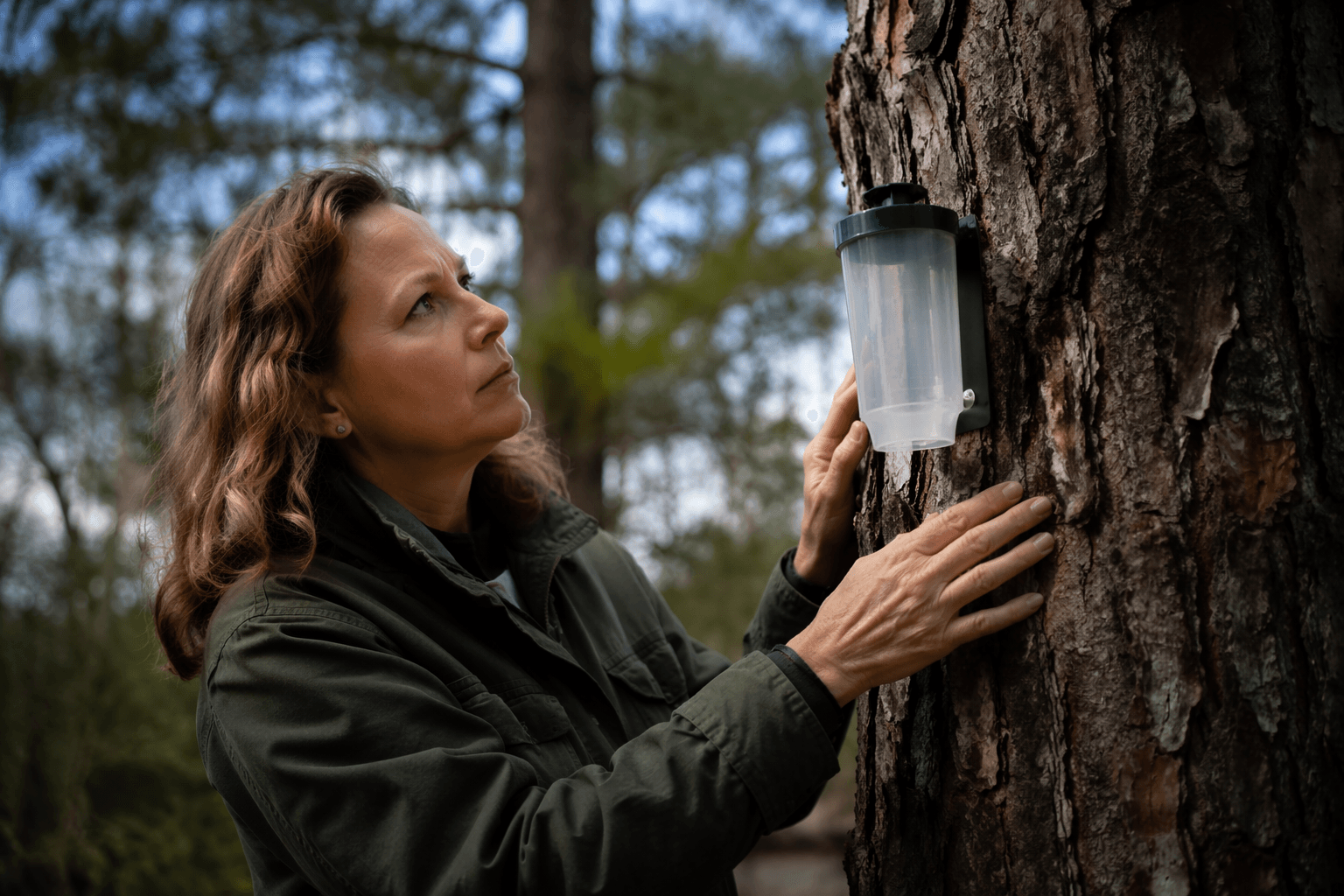
A tree planted abroad can function like a living detector, revealing which insects and pathogens are most likely to threaten forests long before they cross an ocean. The USDA Forest Service says it has established seven sentinel gardens in Asia, Europe and the United States, including plantings in China and South Korea, and it also works with global botanic gardens to monitor mature American trees already growing in collections overseas.
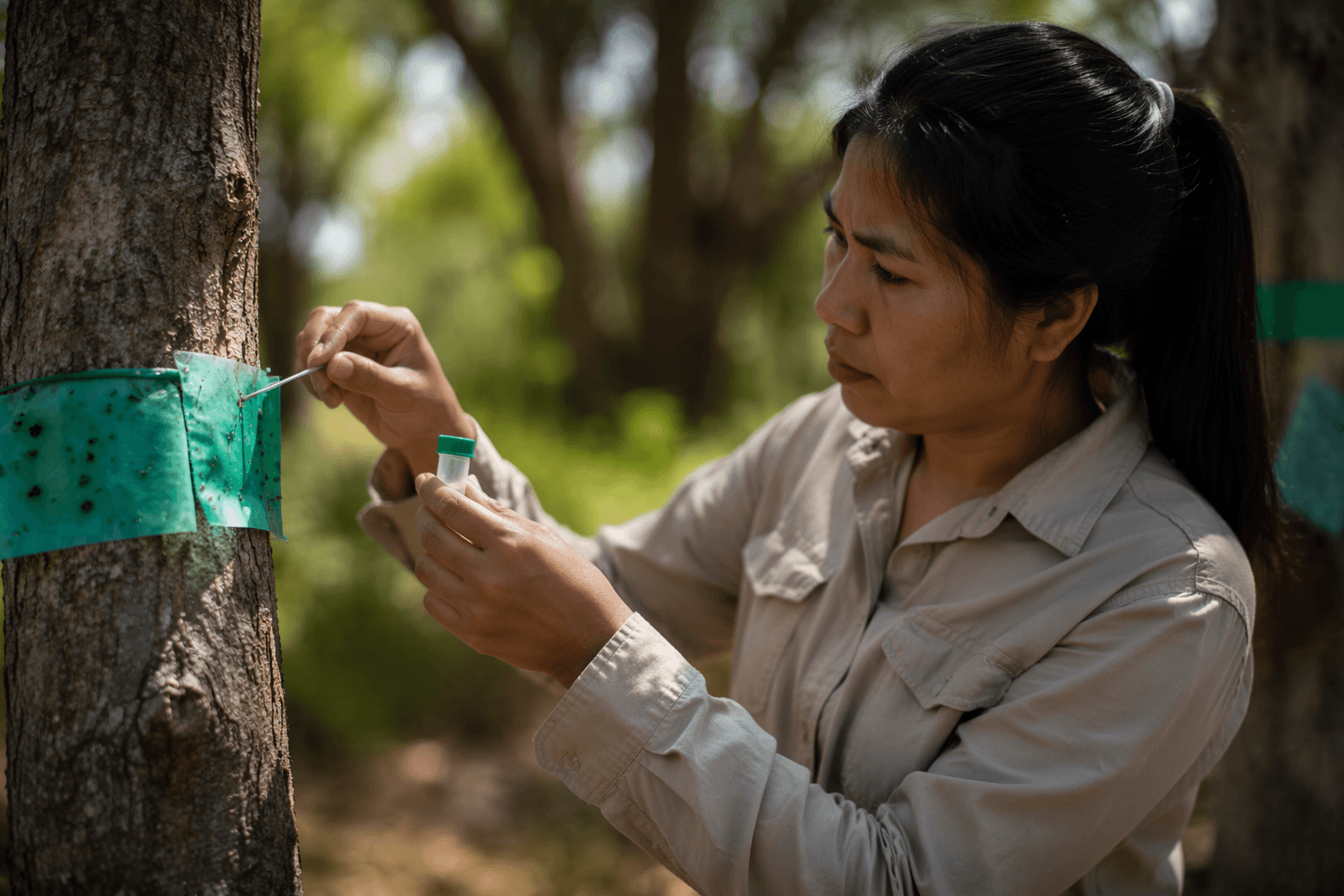
The concept is straightforward but powerful. High-value American tree species are grown outside their native range so scientists can see which foreign insects are drawn to them, how they feed, and whether they appear capable of becoming dangerous pests back home. In that sense, sentinel trees are not just research plots. They are overseas tripwires for invasive species that could reshape forests, hit crop systems and strain municipal budgets if they become established in the United States.
A method shaped by real outbreaks
The idea has been tested for years, not just proposed on paper. From 2007 to 2011, a team led by French entomologist Alain Roques planted seven European tree species in Fuyang and near Beijing, China. After years of monitoring, researchers documented more than 100 insect species on the trees, and five of those insects were considered threats.
Another sentinel study near Shanghai showed how quickly such findings can turn into policy. Researchers found a beetle feeding on American sweetgum trees, and China later banned import of the trees in 2017 to reduce the risk of spread. That is the value of the approach: it can identify a risky insect-host pairing before trade, transport and climate conditions give the pest a permanent foothold.
Why the stakes are economic, not just ecological
The Forest Service says invasive species cost the forest products industry an estimated $4.2 billion a year. That figure captures only one slice of the damage. When invasive forest pests take hold, the bill spreads into utility budgets, city forestry programs, park maintenance, roadside tree removal and replanting, plus lost shade, weakened stormwater management and degraded habitat.
Officials also point to two major pathways for non-native forest pests entering the United States: wood pallets and horticultural imports. That makes sentinel gardens especially relevant to border security for agriculture and ecosystems. The same global movement of plants and packing materials that fuels commerce can also move destructive insects, which is why a forest warning system has to begin overseas, not after a pest is already established in a neighborhood or watershed.
East Asia as the key warning zone
USDA researchers emphasize that East Asia has historically been the source of many of North America’s most damaging non-native forest insects. The emerald ash borer is the clearest example. It has killed hundreds of millions of ash trees in North America and is described by the Forest Service as one of the most destructive invasive forest pests on the continent.
That history is the reason sentinel gardens matter most where the risk is highest. If a North American tree species is being attacked in China or Korea, scientists gain evidence about insects that may already be adapted to exploit similar hosts. The goal is not just to identify pests that are present, but to determine which ones are dangerous enough to justify surveillance before they ever arrive in U.S. forests, urban tree canopies or commercial tree crops.
The collaboration problem behind the science
The work depends on international cooperation and on sorting through information that has long been hard to access. In 2021, the Forest Service said Dr. Jiri Hulcr of the University of Florida worked with scientists at the Institute of Zoology, Chinese Academy of Sciences, and other Chinese partners to compile Chinese reports, notebooks, dissertations and specimen data that were often inaccessible to Western scientists.
That effort uncovered at least two species in the genus Anoplophora that specialize on oaks, a particularly troubling result because oaks are ecologically and economically important across the United States. The larger lesson is institutional as much as scientific: much of the intelligence on invasive threats already exists, but it can be buried in local records, specimen labels and academic archives unless agencies and researchers build the relationships needed to find it.
The people helping move that work forward include USDA Forest Service scientists and collaborators such as Beth Lebow, Isabel Munck, Simon Ernstons, You Li and Dr. Greg Wheeler. Their effort shows how invasive-species defense increasingly depends on a networked approach, where field surveys, taxonomy, historical records and risk modeling all feed the same warning system.
What the newest China study adds
A more recent study of North American trees in two sentinel gardens in China sharpened the picture further. Researchers surveyed wood borers colonizing 11 North American tree species and recorded 38 species from nine families. Quercus texana was the most attacked host, making it a particularly important species for future monitoring and risk assessment.
That kind of result matters because it can be translated into action. The Forest Service says findings from sentinel gardens can feed USDA risk models, early-detection lists and pest alerts, helping officials decide which insects deserve the closest watch and which host trees should be monitored most aggressively. The purpose is to get ahead of establishment, not merely to react after an infestation becomes visible.
Why this system matters now
Sentinel trees abroad are not a substitute for border inspections or domestic quarantine. They are an upstream defense, one that makes it more likely scientists will identify the next high-impact pest while the threat is still manageable. In a world where a beetle can move from one continent to another through pallets, plants or other trade pathways, the strongest early warning system may be a living one planted far from home.
For U.S. forests, crops and city budgets, the lesson is direct: the cost of waiting is enormous, and the best chance to prevent the next ash-borer-scale disaster may lie in watching what insects attack American trees before those insects ever reach American soil.
Know something we missed? Have a correction or additional information?
Submit a Tip