Dow Enters Correction as S&P Posts Fifth Straight Weekly Loss
The Dow plunged 793 points into correction territory as U.S. crude briefly hit $100 a barrel, threatening mortgage rates and the retirement savings of millions.
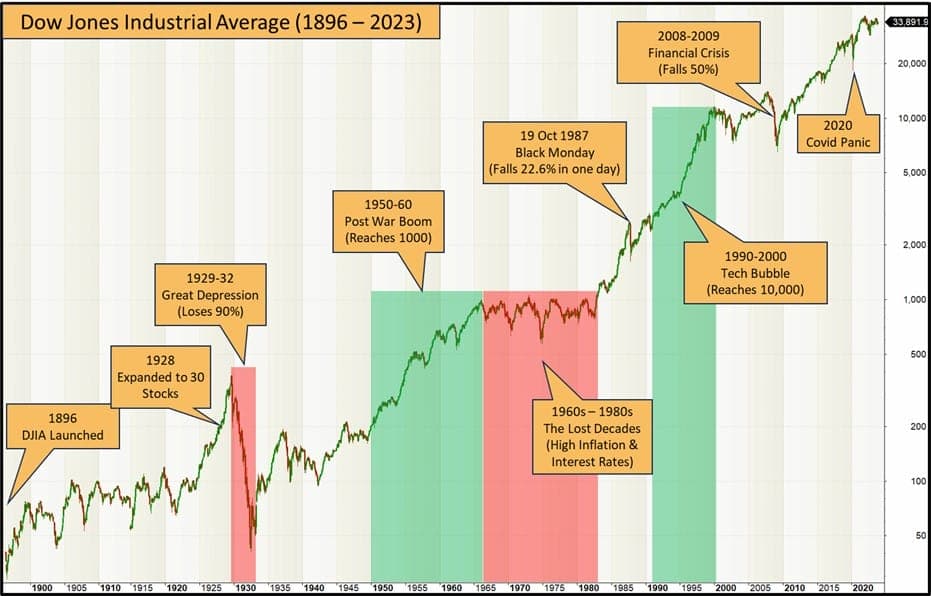
The Dow Jones Industrial Average tumbled 793.47 points Friday to close in correction territory, and every American with a retirement account or a variable-rate loan felt it. For the week, the S&P 500 logged its fifth consecutive loss, the longest weekly losing streak in nearly four years, as U.S. crude oil briefly pierced $100 per barrel for the first time since the war in Iran erupted on February 28.
That $100 threshold matters far beyond the gasoline pump. Oil at triple digits is now feeding directly into long-term borrowing costs: the 10-year Treasury yield hit 4.48% on Friday, its highest level since July, before settling around 4.43%. The 30-year yield briefly cracked 5%, a psychologically significant marker that pushed the average 30-year mortgage rate above 6.5%, up from roughly 6% the day the U.S. and Israel first struck Iran's energy infrastructure. Brent crude, the global benchmark, settled at $112.57 per barrel.
A correction, by market convention, means a decline of at least 10% from a recent peak. The Dow crossed that line Friday, falling more than 10% from its February 10 record close. The Nasdaq, more sensitive to interest rate expectations, confirmed correction Thursday and sits more than 12.5% below its October high. The S&P 500 closed at 6,368.85, down 8.74% from its January peak. "The stock market is still highly correlated to oil prices, so as oil prices move higher, stocks are moving lower," Glen Smith, chief investment officer at GDS Wealth Management, wrote Friday. "Clearly, the overall tone has turned very negative and now we have broken down into correction territory," added Ken Polcari, chief market strategist at SlateStone Wealth.
The correction label matters mechanically as well as psychologically. Institutional money managers with mandates to reduce risk near the 10% drawdown threshold face automatic triggers that can amplify selling. Markets are now pricing in zero Federal Reserve rate cuts this year, a complete reversal from the two cuts expected before the war. CME's FedWatch Tool puts the probability of an outright rate hike at the Fed's October meeting at roughly 25%.

For households weighing the damage, time horizon is the decisive variable. Christine Benz, director of personal finance and retirement planning at Morningstar, frames the divide plainly: "The conventional wisdom is, 'Everybody freeze, no one do anything.'" But she warns that investors within two to three years of retirement "may actually need to take action," shifting a portion of holdings toward cash or short-duration bonds before losses compound. For everyone else, the first call should be to a plan provider to verify current allocation, confirm the correct target retirement year, and check whether the fund's automatic glide path is functioning as designed. More than 80% of 529 college savings plans similarly shift from equities toward bonds as the target graduation year approaches, according to Morningstar, but families should confirm that adjustment is underway.
The war's economic ripple is most severe in consumer-facing sectors. Consumer discretionary stocks dropped 3.1% Friday, the worst of the 11 major S&P 500 sectors. Cruise operator Carnival slid 4.3% after slashing its annual profit forecast; Norwegian Cruise Line fell 6.9%. Energy producers were the session's lone significant winner. Macquarie strategists have warned that if the Strait of Hormuz remains effectively closed through June, oil could reach $200 per barrel, a level with no historical precedent.
President Trump on Friday gave Iran 10 additional days to reopen the strait or face the destruction of its energy plants. Secretary of State Marco Rubio said U.S. objectives could be achieved without ground troops, expecting the operation to conclude within weeks. Until one of those outcomes arrives, the number most worth watching next week is the U.S. crude price. If oil pulls back from $100, yields have room to ease and equities could stabilize. If it holds or climbs, the S&P 500, already just 1.4% above its own correction threshold, could join the Dow before the Federal Reserve's next meeting in May.
This article was produced by Prism’s automated news system from verified source data, official records, and press releases, then run through automated quality and moderation checks before publishing. The system is built and supervised by the people who set the standards it runs under. Read our full AI policy.
Did this article answer your question?