Dow Falls as Oil Surges on Middle East Escalation Fears
Oil jumped 5.8% to $114.39 as fears of trouble in the Strait of Hormuz rattled stocks and revived inflation worries.

A jump in oil sent a familiar warning through Wall Street: if shipping through the Strait of Hormuz is threatened, Americans can feel it at the pump, on plane tickets and in the inflation data before long.
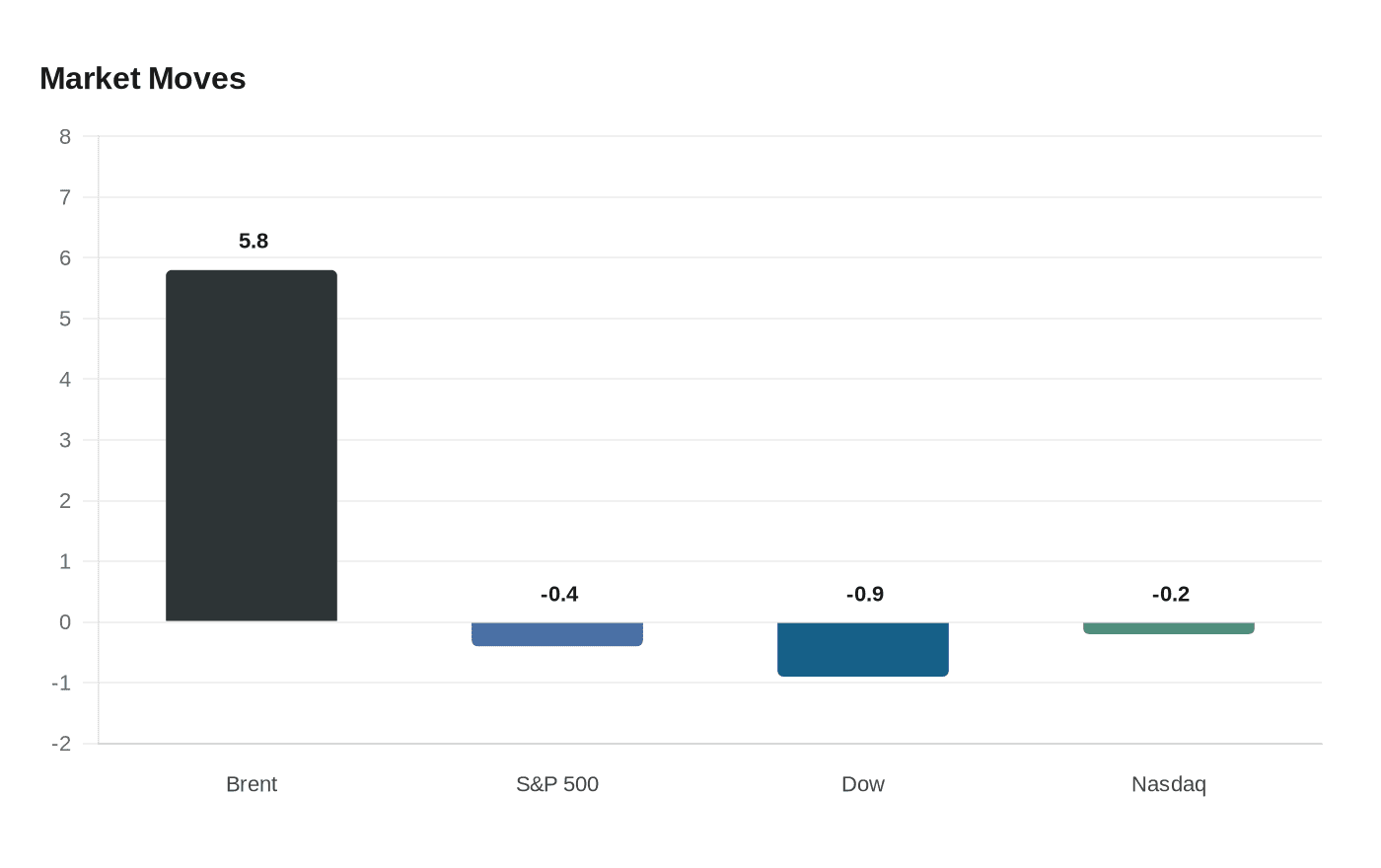
The market selloff deepened as Brent crude surged 5.8% to $114.39 a barrel, while the S&P 500 fell 0.4% and the Dow Jones Industrial Average dropped 453 points, or 0.9%, by 1:18 p.m. Eastern time. The Nasdaq composite slipped 0.2%. Traders were reacting to conflicting reports about a U.S. warship near the Strait of Hormuz, a flash point that has turned oil pricing into the quickest transmission channel for Middle East escalation fears.
The stakes are unusually high because the Strait of Hormuz is one of the world’s most important energy chokepoints. About one-fifth of global oil and gas flows through the narrow waterway, and the U.S. Energy Information Administration says 20 million barrels per day moved through it in 2024, equal to about 20% of global petroleum liquids consumption. Roughly one-fifth of global liquefied natural gas trade also passed through the strait, much of it from Qatar. Any disruption there can hit not just crude prices but gasoline, heating costs and the fuel bills that airlines pass on to travelers.
The United States also began efforts to guide stranded ships from the strait, a sign that the concern had moved beyond trading screens and into shipping logistics. That kind of disruption can ripple through global trade quickly, especially if tankers slow, reroute or demand higher insurance premiums. Even before any actual closure, the threat alone can force refiners, carriers and commodity traders to reprice risk.
The market’s sensitivity reflected how fragile sentiment was after a strong run. Just days earlier, the S&P 500 and Nasdaq had closed at record highs while the Dow slipped slightly. Now investors were weighing whether a sustained oil spike could keep inflation elevated, pressure bond yields and make the Federal Reserve slower to cut rates. OPEC+ had agreed to a modest June output increase, but that move did little to ease the fear that a Hormuz disruption would be faster and larger than spare supply could cover.
This article was produced by Prism’s automated news system from verified source data, official records, and press releases, then run through automated quality and moderation checks before publishing. The system is built and supervised by the people who set the standards it runs under. Read our full AI policy.
Did this article answer your question?
%3Amax_bytes(150000)%3Astrip_icc()%2FCertificate-of-deposit-2301f2164ceb4e91b100cb92aa6f868a.jpg&w=1920&q=75)